- - -

Articles about Aruba

Ghislaine Koeiman, Head of Information, Education, and Communication Support at FPA

Delivering contraception directly to the client

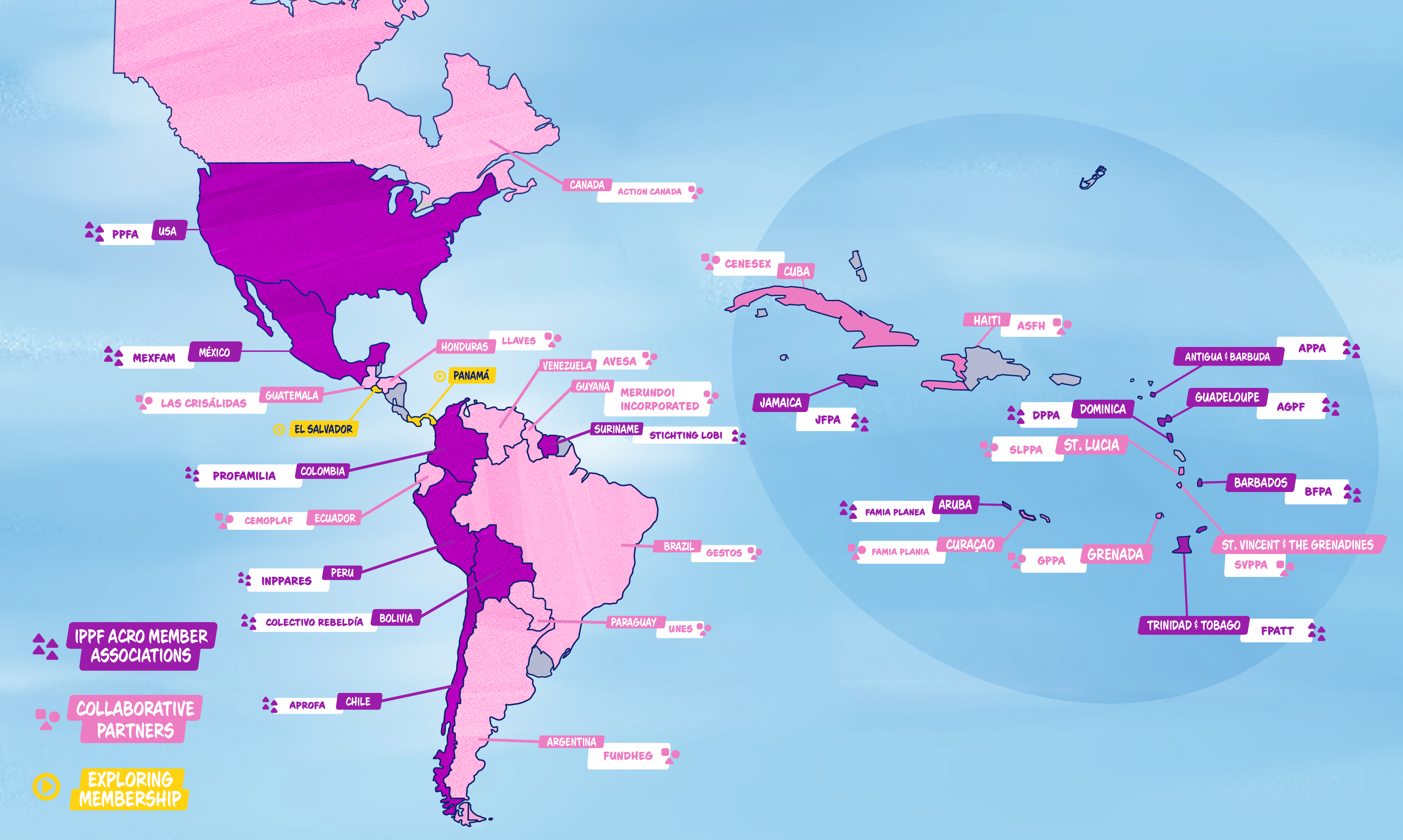
Famia Planea Aruba’s (FPA) contraceptive delivery service is an added personal touch to its online store. The site is accessible to both members and non-members who can shop in privacy for their contraceptives and schedule a delivery. Orders are delivered by FPA staff with clients having the option to pay cash or debit upon delivery. To ensure a clients’ privacy and confidentiality orders are delivered discreetly. Ghislaine Koeiman, Head of Information, Education, and Communication Support at FPA has been managing the delivery service since it started in August 2018. “Since the start of the delivery service in 2018, our clients were enthusiastic however, the usage started slow. I believe this was due to the unfamiliarity, and people were still in the transition phase to online services. Moreover, clients believed that the delivery transportation would have been in a car completely covered in images of condoms, sperm cells and pills, which made them skeptical of using the service due to embarrassment”, says Ghislaine.  As with any new service comes challenges as well as opportunities. “Some of the challenges we face are the overload of deliveries on one day.” Even though Aruba is a small island and there are traffic jams only at specific hours in the day. “Sometimes I get stuck in traffic and try to rush myself to deliver the products in the time slot and at times I find myself in places that I barely recognize and discover new locations.” “The part I enjoy is the communication with the clients. Building a relationship with the client and vice versa provides a smoother transition of service but also provides the comfort and safe feeling for the client”. Ghislaine says the service often calls for more than the delivery of contraceptive orders, as clients may have questions or need support about their health. FPA’s bespoke healthcare delivery has seen successful growth since it started, with an increase of 115% during 2019 and 170% in 2020. “There has been an immense increase in the service in 2020 due to the pandemic. We already had the service in place, so we just had to fill in the gaps; for example, providing more hours and dates for clients to make use of the service.” <img src="https://tracker.metricool.com/c3po.jpg?hash=8b2b54e62fc802a9ae3ee7903a883415"/>

Marta Alicia Hernández Monge

"Being a volunteer is my inheritance"

“I am a volunteer promoter by inheritance. First, my mother volunteered with Pro-Familia for 15 years, she resigned because she had to go to the United States. I learned to volunteer since I was little because I saw how my mother did it”, Alicia recalls. Alicia Hernández Monge, 43, remembers that with her mother leaving the country, the community spent some years without a volunteer health promoter. In those years, women came to her to encourage her to re-establish contact with Pro-Familia so the program would resume in the Santo Domingo village, one and a half hours outside of San Salvador.  In the absence of a local public health facility, Alicia decided to become a volunteer health promoter to support her community. “When my mother left, I agreed to collaborate just to promote the cervical screening clinic, but Pro-Familia suggested that I be a volunteer, like my mother, and I accepted. Today, it’s been two years. They have trained me at home on sexual and reproductive health issues, counseling, home visits, and the use of brochures, and I also learned to inject, with all that I do a better job in my community, especially with women”, says Alicia. Alicia is an entrepreneur with a strong spirit of care towards her family and community. Every day she attends her small business that provides the community with basic products.  “I help change people's lives; the women are happy and grateful because they no longer go to Guazapa to buy contraceptive methods. Pro-Familia trains me and I coordinate with other institutions in the community, such as the church, to help people”, she says.  Alicia says that counseling is the most important part of her work. “Counselling is very important, women learn to use (contraceptive) methods and stop thinking that it is a sin, I help them to understand that family planning is a right. (…) I had a case of a client where the husband was the one who decided which method to use and make her changed very often (contraceptive method) because he wanted her to lose weight; one day I explained to him about the benefits of using only one family planning method, the effects of changing very often on her menstruation and that she had the right to decide whether or not to change, and that the weight could be due to other reasons. He understood and thanked me for taking the time to speak to him; from that day on the client keeps one family planning method and the husband respects her decision,” she says. Alicia dreams of having a larger place for her clients, or have a table to administer the injectable, but despite the limited space, she enjoys her work. "I like it and I am happy to know that I can help, many users come at night to pick up their methods because they work out of the house and I take care of them with great pleasure, when they miss their appointment, I look after them, I speak to them by phone or I send them a WhatsApp message", she ends. They prefer her for the confidence she brings Ruth Séfora Manzano has known Alicia for several years before she had children. “I like Alicia because she is a respectful person, she likes to help people, she gives me confidence, and you can trust your personal things to her because she doesn't tell anyone, she looked after me when I got pregnant and she also cares about my daughter, she guides me on how taking care of myself and the baby, she is a kind person, that's why I plan with her, and if I need other medicines I also buy them from her. I also like it because it is close to my house, she gives me the shots, and I don't have to go elsewhere, I am grateful for her help and Pro-Familia´s."

Community Health Worker, Elga Lisbeth Cornejo Granados is committed to training the best volunteer health promoters in El Salvador

"Working for sexual and reproductive health of women is the purpose of my life"

“I remember that I joined Pro-Familia on July 1, 2011, I had many fears and questions at that time, because I did not know about sexual and reproductive health issues, and had no experience working with contraceptive methods, it was something completely new for me, but I really wanted to learn,” says Elga, 34. Elga is one of the Community Health Workers (CHW) in the ADS - Profamilia Community-Based Program team. She remembers when she first started her training, she felt that her role was small and unimportant; but over time she learned and gained in confidence, understanding the positive impact she was having in the local communities. “I found the reason to live, I found a purpose: knowing people’s situations, their difficult situations, that is special for me. Feeling they miss me when they spend days without seeing me because I am in different communities, that is something important, it means they value my work,” she comments excitedly. Elga believes that she has gained a lot personally. “I have learned a lot about women's rights; I apply everything about sexual and reproductive health in my personal life, I do not allow abuse by my partner and I teach my son to respect people. I learned to use contraception for my own benefit,” she says. Communication was very difficult for Elga, she considered herself shy and was very quiet. Today she talks with people, in front of large groups of students in schools, expresses her ideas, and provides counseling. “I enjoy what I do, I prepare to visit the volunteer promoters, to train them and resolve any doubts or questions that arise, they are very intelligent, and I intend to have the best volunteers. I enjoy visiting families in the community, having the opportunity to give family planning counseling, work on the prevention of cervical and breast cancer, work with young people, help them to change their lives, to find new paths, free from violence, just as I found my purpose,” she says. She admires the work of Pro-Familia, as no other organization has permanent programs and subsidized healthcare, which is of enormous benefit to the local community. Elga has seen many clients since she started volunteering. She recalls encouraging a woman to come to the cervical screening clinic: “The lady had never had a cervical screening. I gave her counseling and a referral so that she could come to the ADS / Pro-Familia clinic. Her result was cervical dysplasia – level 1, I followed her until she received the treatment; now, every time she sees me, she thanks me for guiding her and inviting her to the clinic,” she says with joy. She also remembers the first time she suggested a vasectomy to a client. “First, I made the reference to the woman client, but because of health reasons she could not be sterilized, and she was very sad because using hormonal methods also affected her health; I decided to give counseling to the client's partner, who agreed to a vasectomy. The intervention was successful, and he is well, grateful to me and to Pro-Familia”, she recalls. The issues of sexual and reproductive health and contraceptive care are still taboo in many communities. Changing attitudes in order to improve the lives of individuals and families remain a vital focus. Counseling is key to recognizing that health and contraceptive care are fundamental rights, and to eliminate myths and beliefs that prohibit the use of contraception. Volunteers like Elga remain integral to this process in order to bring about change for the future. 

Manuela 1975-2010
10 March 2021

Manuela vs. El Salvador Factsheet

Manuela was sentenced to 30 years in prison for aggravated homicide after suffering an emergency that resulted in pregnancy loss. She died imprisoned 2 years later, after receiving inadequate medical care. Manuela fue condenada a 30 años de prisión por homicidio agravado tras sufrir una emergencia que le hizo perder el embarazo. Murió encarcelada 2 años después, tras recibir una atención médica inadecuada. 

Juana Margoth Murcia Health Promoter El Salvador

Ensuring health and contraceptive care in local villages

“I started as a Pro-Family Health Promoter (PSP, in Spanish) 30 years ago. I received a visit from Pro-Familia staff on several occasions, I was very interested in what I could do to help in my community as a volunteer. I was trained in sexual and reproductive health issues, and in the technique of injecting (contraceptives)”, says Juana Margoth. Through the community-based Pro-Family Health Promoter program, the Salvadoran Demographic Association (ADS / Pro-Familia) has been providing sexual and reproductive healthcare to local communities since 1974. Today, the program currently has around 900 health promoters across El Salvador. Reaching under-served communities with contraceptive care and information lies at the heart of the program’s mission. In the absence of healthcare from the Ministry of Health in Hacienda El Edén, Sonsonate, Juana provides care to four villages in the surrounding area. “I make visits in the communities to the clients I already have, to see if they are okay with the (contraceptive) method and to receive new clients, sometimes even the same clients tell me that there is someone who needs a visit. I like that they look to me to help them. I give confidence to the clients, to their partners too, I have clients since 2, 5 or 6 years ago. (…) There is a lot of need, so I am here, until God wants it”, she says. Juana receives a quarterly supply of contraceptives that she distributes at low prices to the women in her community. “I like that women know that I am here to help them, also to give advice and understand each people's problem; (to help them) to plan their family, and I like the fact that they want to do it with me,” she says. Providing counseling to clients on contraceptive methods so that they understand the different types and can make an informed choice is a crucial part of her role. “In other places - she says - they only give the contraceptive methods to women and do not explain (it’s use)”. In addition to the community-based program, Pro-Familia supports the network of promoters to help respond to emergencies. When natural disasters occur, Pro-Familia conducts a survey of needs and responds with support for reconstruction and food supplies. “I have a lot to thank Pro-Familia for, I have learned and continue to learn with them, they are always there when I need to know something when I run out of contraceptives and without medications (for the program); I am also grateful because I have my prefabricated house thanks to Pro-Familia who helped me when the earthquake of 2001 happened”, she says. I feel confident with her Yaneth Aguilar knew Juana Margoth and felt confident in choosing the injectable as her preferred contraceptive method. “With my husband, we agreed to put myself in control with her, she is kind, and she pays attention. If she were not here, I would surely have two more children. I feel confident with her. I don't like going to the health unit, because I have to spend the whole day, and sometimes they don't treat me well." Veronica Moran also received contraceptive care and information from Juana. “Margoth has changed our life, mine and my family’s, I have been planning with her for 8 years, she is kind and always has the method I use. When I have doubts, I ask her with confidence, without shame, and I can go to her house at any time, she is always there. I don't like going to the health unit, because I spend a lot (of money), and sometimes they don't have contraceptives; nowadays, with the pandemic, we have her close and she never stopped treating me, it is very helpful in our community." Brenda Martinez has been a client of Juana’s for two years. “She is the person that we know has (contraceptive) methods in the community, where Pap tests to prevent cancer are done, where we buy medicines, where you can always ask. When I was born, she was already a promoter; I couldn't be in another place planning, she is a very good person, kind, and she is always helping us in whatever way.”

Blanca Edith Mendoza Ramos

"I can always do something to help others"

When Blanca started as a volunteer, she committed to her new role with enthusiasm, thinking about how the women of La Loma village would benefit from being able to access contraceptive methods close to home. “Many women walk up to an hour and a half from the villages of the Guazapa hill, to receive family planning services or to receive counseling,” Blanca Edith Mendoza Ramos, 61, says proudly. Her house is a cozy and special place for the clients. “I have been a Pro-Familia volunteer for 29 years, when I started, I had already had my five children, I was busy at home, but when the Pro-Familia staff explained to me about working in my community, I trusted It was important to support women. I have learned a lot and I continue to do so, I have received training that helps me to be a better person, to have knowledge and to give good advice; I have received many people from Pro-Familia in these years, and always with great responsibility”, she says. To ensure her clients’ confidentiality, Blanca has created a private room with a sofa where she provides counseling and administers injectable contraceptive methods. By creating a private space, Blanca has built up trust in the community and women prefer to go to her for contraception and advice. “I am proud to help in my community, I visit clients to see if they have any side effects when they do not come to receive their method, or to know if they are well or to recruit new clients who are encouraged to use a family planning method because their families are already very large”, comments Blanqui, as she is known in her community. The public health facility provides free healthcare, however, women from other local communities prefer to see Blanca because she is closer and offers confidential personalized care. “The Health Unit is not close, so women prefer to plan with me, they come with confidence to apply their method. On their first visit, I ask them a few questions about their health, and if everything is okay, they plan with me. I think that family planning is important for the spacing of the children and that it is not only the use of methods but also communication with the couple”, reflects Blanca. The poverty and patriarchy in these communities present many challenges, including domestic violence, multiple partners, and miscarriage that require a sensitive approach to provision of healthcare and information. Volunteers like Blanca are supported to deal with these challenges through training provided by the Community-Based Program staff. Volunteers develop skills to use referral systems, coordinate with local institutions, such as the Ministry of Public Health, other NGOs, such as the Feminist Women's Collective, the Institute for Research, Training, and Development of Women (IMU), which provide support for cases of violence or care in cases of miscarriage. This approach is integral to the provision of healthcare and support in the communities. The team of volunteers helps to reduce violence and femicides in order to improve the quality of life for women and families. “People in the community tell me that they are grateful for the care I give them, and I will continue to change what I can to improve people's lives. I will continue to make home visits, give counseling because it is a need, women need someone that understands them and helps them. Pro-Familia is part of my life, being a volunteer is something special, I have learned a lot, and the most important thing is that I can help others”, says Blanca. Respect and comfort Blanca is often recommended by her clients. María Ofelia, or Felita, as she likes to be called, comments that “a friend from the community recommended that I visit the Blanqui, I already had two children, one 4-years-old and another 11-year-old. I still remember with deep sadness the moment I looked for her, it was my last pregnancy, and I lost my daughter. Blanqui received me with affection, respect, and comfort, she understood what I was going through, she guided me, and I made the decision to plan until now. I’ve been using the two-month injection for 4 years." María Ofelia says that although she can go to the social security check-up, she prefers to go to Blanca because of the confidence she gives her, “she always takes care of me, and the prices are low, I can pay it, because in other places the methods (contraceptives) are more expensive.”
Midwife Dorothy Boyd-Brown, Jamaica

“I remember some time ago a lady beat her daughter the first time she had her period”

From their inception, cultural barriers and stigma have threatened the work of the Jamaica Family Planning Association (JFPA). Although some myths around family planning are still prevalent, according to one senior healthcare provider at the Beth Jacobs Clinic in St Ann,  there have been some positive shifts. Registered midwife Dorothy Boyd-Brown who first began working with the Association in 1973, said the organization has made its mark and reduced barriers and stigmatizing behavior towards family planning and sexual and reproductive health and rights. Boyd-Brown, head of maternal and child-care/sexual and reproductive healthcare at the Beth Jacobs Clinic said cultural barriers were often seen in families lacking basic knowledge about sexual health. “I remember some time ago a lady beat her daughter the first time she had her period as she believed the only way, she could see her period, is if a man had gone there [if the child was sexually active]. I had to send for her [mother] and have a session with both her and the child as to how a period works. “She apologized to her daughter and said she was sorry. She never had the knowledge and she was happy for places like these where she could come and learn – both parent and child,” Boyd-Brown said. Information sharing is important She also highlights that religious groups once perpetuated stigma, so much so that women feared even walking near the FAMPLAN clinic. “Churchwomen would hide and come, tell their husbands, partners or friend they are going to the doctor as they have a pain in their foot, which nuh guh suh [was not true]. Every minute you would see them looking to see if any church brother or sister came on the premises to see them as they would go back and tell the Minister because they don’t support family planning. But that was in the 90s,” Boyd Brown said. Boyd-Brown says things have changed and the church participates in training sessions about family planning encouraging members to be informed about contraceptive care and their sexual and reproductive health and rights. But despite the wealth of information and forward-thinking of the communities the Beth Jacobs Clinic serves, Boyd-Brown said there are some prevailing myths, which if left unaddressed threaten to repeal the work of the Association. “Information sharing is important, and we try to have brochures on various STIs, and issues around sexual reproductive health and rights. But there are people who still believe ‘sex with a virgin cures’ HIV, plus there are myths around contraceptive use too. We encourage reading. Back in the 70s, 80s, 90s we had a good library where we encouraged people to read, get books, get brochures. That is not so much now,” Boyd-Brown said. Boyd-Brown also faces the challenge of ensuring women continue to access healthcare. “I saw a lady in the market who told me from the last day I did her pap smear she hasn’t done another one. That was five years ago. I had one recently - no pap smear for 14 years. I delivered her last child,” Boyd-Brown said. Despite the challenge, she remains dedicated to the task and shares that her commitment also helps to improve women’s choices. It is Boyd-Brown’s hopes that the once active Mobile Unit with community-based distributors will be reintegrated into JFPA’s healthcare delivery to be able to reach under-served communities.  Boyd-Brown added, “JFPA has made its mark. It will never leave Jamaica or die.”

FPA - Aruba

FPA, formerly known as Famia Planea Aruba was established in 1970, by a group of physicians who saw the need for accessibility to contraceptives. FPA envisions a community that is conscious about its sexual and reproductive health and rights in general. 

FPA’s mission is to promote the rights of, and accessibility to, services, information and education about contraceptives and sexual health in general to the community of Aruba, without any discrimination regarding race, religion, political or sexual orientation. 

FPA has only one service point and has a total of four employees and an ED, who provide over 73,000 SRHR services to over 7,000 clients every year. FPA does not provide clinical services, but rather focuses on comprehensive sexuality education, provision of contraceptives and social enterprise which has grown substantially since the introduction of their delivery service. 


Instagram


Document(s)
Ghislaine Koeiman, Head of Information, Education, and Communication Support at FPA

Delivering contraception directly to the client

Famia Planea Aruba’s (FPA) contraceptive delivery service is an added personal touch to its online store. The site is accessible to both members and non-members who can shop in privacy for their contraceptives and schedule a delivery. Orders are delivered by FPA staff with clients having the option to pay cash or debit upon delivery. To ensure a clients’ privacy and confidentiality orders are delivered discreetly. Ghislaine Koeiman, Head of Information, Education, and Communication Support at FPA has been managing the delivery service since it started in August 2018. “Since the start of the delivery service in 2018, our clients were enthusiastic however, the usage started slow. I believe this was due to the unfamiliarity, and people were still in the transition phase to online services. Moreover, clients believed that the delivery transportation would have been in a car completely covered in images of condoms, sperm cells and pills, which made them skeptical of using the service due to embarrassment”, says Ghislaine.  As with any new service comes challenges as well as opportunities. “Some of the challenges we face are the overload of deliveries on one day.” Even though Aruba is a small island and there are traffic jams only at specific hours in the day. “Sometimes I get stuck in traffic and try to rush myself to deliver the products in the time slot and at times I find myself in places that I barely recognize and discover new locations.” “The part I enjoy is the communication with the clients. Building a relationship with the client and vice versa provides a smoother transition of service but also provides the comfort and safe feeling for the client”. Ghislaine says the service often calls for more than the delivery of contraceptive orders, as clients may have questions or need support about their health. FPA’s bespoke healthcare delivery has seen successful growth since it started, with an increase of 115% during 2019 and 170% in 2020. “There has been an immense increase in the service in 2020 due to the pandemic. We already had the service in place, so we just had to fill in the gaps; for example, providing more hours and dates for clients to make use of the service.” <img src="https://tracker.metricool.com/c3po.jpg?hash=8b2b54e62fc802a9ae3ee7903a883415"/>

Marta Alicia Hernández Monge

"Being a volunteer is my inheritance"

“I am a volunteer promoter by inheritance. First, my mother volunteered with Pro-Familia for 15 years, she resigned because she had to go to the United States. I learned to volunteer since I was little because I saw how my mother did it”, Alicia recalls. Alicia Hernández Monge, 43, remembers that with her mother leaving the country, the community spent some years without a volunteer health promoter. In those years, women came to her to encourage her to re-establish contact with Pro-Familia so the program would resume in the Santo Domingo village, one and a half hours outside of San Salvador.  In the absence of a local public health facility, Alicia decided to become a volunteer health promoter to support her community. “When my mother left, I agreed to collaborate just to promote the cervical screening clinic, but Pro-Familia suggested that I be a volunteer, like my mother, and I accepted. Today, it’s been two years. They have trained me at home on sexual and reproductive health issues, counseling, home visits, and the use of brochures, and I also learned to inject, with all that I do a better job in my community, especially with women”, says Alicia. Alicia is an entrepreneur with a strong spirit of care towards her family and community. Every day she attends her small business that provides the community with basic products.  “I help change people's lives; the women are happy and grateful because they no longer go to Guazapa to buy contraceptive methods. Pro-Familia trains me and I coordinate with other institutions in the community, such as the church, to help people”, she says.  Alicia says that counseling is the most important part of her work. “Counselling is very important, women learn to use (contraceptive) methods and stop thinking that it is a sin, I help them to understand that family planning is a right. (…) I had a case of a client where the husband was the one who decided which method to use and make her changed very often (contraceptive method) because he wanted her to lose weight; one day I explained to him about the benefits of using only one family planning method, the effects of changing very often on her menstruation and that she had the right to decide whether or not to change, and that the weight could be due to other reasons. He understood and thanked me for taking the time to speak to him; from that day on the client keeps one family planning method and the husband respects her decision,” she says. Alicia dreams of having a larger place for her clients, or have a table to administer the injectable, but despite the limited space, she enjoys her work. "I like it and I am happy to know that I can help, many users come at night to pick up their methods because they work out of the house and I take care of them with great pleasure, when they miss their appointment, I look after them, I speak to them by phone or I send them a WhatsApp message", she ends. They prefer her for the confidence she brings Ruth Séfora Manzano has known Alicia for several years before she had children. “I like Alicia because she is a respectful person, she likes to help people, she gives me confidence, and you can trust your personal things to her because she doesn't tell anyone, she looked after me when I got pregnant and she also cares about my daughter, she guides me on how taking care of myself and the baby, she is a kind person, that's why I plan with her, and if I need other medicines I also buy them from her. I also like it because it is close to my house, she gives me the shots, and I don't have to go elsewhere, I am grateful for her help and Pro-Familia´s."

Community Health Worker, Elga Lisbeth Cornejo Granados is committed to training the best volunteer health promoters in El Salvador

"Working for sexual and reproductive health of women is the purpose of my life"

“I remember that I joined Pro-Familia on July 1, 2011, I had many fears and questions at that time, because I did not know about sexual and reproductive health issues, and had no experience working with contraceptive methods, it was something completely new for me, but I really wanted to learn,” says Elga, 34. Elga is one of the Community Health Workers (CHW) in the ADS - Profamilia Community-Based Program team. She remembers when she first started her training, she felt that her role was small and unimportant; but over time she learned and gained in confidence, understanding the positive impact she was having in the local communities. “I found the reason to live, I found a purpose: knowing people’s situations, their difficult situations, that is special for me. Feeling they miss me when they spend days without seeing me because I am in different communities, that is something important, it means they value my work,” she comments excitedly. Elga believes that she has gained a lot personally. “I have learned a lot about women's rights; I apply everything about sexual and reproductive health in my personal life, I do not allow abuse by my partner and I teach my son to respect people. I learned to use contraception for my own benefit,” she says. Communication was very difficult for Elga, she considered herself shy and was very quiet. Today she talks with people, in front of large groups of students in schools, expresses her ideas, and provides counseling. “I enjoy what I do, I prepare to visit the volunteer promoters, to train them and resolve any doubts or questions that arise, they are very intelligent, and I intend to have the best volunteers. I enjoy visiting families in the community, having the opportunity to give family planning counseling, work on the prevention of cervical and breast cancer, work with young people, help them to change their lives, to find new paths, free from violence, just as I found my purpose,” she says. She admires the work of Pro-Familia, as no other organization has permanent programs and subsidized healthcare, which is of enormous benefit to the local community. Elga has seen many clients since she started volunteering. She recalls encouraging a woman to come to the cervical screening clinic: “The lady had never had a cervical screening. I gave her counseling and a referral so that she could come to the ADS / Pro-Familia clinic. Her result was cervical dysplasia – level 1, I followed her until she received the treatment; now, every time she sees me, she thanks me for guiding her and inviting her to the clinic,” she says with joy. She also remembers the first time she suggested a vasectomy to a client. “First, I made the reference to the woman client, but because of health reasons she could not be sterilized, and she was very sad because using hormonal methods also affected her health; I decided to give counseling to the client's partner, who agreed to a vasectomy. The intervention was successful, and he is well, grateful to me and to Pro-Familia”, she recalls. The issues of sexual and reproductive health and contraceptive care are still taboo in many communities. Changing attitudes in order to improve the lives of individuals and families remain a vital focus. Counseling is key to recognizing that health and contraceptive care are fundamental rights, and to eliminate myths and beliefs that prohibit the use of contraception. Volunteers like Elga remain integral to this process in order to bring about change for the future. 

Manuela 1975-2010
10 March 2021

Manuela vs. El Salvador Factsheet

Manuela was sentenced to 30 years in prison for aggravated homicide after suffering an emergency that resulted in pregnancy loss. She died imprisoned 2 years later, after receiving inadequate medical care. Manuela fue condenada a 30 años de prisión por homicidio agravado tras sufrir una emergencia que le hizo perder el embarazo. Murió encarcelada 2 años después, tras recibir una atención médica inadecuada. 

Juana Margoth Murcia Health Promoter El Salvador

Ensuring health and contraceptive care in local villages

“I started as a Pro-Family Health Promoter (PSP, in Spanish) 30 years ago. I received a visit from Pro-Familia staff on several occasions, I was very interested in what I could do to help in my community as a volunteer. I was trained in sexual and reproductive health issues, and in the technique of injecting (contraceptives)”, says Juana Margoth. Through the community-based Pro-Family Health Promoter program, the Salvadoran Demographic Association (ADS / Pro-Familia) has been providing sexual and reproductive healthcare to local communities since 1974. Today, the program currently has around 900 health promoters across El Salvador. Reaching under-served communities with contraceptive care and information lies at the heart of the program’s mission. In the absence of healthcare from the Ministry of Health in Hacienda El Edén, Sonsonate, Juana provides care to four villages in the surrounding area. “I make visits in the communities to the clients I already have, to see if they are okay with the (contraceptive) method and to receive new clients, sometimes even the same clients tell me that there is someone who needs a visit. I like that they look to me to help them. I give confidence to the clients, to their partners too, I have clients since 2, 5 or 6 years ago. (…) There is a lot of need, so I am here, until God wants it”, she says. Juana receives a quarterly supply of contraceptives that she distributes at low prices to the women in her community. “I like that women know that I am here to help them, also to give advice and understand each people's problem; (to help them) to plan their family, and I like the fact that they want to do it with me,” she says. Providing counseling to clients on contraceptive methods so that they understand the different types and can make an informed choice is a crucial part of her role. “In other places - she says - they only give the contraceptive methods to women and do not explain (it’s use)”. In addition to the community-based program, Pro-Familia supports the network of promoters to help respond to emergencies. When natural disasters occur, Pro-Familia conducts a survey of needs and responds with support for reconstruction and food supplies. “I have a lot to thank Pro-Familia for, I have learned and continue to learn with them, they are always there when I need to know something when I run out of contraceptives and without medications (for the program); I am also grateful because I have my prefabricated house thanks to Pro-Familia who helped me when the earthquake of 2001 happened”, she says. I feel confident with her Yaneth Aguilar knew Juana Margoth and felt confident in choosing the injectable as her preferred contraceptive method. “With my husband, we agreed to put myself in control with her, she is kind, and she pays attention. If she were not here, I would surely have two more children. I feel confident with her. I don't like going to the health unit, because I have to spend the whole day, and sometimes they don't treat me well." Veronica Moran also received contraceptive care and information from Juana. “Margoth has changed our life, mine and my family’s, I have been planning with her for 8 years, she is kind and always has the method I use. When I have doubts, I ask her with confidence, without shame, and I can go to her house at any time, she is always there. I don't like going to the health unit, because I spend a lot (of money), and sometimes they don't have contraceptives; nowadays, with the pandemic, we have her close and she never stopped treating me, it is very helpful in our community." Brenda Martinez has been a client of Juana’s for two years. “She is the person that we know has (contraceptive) methods in the community, where Pap tests to prevent cancer are done, where we buy medicines, where you can always ask. When I was born, she was already a promoter; I couldn't be in another place planning, she is a very good person, kind, and she is always helping us in whatever way.”

Blanca Edith Mendoza Ramos

"I can always do something to help others"

When Blanca started as a volunteer, she committed to her new role with enthusiasm, thinking about how the women of La Loma village would benefit from being able to access contraceptive methods close to home. “Many women walk up to an hour and a half from the villages of the Guazapa hill, to receive family planning services or to receive counseling,” Blanca Edith Mendoza Ramos, 61, says proudly. Her house is a cozy and special place for the clients. “I have been a Pro-Familia volunteer for 29 years, when I started, I had already had my five children, I was busy at home, but when the Pro-Familia staff explained to me about working in my community, I trusted It was important to support women. I have learned a lot and I continue to do so, I have received training that helps me to be a better person, to have knowledge and to give good advice; I have received many people from Pro-Familia in these years, and always with great responsibility”, she says. To ensure her clients’ confidentiality, Blanca has created a private room with a sofa where she provides counseling and administers injectable contraceptive methods. By creating a private space, Blanca has built up trust in the community and women prefer to go to her for contraception and advice. “I am proud to help in my community, I visit clients to see if they have any side effects when they do not come to receive their method, or to know if they are well or to recruit new clients who are encouraged to use a family planning method because their families are already very large”, comments Blanqui, as she is known in her community. The public health facility provides free healthcare, however, women from other local communities prefer to see Blanca because she is closer and offers confidential personalized care. “The Health Unit is not close, so women prefer to plan with me, they come with confidence to apply their method. On their first visit, I ask them a few questions about their health, and if everything is okay, they plan with me. I think that family planning is important for the spacing of the children and that it is not only the use of methods but also communication with the couple”, reflects Blanca. The poverty and patriarchy in these communities present many challenges, including domestic violence, multiple partners, and miscarriage that require a sensitive approach to provision of healthcare and information. Volunteers like Blanca are supported to deal with these challenges through training provided by the Community-Based Program staff. Volunteers develop skills to use referral systems, coordinate with local institutions, such as the Ministry of Public Health, other NGOs, such as the Feminist Women's Collective, the Institute for Research, Training, and Development of Women (IMU), which provide support for cases of violence or care in cases of miscarriage. This approach is integral to the provision of healthcare and support in the communities. The team of volunteers helps to reduce violence and femicides in order to improve the quality of life for women and families. “People in the community tell me that they are grateful for the care I give them, and I will continue to change what I can to improve people's lives. I will continue to make home visits, give counseling because it is a need, women need someone that understands them and helps them. Pro-Familia is part of my life, being a volunteer is something special, I have learned a lot, and the most important thing is that I can help others”, says Blanca. Respect and comfort Blanca is often recommended by her clients. María Ofelia, or Felita, as she likes to be called, comments that “a friend from the community recommended that I visit the Blanqui, I already had two children, one 4-years-old and another 11-year-old. I still remember with deep sadness the moment I looked for her, it was my last pregnancy, and I lost my daughter. Blanqui received me with affection, respect, and comfort, she understood what I was going through, she guided me, and I made the decision to plan until now. I’ve been using the two-month injection for 4 years." María Ofelia says that although she can go to the social security check-up, she prefers to go to Blanca because of the confidence she gives her, “she always takes care of me, and the prices are low, I can pay it, because in other places the methods (contraceptives) are more expensive.”

Midwife Dorothy Boyd-Brown, Jamaica

“I remember some time ago a lady beat her daughter the first time she had her period”

From their inception, cultural barriers and stigma have threatened the work of the Jamaica Family Planning Association (JFPA). Although some myths around family planning are still prevalent, according to one senior healthcare provider at the Beth Jacobs Clinic in St Ann,  there have been some positive shifts. Registered midwife Dorothy Boyd-Brown who first began working with the Association in 1973, said the organization has made its mark and reduced barriers and stigmatizing behavior towards family planning and sexual and reproductive health and rights. Boyd-Brown, head of maternal and child-care/sexual and reproductive healthcare at the Beth Jacobs Clinic said cultural barriers were often seen in families lacking basic knowledge about sexual health. “I remember some time ago a lady beat her daughter the first time she had her period as she believed the only way, she could see her period, is if a man had gone there [if the child was sexually active]. I had to send for her [mother] and have a session with both her and the child as to how a period works. “She apologized to her daughter and said she was sorry. She never had the knowledge and she was happy for places like these where she could come and learn – both parent and child,” Boyd-Brown said. Information sharing is important She also highlights that religious groups once perpetuated stigma, so much so that women feared even walking near the FAMPLAN clinic. “Churchwomen would hide and come, tell their husbands, partners or friend they are going to the doctor as they have a pain in their foot, which nuh guh suh [was not true]. Every minute you would see them looking to see if any church brother or sister came on the premises to see them as they would go back and tell the Minister because they don’t support family planning. But that was in the 90s,” Boyd Brown said. Boyd-Brown says things have changed and the church participates in training sessions about family planning encouraging members to be informed about contraceptive care and their sexual and reproductive health and rights. But despite the wealth of information and forward-thinking of the communities the Beth Jacobs Clinic serves, Boyd-Brown said there are some prevailing myths, which if left unaddressed threaten to repeal the work of the Association. “Information sharing is important, and we try to have brochures on various STIs, and issues around sexual reproductive health and rights. But there are people who still believe ‘sex with a virgin cures’ HIV, plus there are myths around contraceptive use too. We encourage reading. Back in the 70s, 80s, 90s we had a good library where we encouraged people to read, get books, get brochures. That is not so much now,” Boyd-Brown said. Boyd-Brown also faces the challenge of ensuring women continue to access healthcare. “I saw a lady in the market who told me from the last day I did her pap smear she hasn’t done another one. That was five years ago. I had one recently - no pap smear for 14 years. I delivered her last child,” Boyd-Brown said. Despite the challenge, she remains dedicated to the task and shares that her commitment also helps to improve women’s choices. It is Boyd-Brown’s hopes that the once active Mobile Unit with community-based distributors will be reintegrated into JFPA’s healthcare delivery to be able to reach under-served communities.  Boyd-Brown added, “JFPA has made its mark. It will never leave Jamaica or die.”

FPA - Aruba

FPA, formerly known as Famia Planea Aruba was established in 1970, by a group of physicians who saw the need for accessibility to contraceptives. FPA envisions a community that is conscious about its sexual and reproductive health and rights in general. 

FPA’s mission is to promote the rights of, and accessibility to, services, information and education about contraceptives and sexual health in general to the community of Aruba, without any discrimination regarding race, religion, political or sexual orientation. 

FPA has only one service point and has a total of four employees and an ED, who provide over 73,000 SRHR services to over 7,000 clients every year. FPA does not provide clinical services, but rather focuses on comprehensive sexuality education, provision of contraceptives and social enterprise which has grown substantially since the introduction of their delivery service. 


Instagram


Document(s)