



Spotlight
A selection of resources from across the Federation

Americas & the Caribbean
Resource
Care, Support and Reduce Harm in Americas and the Caribbean
Organizations across the Americas share their strategies to support abortion access across different contexts.
Most Popular This Week
Americas & the Caribbean

Resource
|
Care, Support and Reduce Harm in Americas and the Caribbean
IPPF Americas & Caribbean (ACRO) is a locally rooted, globally connected network of civil society organizations in 30 countries. We defend sexual and reproductive health and
Americas & the Caribbean

Resource
|
Caribbean Observatory on SRHR: Policy Briefs
Caribbean Observatory on Sexual and Reproductive Health and Rights is an initiative spearheaded by IPPF Americas and the Caribbean Regional Office (IPPF ACRO).
Americas & the Caribbean

Resource
|
2021 Annual Performance Report
IPPF has always done the utmost to advance sexual and reproductive health and rights for all.
Americas & the Caribbean

Resource
|
The Caribbean Observatory on SRHR
Filter our resources by:
Resource
| 06 June 2026
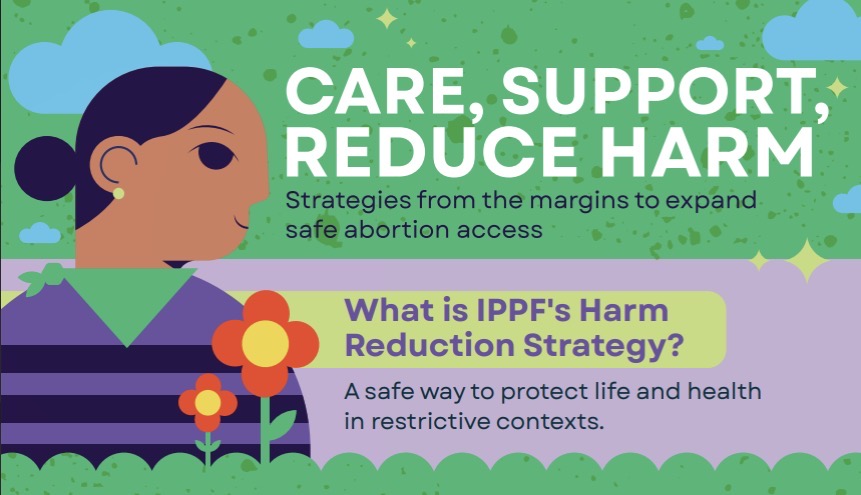
Care, Support and Reduce Harm in Americas and the Caribbean
IPPF Americas & Caribbean (ACRO) is a locally rooted, globally connected network of civil society organizations in 30 countries. We defend sexual and reproductive health and rights through a feminist, inclusive, and evidence-based approach. We act through: Services Political advocacy Strategic alliances Access to Safe Abortion: Our Pillars A safe abortion: Uses effective methods with professional or community support. Is based on clear information and international guidelines. Respects people and is free of stigma. Can take place inside or outside health facilities, even in restrictive settings. Our pillars: Legality – Accessibility – Quality We promote: Informed decision-making Autonomy Access to quality mifepristone and misoprostol Safe abortion requires informed, stigma-free communities that support and respect people’s life decisions. Our Strategic Approaches Self-cared abortion: Safe, effective, empowering—returning control to people facing geographic, legal, or social barriers. Community activism and accompaniment networks are key. Risk and harm reduction strategy: Provide safe information on medication in restrictive contexts. Refer to services that guarantee safety. Expand access routes: community networks, pharmacists, telemedicine, and remote care. Abortion in Advanced Pregnancies Abortions are needed at any stage of pregnancy. Our commitment is to make them safe. IPPF ACRO promotes dignified, stigma-free access with trained staff, backed by WHO and IPPF’s IMAP. Gestational limits are stigma-based barriers. We rely on evidence about safety and viability. Gestational limits are no excuse to deny the right to choose. Caring means supporting without judgment. Institutional Commitments We expand access through: Clinical Services Telemedicine Surgical procedures Specialized procedures (including advanced abortions) Community and peer support Partnerships with pharmacists Alliances with local networks We also: Promote registration of essential medications Push for regulatory flexibility so nurses and other providers can offer abortion care Our principles: Dignity – Autonomy – Justice Wherever there is need, there must be safe, dignified, and accompanied care. Our Footprint in the Region In the last 3 years, IPPF ACRO has: Provided around 180,000 safe abortion services Implemented community and risk-reduction strategies in 20+ organizations Expanded access to misoprostol and mifepristone in 10 countries Built a community of practice on medication abortion Together we are stronger. We build networks across movements and sectors. We expand access to: essential medicines, legal protection, flexible funding, abortion as essential service, and ongoing rights-based training. Our sensitive, informed communities are the heart of resistance.
Resource
| 06 June 2026
Care, Support and Reduce Harm in Americas and the Caribbean
IPPF Americas & Caribbean (ACRO) is a locally rooted, globally connected network of civil society organizations in 30 countries. We defend sexual and reproductive health and rights through a feminist, inclusive, and evidence-based approach. We act through: Services Political advocacy Strategic alliances Access to Safe Abortion: Our Pillars A safe abortion: Uses effective methods with professional or community support. Is based on clear information and international guidelines. Respects people and is free of stigma. Can take place inside or outside health facilities, even in restrictive settings. Our pillars: Legality – Accessibility – Quality We promote: Informed decision-making Autonomy Access to quality mifepristone and misoprostol Safe abortion requires informed, stigma-free communities that support and respect people’s life decisions. Our Strategic Approaches Self-cared abortion: Safe, effective, empowering—returning control to people facing geographic, legal, or social barriers. Community activism and accompaniment networks are key. Risk and harm reduction strategy: Provide safe information on medication in restrictive contexts. Refer to services that guarantee safety. Expand access routes: community networks, pharmacists, telemedicine, and remote care. Abortion in Advanced Pregnancies Abortions are needed at any stage of pregnancy. Our commitment is to make them safe. IPPF ACRO promotes dignified, stigma-free access with trained staff, backed by WHO and IPPF’s IMAP. Gestational limits are stigma-based barriers. We rely on evidence about safety and viability. Gestational limits are no excuse to deny the right to choose. Caring means supporting without judgment. Institutional Commitments We expand access through: Clinical Services Telemedicine Surgical procedures Specialized procedures (including advanced abortions) Community and peer support Partnerships with pharmacists Alliances with local networks We also: Promote registration of essential medications Push for regulatory flexibility so nurses and other providers can offer abortion care Our principles: Dignity – Autonomy – Justice Wherever there is need, there must be safe, dignified, and accompanied care. Our Footprint in the Region In the last 3 years, IPPF ACRO has: Provided around 180,000 safe abortion services Implemented community and risk-reduction strategies in 20+ organizations Expanded access to misoprostol and mifepristone in 10 countries Built a community of practice on medication abortion Together we are stronger. We build networks across movements and sectors. We expand access to: essential medicines, legal protection, flexible funding, abortion as essential service, and ongoing rights-based training. Our sensitive, informed communities are the heart of resistance.

Resource
| 01 July 2024
Caribbean Observatory on SRHR: Policy Briefs
Caribbean Observatory on Sexual and Reproductive Health and Rights is an initiative spearheaded by IPPF Americas and the Caribbean Regional Office (IPPF ACRO). We are proudly collaborating with a dynamic coalition of Caribbean organizations committed to the well-being of our region in order to secure data and insights that are critical to shaping SRHR in the Caribbean. Policy briefs These policy briefs, developed by the Spotlight Iniciative, seek to shed light on the current situation of pivotal SRHR issues in the Caribbean region, such as reduction of adolescent pregnancy, empowering youth, monitoring, child marriage and early unions, Comprehensive Sexuality Education, and several others. The goal of these policy briefs on SRHR in the Caribbean is to create a strong foundation for informed discussions between civil society, governments, and international agencies, as supported by the Caribbean Observatory on SRHR. Such informed discussions between women’s rights experts and national authorities, focusing on reviewing policies, laws, and progress indicators like administrative data on service delivery and capacity, are vital for turning human rights commitments into meaningful national changes that empower women to exercise their rights.
Resource
| 01 July 2024
Caribbean Observatory on SRHR: Policy Briefs
Caribbean Observatory on Sexual and Reproductive Health and Rights is an initiative spearheaded by IPPF Americas and the Caribbean Regional Office (IPPF ACRO). We are proudly collaborating with a dynamic coalition of Caribbean organizations committed to the well-being of our region in order to secure data and insights that are critical to shaping SRHR in the Caribbean. Policy briefs These policy briefs, developed by the Spotlight Iniciative, seek to shed light on the current situation of pivotal SRHR issues in the Caribbean region, such as reduction of adolescent pregnancy, empowering youth, monitoring, child marriage and early unions, Comprehensive Sexuality Education, and several others. The goal of these policy briefs on SRHR in the Caribbean is to create a strong foundation for informed discussions between civil society, governments, and international agencies, as supported by the Caribbean Observatory on SRHR. Such informed discussions between women’s rights experts and national authorities, focusing on reviewing policies, laws, and progress indicators like administrative data on service delivery and capacity, are vital for turning human rights commitments into meaningful national changes that empower women to exercise their rights.

Resource
| 24 January 2024
For a transformative education: an open letter from youth to the ministers of education of Latin America and the Caribbean
Resource
| 24 January 2024
For a transformative education: an open letter from youth to the ministers of education of Latin America and the Caribbean

Resource
| 14 November 2023
Political Declaration SC CM+10
The networks, organizations and collectives of civil society: feminists, indigenous, Afro-descendants,LGBTI+, youth, seniors, people with disabilities, sex workers and local communities, among others, whoare committed to the follow-up of the Regional Conference on Population and Development (RCPD), andto the implementation of the Montevideo Consensus, are gathered, in the framework of its fifth PresidingOfficers and the extraordinary session on the tenth anniversary of this transcendent regional agreement,to state that: The Montevideo Consensus represents a fundamental milestone in the promotion and protection ofhuman rights in Latin America and the Caribbean, and we celebrate its importance as a comprehensivedocument that addresses a wide range of issues crucial to sustainable development and the individualand collective well-being of all people in their different stages of life.
Resource
| 14 November 2023
Political Declaration SC CM+10
The networks, organizations and collectives of civil society: feminists, indigenous, Afro-descendants,LGBTI+, youth, seniors, people with disabilities, sex workers and local communities, among others, whoare committed to the follow-up of the Regional Conference on Population and Development (RCPD), andto the implementation of the Montevideo Consensus, are gathered, in the framework of its fifth PresidingOfficers and the extraordinary session on the tenth anniversary of this transcendent regional agreement,to state that: The Montevideo Consensus represents a fundamental milestone in the promotion and protection ofhuman rights in Latin America and the Caribbean, and we celebrate its importance as a comprehensivedocument that addresses a wide range of issues crucial to sustainable development and the individualand collective well-being of all people in their different stages of life.

Resource
| 14 November 2023
Youth Declaration Montevideo +10
Diverse youth from Latin America and the Caribbean gathered at the Montevideo +10 Youth Forum, which took place virtually on October 30 and in person on November 12, 2023, within the framework of the 5th meeting Presiding Officers of the Regional Conference on Population and Development and the 10th anniversary of the Montevideo Consensus. We came together to listen, analyze, and understand the context of the region. During these discussions, we shared our concerns, demands, and proposals to continue advancing towards the full implementation of the Montevideo Consensus.
Resource
| 14 November 2023
Youth Declaration Montevideo +10
Diverse youth from Latin America and the Caribbean gathered at the Montevideo +10 Youth Forum, which took place virtually on October 30 and in person on November 12, 2023, within the framework of the 5th meeting Presiding Officers of the Regional Conference on Population and Development and the 10th anniversary of the Montevideo Consensus. We came together to listen, analyze, and understand the context of the region. During these discussions, we shared our concerns, demands, and proposals to continue advancing towards the full implementation of the Montevideo Consensus.

Resource
| 07 November 2023
Child, Early and Forced Marriages and Unions
Resource
| 07 November 2023
Child, Early and Forced Marriages and Unions
Resource
| 06 June 2026
Care, Support and Reduce Harm in Americas and the Caribbean
IPPF Americas & Caribbean (ACRO) is a locally rooted, globally connected network of civil society organizations in 30 countries. We defend sexual and reproductive health and rights through a feminist, inclusive, and evidence-based approach. We act through: Services Political advocacy Strategic alliances Access to Safe Abortion: Our Pillars A safe abortion: Uses effective methods with professional or community support. Is based on clear information and international guidelines. Respects people and is free of stigma. Can take place inside or outside health facilities, even in restrictive settings. Our pillars: Legality – Accessibility – Quality We promote: Informed decision-making Autonomy Access to quality mifepristone and misoprostol Safe abortion requires informed, stigma-free communities that support and respect people’s life decisions. Our Strategic Approaches Self-cared abortion: Safe, effective, empowering—returning control to people facing geographic, legal, or social barriers. Community activism and accompaniment networks are key. Risk and harm reduction strategy: Provide safe information on medication in restrictive contexts. Refer to services that guarantee safety. Expand access routes: community networks, pharmacists, telemedicine, and remote care. Abortion in Advanced Pregnancies Abortions are needed at any stage of pregnancy. Our commitment is to make them safe. IPPF ACRO promotes dignified, stigma-free access with trained staff, backed by WHO and IPPF’s IMAP. Gestational limits are stigma-based barriers. We rely on evidence about safety and viability. Gestational limits are no excuse to deny the right to choose. Caring means supporting without judgment. Institutional Commitments We expand access through: Clinical Services Telemedicine Surgical procedures Specialized procedures (including advanced abortions) Community and peer support Partnerships with pharmacists Alliances with local networks We also: Promote registration of essential medications Push for regulatory flexibility so nurses and other providers can offer abortion care Our principles: Dignity – Autonomy – Justice Wherever there is need, there must be safe, dignified, and accompanied care. Our Footprint in the Region In the last 3 years, IPPF ACRO has: Provided around 180,000 safe abortion services Implemented community and risk-reduction strategies in 20+ organizations Expanded access to misoprostol and mifepristone in 10 countries Built a community of practice on medication abortion Together we are stronger. We build networks across movements and sectors. We expand access to: essential medicines, legal protection, flexible funding, abortion as essential service, and ongoing rights-based training. Our sensitive, informed communities are the heart of resistance.
Resource
| 06 June 2026
Care, Support and Reduce Harm in Americas and the Caribbean
IPPF Americas & Caribbean (ACRO) is a locally rooted, globally connected network of civil society organizations in 30 countries. We defend sexual and reproductive health and rights through a feminist, inclusive, and evidence-based approach. We act through: Services Political advocacy Strategic alliances Access to Safe Abortion: Our Pillars A safe abortion: Uses effective methods with professional or community support. Is based on clear information and international guidelines. Respects people and is free of stigma. Can take place inside or outside health facilities, even in restrictive settings. Our pillars: Legality – Accessibility – Quality We promote: Informed decision-making Autonomy Access to quality mifepristone and misoprostol Safe abortion requires informed, stigma-free communities that support and respect people’s life decisions. Our Strategic Approaches Self-cared abortion: Safe, effective, empowering—returning control to people facing geographic, legal, or social barriers. Community activism and accompaniment networks are key. Risk and harm reduction strategy: Provide safe information on medication in restrictive contexts. Refer to services that guarantee safety. Expand access routes: community networks, pharmacists, telemedicine, and remote care. Abortion in Advanced Pregnancies Abortions are needed at any stage of pregnancy. Our commitment is to make them safe. IPPF ACRO promotes dignified, stigma-free access with trained staff, backed by WHO and IPPF’s IMAP. Gestational limits are stigma-based barriers. We rely on evidence about safety and viability. Gestational limits are no excuse to deny the right to choose. Caring means supporting without judgment. Institutional Commitments We expand access through: Clinical Services Telemedicine Surgical procedures Specialized procedures (including advanced abortions) Community and peer support Partnerships with pharmacists Alliances with local networks We also: Promote registration of essential medications Push for regulatory flexibility so nurses and other providers can offer abortion care Our principles: Dignity – Autonomy – Justice Wherever there is need, there must be safe, dignified, and accompanied care. Our Footprint in the Region In the last 3 years, IPPF ACRO has: Provided around 180,000 safe abortion services Implemented community and risk-reduction strategies in 20+ organizations Expanded access to misoprostol and mifepristone in 10 countries Built a community of practice on medication abortion Together we are stronger. We build networks across movements and sectors. We expand access to: essential medicines, legal protection, flexible funding, abortion as essential service, and ongoing rights-based training. Our sensitive, informed communities are the heart of resistance.
Resource
| 01 July 2024
Caribbean Observatory on SRHR: Policy Briefs
Caribbean Observatory on Sexual and Reproductive Health and Rights is an initiative spearheaded by IPPF Americas and the Caribbean Regional Office (IPPF ACRO). We are proudly collaborating with a dynamic coalition of Caribbean organizations committed to the well-being of our region in order to secure data and insights that are critical to shaping SRHR in the Caribbean. Policy briefs These policy briefs, developed by the Spotlight Iniciative, seek to shed light on the current situation of pivotal SRHR issues in the Caribbean region, such as reduction of adolescent pregnancy, empowering youth, monitoring, child marriage and early unions, Comprehensive Sexuality Education, and several others. The goal of these policy briefs on SRHR in the Caribbean is to create a strong foundation for informed discussions between civil society, governments, and international agencies, as supported by the Caribbean Observatory on SRHR. Such informed discussions between women’s rights experts and national authorities, focusing on reviewing policies, laws, and progress indicators like administrative data on service delivery and capacity, are vital for turning human rights commitments into meaningful national changes that empower women to exercise their rights.
Resource
| 01 July 2024
Caribbean Observatory on SRHR: Policy Briefs
Caribbean Observatory on Sexual and Reproductive Health and Rights is an initiative spearheaded by IPPF Americas and the Caribbean Regional Office (IPPF ACRO). We are proudly collaborating with a dynamic coalition of Caribbean organizations committed to the well-being of our region in order to secure data and insights that are critical to shaping SRHR in the Caribbean. Policy briefs These policy briefs, developed by the Spotlight Iniciative, seek to shed light on the current situation of pivotal SRHR issues in the Caribbean region, such as reduction of adolescent pregnancy, empowering youth, monitoring, child marriage and early unions, Comprehensive Sexuality Education, and several others. The goal of these policy briefs on SRHR in the Caribbean is to create a strong foundation for informed discussions between civil society, governments, and international agencies, as supported by the Caribbean Observatory on SRHR. Such informed discussions between women’s rights experts and national authorities, focusing on reviewing policies, laws, and progress indicators like administrative data on service delivery and capacity, are vital for turning human rights commitments into meaningful national changes that empower women to exercise their rights.
Resource
| 24 January 2024
For a transformative education: an open letter from youth to the ministers of education of Latin America and the Caribbean
Resource
| 24 January 2024
For a transformative education: an open letter from youth to the ministers of education of Latin America and the Caribbean
Resource
| 14 November 2023
Political Declaration SC CM+10
The networks, organizations and collectives of civil society: feminists, indigenous, Afro-descendants,LGBTI+, youth, seniors, people with disabilities, sex workers and local communities, among others, whoare committed to the follow-up of the Regional Conference on Population and Development (RCPD), andto the implementation of the Montevideo Consensus, are gathered, in the framework of its fifth PresidingOfficers and the extraordinary session on the tenth anniversary of this transcendent regional agreement,to state that: The Montevideo Consensus represents a fundamental milestone in the promotion and protection ofhuman rights in Latin America and the Caribbean, and we celebrate its importance as a comprehensivedocument that addresses a wide range of issues crucial to sustainable development and the individualand collective well-being of all people in their different stages of life.
Resource
| 14 November 2023
Political Declaration SC CM+10
The networks, organizations and collectives of civil society: feminists, indigenous, Afro-descendants,LGBTI+, youth, seniors, people with disabilities, sex workers and local communities, among others, whoare committed to the follow-up of the Regional Conference on Population and Development (RCPD), andto the implementation of the Montevideo Consensus, are gathered, in the framework of its fifth PresidingOfficers and the extraordinary session on the tenth anniversary of this transcendent regional agreement,to state that: The Montevideo Consensus represents a fundamental milestone in the promotion and protection ofhuman rights in Latin America and the Caribbean, and we celebrate its importance as a comprehensivedocument that addresses a wide range of issues crucial to sustainable development and the individualand collective well-being of all people in their different stages of life.
Resource
| 14 November 2023
Youth Declaration Montevideo +10
Diverse youth from Latin America and the Caribbean gathered at the Montevideo +10 Youth Forum, which took place virtually on October 30 and in person on November 12, 2023, within the framework of the 5th meeting Presiding Officers of the Regional Conference on Population and Development and the 10th anniversary of the Montevideo Consensus. We came together to listen, analyze, and understand the context of the region. During these discussions, we shared our concerns, demands, and proposals to continue advancing towards the full implementation of the Montevideo Consensus.
Resource
| 14 November 2023
Youth Declaration Montevideo +10
Diverse youth from Latin America and the Caribbean gathered at the Montevideo +10 Youth Forum, which took place virtually on October 30 and in person on November 12, 2023, within the framework of the 5th meeting Presiding Officers of the Regional Conference on Population and Development and the 10th anniversary of the Montevideo Consensus. We came together to listen, analyze, and understand the context of the region. During these discussions, we shared our concerns, demands, and proposals to continue advancing towards the full implementation of the Montevideo Consensus.
Resource
| 07 November 2023
Child, Early and Forced Marriages and Unions
Resource
| 07 November 2023
