- - -

Articles about Ecuador

CEMOPLAF y su trabajo transformativo sobre derechos sexuales y reproductivos en Ecuador
21 October 2024

A Transformative Approach for Sexual and Reproductive Health and Rights in Ecuador

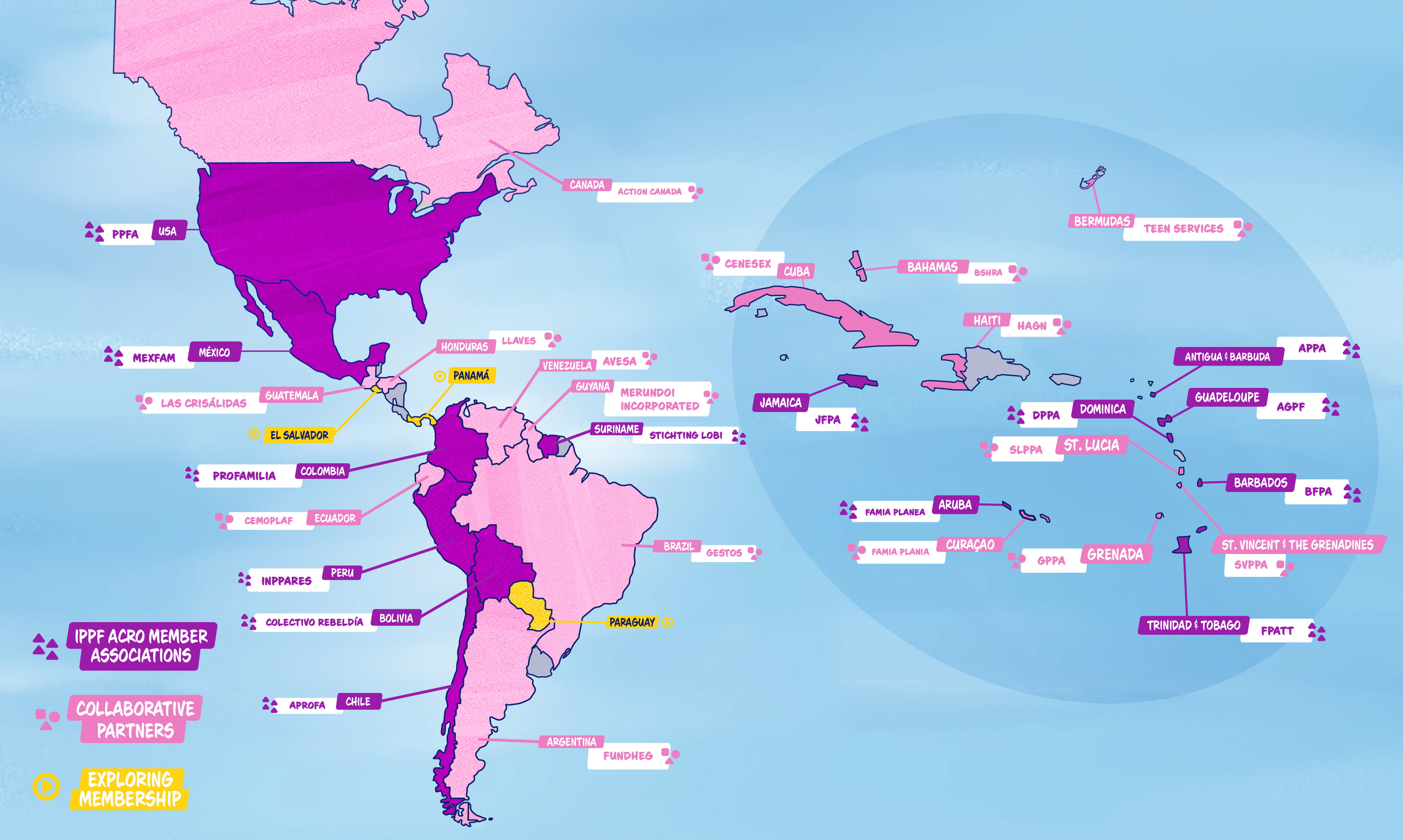
From October 15 to 17, Alvaro Bermejo, IPPF’s Director-General, and Eugenia López Uribe, Regional Director for the Americas and the Caribbean, visited Ecuador to witness the outstanding work of CEMOPLAF, IPPF’s Collaborative Partner in the country. The visit served to underscore the incredible impact CEMOPLAF has had in advancing sexual and reproductive health and rights (SRHR), particularly for marginalized and indigenous communities.     CEMOPLAF’s Pioneering Work with Indigenous Communities  Since the mid-1980s, CEMOPLAF has been a pioneer in bringing SRHR services to indigenous populations in Ecuador. The organization began by establishing programs in Chimborazo, Cotopaxi, and Imbabura—provinces with significant indigenous populations living in extreme poverty. These areas had long faced limited access to healthcare, but CEMOPLAF’s approach, combining sexual health education with culturally sensitive outreach, has been key to overcoming this challenge.  Through strategic partnerships with local leaders and community health workers, CEMOPLAF ensures that its programs are not only accepted but embraced. Their integrated approach has provided indigenous communities with access to contraception and reproductive health services, while also addressing agricultural needs—an essential component for these populations. This holistic model has proven successful, expanding over the years to additional provinces like Bolívar.  CEMOPLAF's IEC (Information, Education, and Communication) initiatives have further strengthened these efforts, with home visits and personalized counselling sessions playing a critical role in ensuring confidentiality and trust within communities.      Spotlight on Adolescent Health and Peer Education  During their visit, Alvaro and Eugenia also explored CEMOPLAF's work with adolescents. The organization has been a trailblazer in Ecuador, creating information booths where young people, including indigenous youth, can get tailored sexual health knowledge in a safe and respectful environment. By training youth leaders within these communities, CEMOPLAF has fostered peer education programs that have built trust and empowered young people to make informed decisions about their sexual health.  CEMOPLAF’s innovative approach to adolescent health is not just about providing information, but also about creating opportunities for youth to become advocates for SRHR in their own communities. This peer-to-peer model has been particularly effective in fostering open dialogue and reducing stigma around contraception and sexual health.   Visiting the Clinics and Programs: A Firsthand Experience  The three-day visit also included stops at several key CEMOPLAF clinics. To start, the team visited CEMOPLAF main office, where they had the privilege to meet with the staff and youth network.   Next, the team travelled to Latacunga, where 50% of the patients served are from indigenous backgrounds. This clinic is known for its integration of adolescent health programs. The leaders met with staff, youth participants, and community members to hear firsthand the challenges and successes of providing SRHR services in the region.  The final stop was Otavalo, a town where 80% of the patients are indigenous. The clinic’s comprehensive services, which include dental and pediatric care alongside SRHR services, have made it a vital part of the community. CEMOPLAF’s collaboration with local religious and municipal leaders has further strengthened its outreach to rural areas.      Looking Forward  This visit not only highlighted the essential role CEMOPLAF plays in Ecuador’s healthcare landscape, but also reaffirmed IPPF’s commitment to supporting and amplifying the efforts of its Membership. The inspiring work of CEMOPLAF demonstrates the power of combining healthcare with cultural understanding and community involvement to achieve lasting change.  As IPPF’s leaders return from their visit, the focus will be on continuing to build on the success of CEMOPLAF’s programs and ensuring that SRHR services remain accessible to those who need them most, especially in the face of poverty and social inequality.       

CEMOPLAF

CEMOPLAF was founded in 1974, as an institution dedicated to offering health services and products, with an emphasis on sexual and reproductive health, to people of medium and low economic resources and thus contribute to improving the quality of life of the population.

Cemoplaf is a network of 23 centres nationwide, with a broad portfolio of health services and a team of renowned professionals who have dedicated years of experience to provide the best care to our users.

Training bog. March 2022
14 March 2022

IPPF ACRO Humanitarian Training

The IPPF Americas and Caribbean Team (ACRO), together with representatives of Member Associations from Colombia, Trinidad and Tobago, Peru, and Ecuador met in Bogota in March 2022 for a training on implementation of the Minimum Initial Service Package on Sexual and Reproductive Health in humanitarian settings and on addressing gender-based violence led by the IPPF Humanitarian Team. Nearly 40 participants had the opportunity to update their knowledge and learn about new approaches to implementing humanitarian responses in Sexual and Reproductive Health, as well as share their experiences with the implementation of humanitarian responses in the diverse regional context of the Americas and the Caribbean, with particular emphasis on the Venezuelan migration crisis. During the training week, special relevance was given to the issue of coordinating efforts in humanitarian response with other allied actors as well as among the different IPPF Member Associations in the region because the Venezuelan migration crisis is a regional phenomenon. People from Venezuela, especially women, adolescents, and girls, are forced to leave their country due to the precarious economic situation, political instability, insecurity, lack of basic health care, and in other cases due to threats to their lives. They seek refuge in other countries in the region, with Colombia and Peru being the main destinations.  Migrants, who travel through entire countries to reach their final destination, face enormous difficulties and barriers in accessing health services in general and sexual and reproductive health services in particular, as well as discrimination and stigma. That through the humanitarian response they access programs and services provided by IPPF Member Associations, including STI and HIV diagnosis and treatment services, family planning, safe abortion care, and survivors of gender-based violence. IPPF Global and ACRO humanitarian team visit to key health care points for migrants from Venezuela. The humanitarian team had the opportunity to visit the points where services are being provided as part of the humanitarian response to Venezuelan migration in the cities of Cúcuta and Santander, which allowed them to learn more about the ongoing response in Colombia, a country that as of January 2021 has received more than 1,700,000 migrants from the neighboring country, according to data from Migration Colombia. IPPF's Humanitarian Program contributes to the consolidation of an innovative model for sexual and reproductive health and rights in crisis situations, connecting key elements of humanitarian action with long-term development. We are one of the world's largest providers of sexual and reproductive health services in emergencies. Sexual and reproductive health and rights in crisis The need for women's reproductive health care is not suspended in crises. A quarter of those affected by crises worldwide are women and girls between the ages of 15 and 49. One in five women is likely to be pregnant and one and five of all births will experience complications. In crisis settings, there is also an increased risk of child, early and forced marriages and unions, sexual violence, unsafe abortions, and unassisted childbirth. Transmission rates of STIs, including HIV, also increase in emergencies.   During crises, we work closely with our clinics on the ground to provide life-saving care to people in need. Our mobile health clinics bring comprehensive services to where they are needed by people affected by the crisis.  

CEMOPLAF y su trabajo transformativo sobre derechos sexuales y reproductivos en Ecuador
21 October 2024

A Transformative Approach for Sexual and Reproductive Health and Rights in Ecuador

From October 15 to 17, Alvaro Bermejo, IPPF’s Director-General, and Eugenia López Uribe, Regional Director for the Americas and the Caribbean, visited Ecuador to witness the outstanding work of CEMOPLAF, IPPF’s Collaborative Partner in the country. The visit served to underscore the incredible impact CEMOPLAF has had in advancing sexual and reproductive health and rights (SRHR), particularly for marginalized and indigenous communities.     CEMOPLAF’s Pioneering Work with Indigenous Communities  Since the mid-1980s, CEMOPLAF has been a pioneer in bringing SRHR services to indigenous populations in Ecuador. The organization began by establishing programs in Chimborazo, Cotopaxi, and Imbabura—provinces with significant indigenous populations living in extreme poverty. These areas had long faced limited access to healthcare, but CEMOPLAF’s approach, combining sexual health education with culturally sensitive outreach, has been key to overcoming this challenge.  Through strategic partnerships with local leaders and community health workers, CEMOPLAF ensures that its programs are not only accepted but embraced. Their integrated approach has provided indigenous communities with access to contraception and reproductive health services, while also addressing agricultural needs—an essential component for these populations. This holistic model has proven successful, expanding over the years to additional provinces like Bolívar.  CEMOPLAF's IEC (Information, Education, and Communication) initiatives have further strengthened these efforts, with home visits and personalized counselling sessions playing a critical role in ensuring confidentiality and trust within communities.      Spotlight on Adolescent Health and Peer Education  During their visit, Alvaro and Eugenia also explored CEMOPLAF's work with adolescents. The organization has been a trailblazer in Ecuador, creating information booths where young people, including indigenous youth, can get tailored sexual health knowledge in a safe and respectful environment. By training youth leaders within these communities, CEMOPLAF has fostered peer education programs that have built trust and empowered young people to make informed decisions about their sexual health.  CEMOPLAF’s innovative approach to adolescent health is not just about providing information, but also about creating opportunities for youth to become advocates for SRHR in their own communities. This peer-to-peer model has been particularly effective in fostering open dialogue and reducing stigma around contraception and sexual health.   Visiting the Clinics and Programs: A Firsthand Experience  The three-day visit also included stops at several key CEMOPLAF clinics. To start, the team visited CEMOPLAF main office, where they had the privilege to meet with the staff and youth network.   Next, the team travelled to Latacunga, where 50% of the patients served are from indigenous backgrounds. This clinic is known for its integration of adolescent health programs. The leaders met with staff, youth participants, and community members to hear firsthand the challenges and successes of providing SRHR services in the region.  The final stop was Otavalo, a town where 80% of the patients are indigenous. The clinic’s comprehensive services, which include dental and pediatric care alongside SRHR services, have made it a vital part of the community. CEMOPLAF’s collaboration with local religious and municipal leaders has further strengthened its outreach to rural areas.      Looking Forward  This visit not only highlighted the essential role CEMOPLAF plays in Ecuador’s healthcare landscape, but also reaffirmed IPPF’s commitment to supporting and amplifying the efforts of its Membership. The inspiring work of CEMOPLAF demonstrates the power of combining healthcare with cultural understanding and community involvement to achieve lasting change.  As IPPF’s leaders return from their visit, the focus will be on continuing to build on the success of CEMOPLAF’s programs and ensuring that SRHR services remain accessible to those who need them most, especially in the face of poverty and social inequality.       

CEMOPLAF

CEMOPLAF was founded in 1974, as an institution dedicated to offering health services and products, with an emphasis on sexual and reproductive health, to people of medium and low economic resources and thus contribute to improving the quality of life of the population.

Cemoplaf is a network of 23 centres nationwide, with a broad portfolio of health services and a team of renowned professionals who have dedicated years of experience to provide the best care to our users.

Training bog. March 2022
14 March 2022

IPPF ACRO Humanitarian Training

The IPPF Americas and Caribbean Team (ACRO), together with representatives of Member Associations from Colombia, Trinidad and Tobago, Peru, and Ecuador met in Bogota in March 2022 for a training on implementation of the Minimum Initial Service Package on Sexual and Reproductive Health in humanitarian settings and on addressing gender-based violence led by the IPPF Humanitarian Team. Nearly 40 participants had the opportunity to update their knowledge and learn about new approaches to implementing humanitarian responses in Sexual and Reproductive Health, as well as share their experiences with the implementation of humanitarian responses in the diverse regional context of the Americas and the Caribbean, with particular emphasis on the Venezuelan migration crisis. During the training week, special relevance was given to the issue of coordinating efforts in humanitarian response with other allied actors as well as among the different IPPF Member Associations in the region because the Venezuelan migration crisis is a regional phenomenon. People from Venezuela, especially women, adolescents, and girls, are forced to leave their country due to the precarious economic situation, political instability, insecurity, lack of basic health care, and in other cases due to threats to their lives. They seek refuge in other countries in the region, with Colombia and Peru being the main destinations.  Migrants, who travel through entire countries to reach their final destination, face enormous difficulties and barriers in accessing health services in general and sexual and reproductive health services in particular, as well as discrimination and stigma. That through the humanitarian response they access programs and services provided by IPPF Member Associations, including STI and HIV diagnosis and treatment services, family planning, safe abortion care, and survivors of gender-based violence. IPPF Global and ACRO humanitarian team visit to key health care points for migrants from Venezuela. The humanitarian team had the opportunity to visit the points where services are being provided as part of the humanitarian response to Venezuelan migration in the cities of Cúcuta and Santander, which allowed them to learn more about the ongoing response in Colombia, a country that as of January 2021 has received more than 1,700,000 migrants from the neighboring country, according to data from Migration Colombia. IPPF's Humanitarian Program contributes to the consolidation of an innovative model for sexual and reproductive health and rights in crisis situations, connecting key elements of humanitarian action with long-term development. We are one of the world's largest providers of sexual and reproductive health services in emergencies. Sexual and reproductive health and rights in crisis The need for women's reproductive health care is not suspended in crises. A quarter of those affected by crises worldwide are women and girls between the ages of 15 and 49. One in five women is likely to be pregnant and one and five of all births will experience complications. In crisis settings, there is also an increased risk of child, early and forced marriages and unions, sexual violence, unsafe abortions, and unassisted childbirth. Transmission rates of STIs, including HIV, also increase in emergencies.   During crises, we work closely with our clinics on the ground to provide life-saving care to people in need. Our mobile health clinics bring comprehensive services to where they are needed by people affected by the crisis.