




Women and children are disproportionately affected by natural disaster and war - pregnant women face dangerous deliveries and, in unprotected refugee settlements, rape, trafficking and gender-based violence increase. IPPF delivers essential lifesaving services for women, men and children in times of crisis.
Articles about Emergencies
11 June 2025
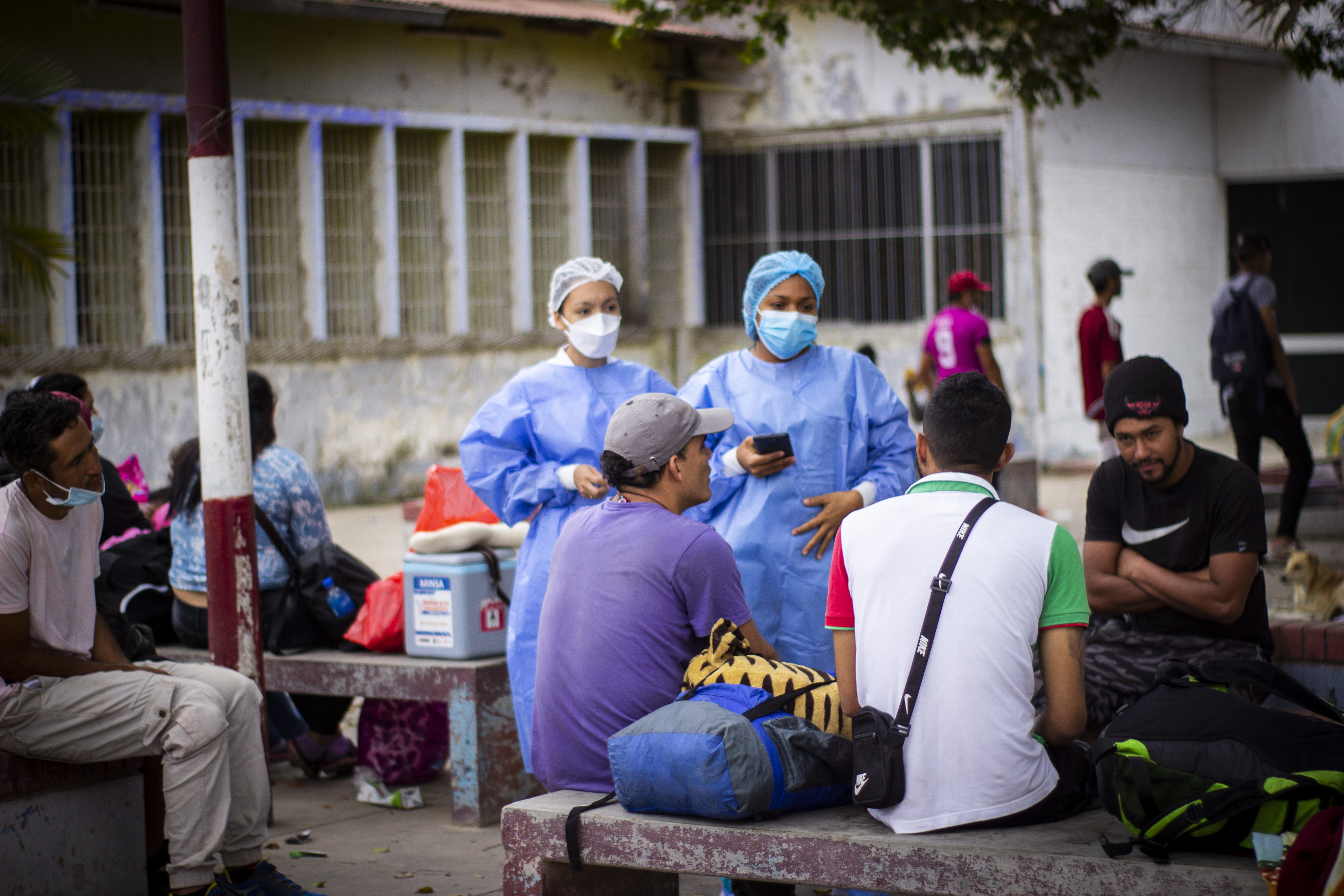
Safe passage: a priority in the Americas and the Caribbean
In 2022, member organisations in Mexico, Guatemala, Honduras, Colombia, Venezuela, Ecuador, Peru and Chile of IPPF Americas and the Caribbean (IPPF ACRO) developed a humanitarian corridor to provide access to essential sexual and reproductive health services to people on the move in five countries in the region. This initiative emerged as an urgent response to the growing migration crisis, exacerbated by the effects of climate change, the COVID-19 pandemic, and widespread violence. The corridor offered safer passage for those crossing borders in search of protection and more dignified living conditions. Three years later, the need to resume and strengthen this initiative is more urgent than ever. Although migration flows from some countries have decreased, as shown by the latest data from the United Nations and the quarterly update on mixed migration in Latin America and the Caribbean, the structural causes of displacement persist and have even worsened in 2025: economic crises, insecurity, state violence and extreme weather conditions continue to drive thousands of people to migrate, a situation that has been exacerbated by the United States' policy of expelling migrants. In recent years, we have not seen any improvements in conditions for migrants, but rather an increase in the risks, vulnerability and violence experienced by people on the move. A report published in March 2025 revealed that sexual violence against migrant women in the Darién Gap had risen alarmingly: it increased by 17 percentage points compared to 2023 and 31 percentage points compared to the period from July to September 2022. The responses of far-right governments, such as those of the United States and El Salvador, towards people on the move in the region are becoming increasingly alarming. In the United States, recent ICE raids at schools, hotels and workplaces, coupled with inhumane conditions in detention centres, are evidence of an openly punitive and exclusionary migration policy. Meanwhile, in El Salvador, prisons have begun to receive arbitrary deportations from the United States without due process, while the Bukele regime has imposed detention conditions that have raised alarms among international organisations due to their similarity to practices of enforced disappearance. In both cases, the international community is witnessing the systematic violation of the human rights of migrants, without effective accountability mechanisms or minimum guarantees of protection. In this context, and in the face of the progressive withdrawal of many humanitarian organisations due to funding constraints, IPPF member organisations in Latin America and the Caribbean (ACRO) remain committed to providing life-saving services. Through the migration corridor to be implemented by Mexfam, Crisálidas, Llaves, Profamilia, AVESA, CEMOPLAF, INPPARES, and APROFA, they seek to guarantee access to contraceptives, prenatal and postnatal care, care in cases of sexual violence, and other key services, with an emphasis on critical points such as the Darién and the southern border of Mexico. IPPF ACRO is and will remain firmly committed to providing care to all people, in all contexts. We know that sexual and reproductive health needs do not stop in crisis situations. People in transit deserve dignified, accessible, and quality health services. IPPF will be there: present, supportive, and active, guaranteeing rights where they are most needed.

13 October 2022
IMAP Statement on Monkeypox
Monkeypox was declared a Public Health Emergency of International Concern on 23 July 2022 by the World Health Organisation. This is the first time monkeypox cases have been reported concurrently in non-endemic and endemic countries in different geographical areas. The number of cases and countries where the infection has spread has continued to increase, reaching more than 95 countries. This statement addresses that access to vaccination, care and treatment, and related research must be equitable and inclusive for all groups of people, including those already most marginalized. Download in English, French and Spanish from the menu above.

14 March 2022
IPPF ACRO Humanitarian Training
The IPPF Americas and Caribbean Team (ACRO), together with representatives of Member Associations from Colombia, Trinidad and Tobago, Peru, and Ecuador met in Bogota in March 2022 for a training on implementation of the Minimum Initial Service Package on Sexual and Reproductive Health in humanitarian settings and on addressing gender-based violence led by the IPPF Humanitarian Team. Nearly 40 participants had the opportunity to update their knowledge and learn about new approaches to implementing humanitarian responses in Sexual and Reproductive Health, as well as share their experiences with the implementation of humanitarian responses in the diverse regional context of the Americas and the Caribbean, with particular emphasis on the Venezuelan migration crisis. During the training week, special relevance was given to the issue of coordinating efforts in humanitarian response with other allied actors as well as among the different IPPF Member Associations in the region because the Venezuelan migration crisis is a regional phenomenon. People from Venezuela, especially women, adolescents, and girls, are forced to leave their country due to the precarious economic situation, political instability, insecurity, lack of basic health care, and in other cases due to threats to their lives. They seek refuge in other countries in the region, with Colombia and Peru being the main destinations. Migrants, who travel through entire countries to reach their final destination, face enormous difficulties and barriers in accessing health services in general and sexual and reproductive health services in particular, as well as discrimination and stigma. That through the humanitarian response they access programs and services provided by IPPF Member Associations, including STI and HIV diagnosis and treatment services, family planning, safe abortion care, and survivors of gender-based violence. IPPF Global and ACRO humanitarian team visit to key health care points for migrants from Venezuela. The humanitarian team had the opportunity to visit the points where services are being provided as part of the humanitarian response to Venezuelan migration in the cities of Cúcuta and Santander, which allowed them to learn more about the ongoing response in Colombia, a country that as of January 2021 has received more than 1,700,000 migrants from the neighboring country, according to data from Migration Colombia. IPPF's Humanitarian Program contributes to the consolidation of an innovative model for sexual and reproductive health and rights in crisis situations, connecting key elements of humanitarian action with long-term development. We are one of the world's largest providers of sexual and reproductive health services in emergencies. Sexual and reproductive health and rights in crisis The need for women's reproductive health care is not suspended in crises. A quarter of those affected by crises worldwide are women and girls between the ages of 15 and 49. One in five women is likely to be pregnant and one and five of all births will experience complications. In crisis settings, there is also an increased risk of child, early and forced marriages and unions, sexual violence, unsafe abortions, and unassisted childbirth. Transmission rates of STIs, including HIV, also increase in emergencies. During crises, we work closely with our clinics on the ground to provide life-saving care to people in need. Our mobile health clinics bring comprehensive services to where they are needed by people affected by the crisis.

31 March 2017
SPRINT: Sexual and reproductive health in crisis and post-crisis situations
The SPRINT Initiative provides one of the most important aspects of humanitarian assistance that is often forgotten when disaster and conflicts strike: access to essential life-saving sexual and reproductive health services. We build capacity of humanitarian workers to deliver essential life-saving sexual and reproductive health services in crisis and post-crisis situations through the delivery of the Minimum Initial Service Package (SRH) for reproductive health in emergencies. Through funding from the Australian Government's Department of Foreign Affairs and Trade (DFAT) our SPRINT Initiative has brought sexual and reproductive health to the humanitarian agenda, increased capacity and responded to a number of humanitarian emergencies. Australia has funded the SPRINT initiative since 2007 and has supported reaching 1,138,175 people to date and continues to respond to ongoing emergencies. In each priority country, we work with an IPPF Member Association to coordinate and implement SPRINT activities. Through these partnerships, SPRINT helps strengthen the enabling environment, improve national capacity and provide lifesaving services during times of crisis. You can read more about the SPRINT Initiative and IPPF Humanitarian’s Programme here. Australian Government's Department of Foreign Affairs and Trade (DFAT) Australia's location in the Indo-Pacific provides us with a unique perspective on humanitarian action. Australia is committed to helping partner governments manage crisis response themselves. This is done through building the capacity of the national government and civil society to be able to respond to disaster. DFAT also works with experienced international partners to prepare for and respond to disasters, including other donors, United Nations agencies, the International Red Cross and Red Crescent Movement and non-government organisations.
11 June 2025
Safe passage: a priority in the Americas and the Caribbean
In 2022, member organisations in Mexico, Guatemala, Honduras, Colombia, Venezuela, Ecuador, Peru and Chile of IPPF Americas and the Caribbean (IPPF ACRO) developed a humanitarian corridor to provide access to essential sexual and reproductive health services to people on the move in five countries in the region. This initiative emerged as an urgent response to the growing migration crisis, exacerbated by the effects of climate change, the COVID-19 pandemic, and widespread violence. The corridor offered safer passage for those crossing borders in search of protection and more dignified living conditions. Three years later, the need to resume and strengthen this initiative is more urgent than ever. Although migration flows from some countries have decreased, as shown by the latest data from the United Nations and the quarterly update on mixed migration in Latin America and the Caribbean, the structural causes of displacement persist and have even worsened in 2025: economic crises, insecurity, state violence and extreme weather conditions continue to drive thousands of people to migrate, a situation that has been exacerbated by the United States' policy of expelling migrants. In recent years, we have not seen any improvements in conditions for migrants, but rather an increase in the risks, vulnerability and violence experienced by people on the move. A report published in March 2025 revealed that sexual violence against migrant women in the Darién Gap had risen alarmingly: it increased by 17 percentage points compared to 2023 and 31 percentage points compared to the period from July to September 2022. The responses of far-right governments, such as those of the United States and El Salvador, towards people on the move in the region are becoming increasingly alarming. In the United States, recent ICE raids at schools, hotels and workplaces, coupled with inhumane conditions in detention centres, are evidence of an openly punitive and exclusionary migration policy. Meanwhile, in El Salvador, prisons have begun to receive arbitrary deportations from the United States without due process, while the Bukele regime has imposed detention conditions that have raised alarms among international organisations due to their similarity to practices of enforced disappearance. In both cases, the international community is witnessing the systematic violation of the human rights of migrants, without effective accountability mechanisms or minimum guarantees of protection. In this context, and in the face of the progressive withdrawal of many humanitarian organisations due to funding constraints, IPPF member organisations in Latin America and the Caribbean (ACRO) remain committed to providing life-saving services. Through the migration corridor to be implemented by Mexfam, Crisálidas, Llaves, Profamilia, AVESA, CEMOPLAF, INPPARES, and APROFA, they seek to guarantee access to contraceptives, prenatal and postnatal care, care in cases of sexual violence, and other key services, with an emphasis on critical points such as the Darién and the southern border of Mexico. IPPF ACRO is and will remain firmly committed to providing care to all people, in all contexts. We know that sexual and reproductive health needs do not stop in crisis situations. People in transit deserve dignified, accessible, and quality health services. IPPF will be there: present, supportive, and active, guaranteeing rights where they are most needed.
13 October 2022
IMAP Statement on Monkeypox
Monkeypox was declared a Public Health Emergency of International Concern on 23 July 2022 by the World Health Organisation. This is the first time monkeypox cases have been reported concurrently in non-endemic and endemic countries in different geographical areas. The number of cases and countries where the infection has spread has continued to increase, reaching more than 95 countries. This statement addresses that access to vaccination, care and treatment, and related research must be equitable and inclusive for all groups of people, including those already most marginalized. Download in English, French and Spanish from the menu above.
14 March 2022
IPPF ACRO Humanitarian Training
The IPPF Americas and Caribbean Team (ACRO), together with representatives of Member Associations from Colombia, Trinidad and Tobago, Peru, and Ecuador met in Bogota in March 2022 for a training on implementation of the Minimum Initial Service Package on Sexual and Reproductive Health in humanitarian settings and on addressing gender-based violence led by the IPPF Humanitarian Team. Nearly 40 participants had the opportunity to update their knowledge and learn about new approaches to implementing humanitarian responses in Sexual and Reproductive Health, as well as share their experiences with the implementation of humanitarian responses in the diverse regional context of the Americas and the Caribbean, with particular emphasis on the Venezuelan migration crisis. During the training week, special relevance was given to the issue of coordinating efforts in humanitarian response with other allied actors as well as among the different IPPF Member Associations in the region because the Venezuelan migration crisis is a regional phenomenon. People from Venezuela, especially women, adolescents, and girls, are forced to leave their country due to the precarious economic situation, political instability, insecurity, lack of basic health care, and in other cases due to threats to their lives. They seek refuge in other countries in the region, with Colombia and Peru being the main destinations. Migrants, who travel through entire countries to reach their final destination, face enormous difficulties and barriers in accessing health services in general and sexual and reproductive health services in particular, as well as discrimination and stigma. That through the humanitarian response they access programs and services provided by IPPF Member Associations, including STI and HIV diagnosis and treatment services, family planning, safe abortion care, and survivors of gender-based violence. IPPF Global and ACRO humanitarian team visit to key health care points for migrants from Venezuela. The humanitarian team had the opportunity to visit the points where services are being provided as part of the humanitarian response to Venezuelan migration in the cities of Cúcuta and Santander, which allowed them to learn more about the ongoing response in Colombia, a country that as of January 2021 has received more than 1,700,000 migrants from the neighboring country, according to data from Migration Colombia. IPPF's Humanitarian Program contributes to the consolidation of an innovative model for sexual and reproductive health and rights in crisis situations, connecting key elements of humanitarian action with long-term development. We are one of the world's largest providers of sexual and reproductive health services in emergencies. Sexual and reproductive health and rights in crisis The need for women's reproductive health care is not suspended in crises. A quarter of those affected by crises worldwide are women and girls between the ages of 15 and 49. One in five women is likely to be pregnant and one and five of all births will experience complications. In crisis settings, there is also an increased risk of child, early and forced marriages and unions, sexual violence, unsafe abortions, and unassisted childbirth. Transmission rates of STIs, including HIV, also increase in emergencies. During crises, we work closely with our clinics on the ground to provide life-saving care to people in need. Our mobile health clinics bring comprehensive services to where they are needed by people affected by the crisis.
31 March 2017
SPRINT: Sexual and reproductive health in crisis and post-crisis situations
The SPRINT Initiative provides one of the most important aspects of humanitarian assistance that is often forgotten when disaster and conflicts strike: access to essential life-saving sexual and reproductive health services. We build capacity of humanitarian workers to deliver essential life-saving sexual and reproductive health services in crisis and post-crisis situations through the delivery of the Minimum Initial Service Package (SRH) for reproductive health in emergencies. Through funding from the Australian Government's Department of Foreign Affairs and Trade (DFAT) our SPRINT Initiative has brought sexual and reproductive health to the humanitarian agenda, increased capacity and responded to a number of humanitarian emergencies. Australia has funded the SPRINT initiative since 2007 and has supported reaching 1,138,175 people to date and continues to respond to ongoing emergencies. In each priority country, we work with an IPPF Member Association to coordinate and implement SPRINT activities. Through these partnerships, SPRINT helps strengthen the enabling environment, improve national capacity and provide lifesaving services during times of crisis. You can read more about the SPRINT Initiative and IPPF Humanitarian’s Programme here. Australian Government's Department of Foreign Affairs and Trade (DFAT) Australia's location in the Indo-Pacific provides us with a unique perspective on humanitarian action. Australia is committed to helping partner governments manage crisis response themselves. This is done through building the capacity of the national government and civil society to be able to respond to disaster. DFAT also works with experienced international partners to prepare for and respond to disasters, including other donors, United Nations agencies, the International Red Cross and Red Crescent Movement and non-government organisations.