



Spotlight
A selection of news from across the Federation

Americas & the Caribbean
News item
Profamilia Colombia celebrates the anniversary of abortion historic ruling
Together with feminist activists, collectives and organizations, Profamilia Colombia celebrates 4 years of the historic ruling that extended access to safe and legal abortion.
Most Popular This Week
Americas & the Caribbean

News item
|
Profamilia Colombia celebrates the anniversary of abortion historic ruling
Haz click aquí para leer esta noticia en español.
Americas & the Caribbean

News item
|
Yemaya, the new menstrual shop in Guadeloupe
Haz click aquí para leer esta historia en español.
Haiti

News item
|
Haiti Midwives Association received the Member Association Staff Courage Award
In the spirit of collective strength and shared values, during the IPPF 2025 General Assembly, the IPPF Courage Awards were presented, recognizing Member Associations, stra
Americas & the Caribbean

News item
|
Our Statement on the Reinstatement of the Global Gag Rule
On 24 January 2025, President Trump signed
Americas & the Caribbean

Argentina

News item
|
Confronting Hate Speech: A Call for Democratic and Inclusive Narratives
To read the original article in Spanish, in FunDheg's website, click here.
Americas & the Caribbean

News item
|
Empowering Young Digital Advocates to Transform Narratives
The IPPF ACRO Youth Network has successfully concluded t
Americas & the Caribbean

News item
|
What Kind of Man Are You?
A question: #WhatKindOfManAreYou? Violence is not strength, silence is not a solution.
Filter our news by:

news item
| 24 June 2024
Webinar | Adolescent Informal Unions in the Caribbean and Latin America: Challenges 30 Years After the Belem Do Para Convention
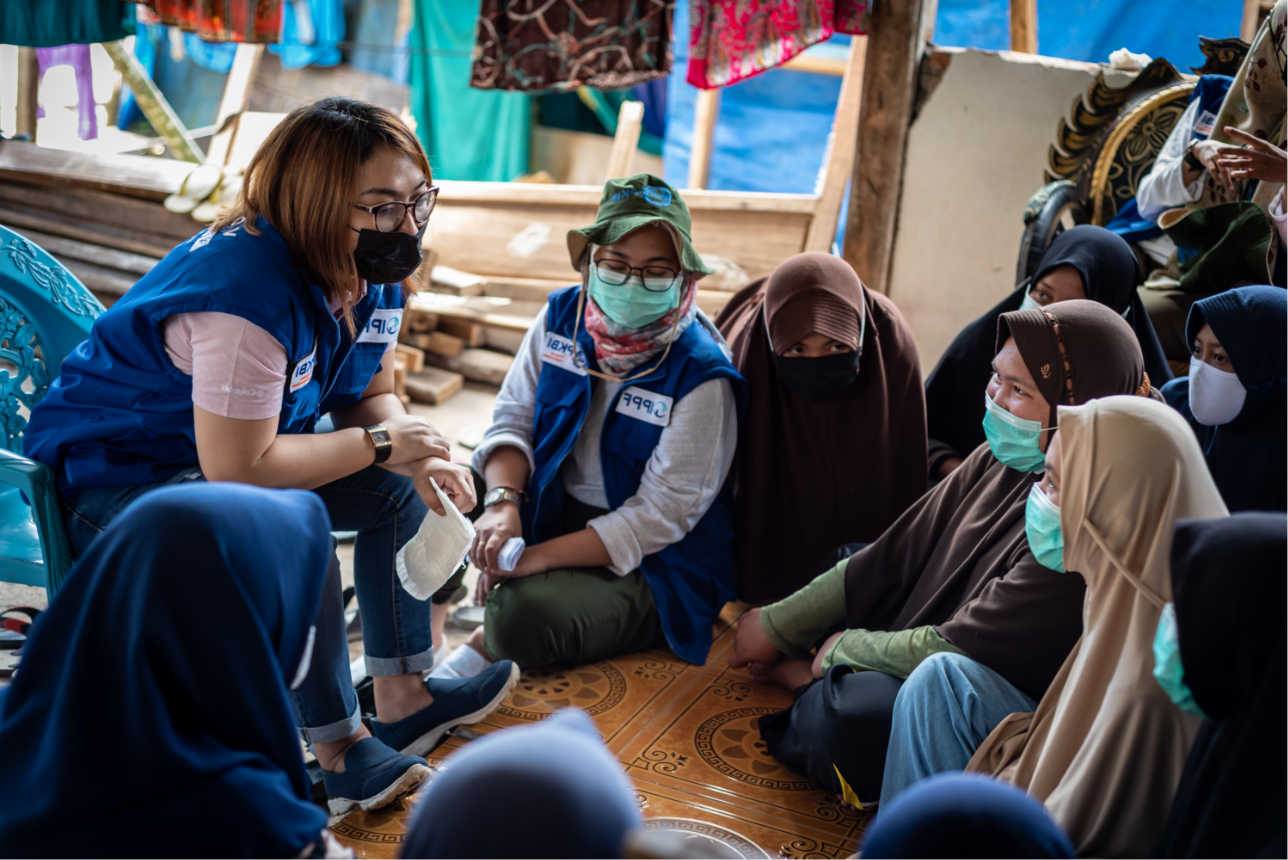
Haz click aquí para leer esta noticia en español. In Latin America and the Caribbean (LAC), one in five women marry or enter a union before the age of 18. This is the only region in the world where child marriage rates have hardly decreased over the past 25 years, and where informal unions without official registration are far more common than formal marriages. Given the relevance of addressing Child, Early, and Forced Marriages and Unions (CEFMU) in our region, IPPF ACRO has launched a series of webinars, “Informal Unions in the Caribbean and Latin America”, to strengthen cross regional dialogue to promote comprehensive initiatives that put adolescents’ rights and autonomy at the centre. The first of these sessions commemorated the 30th anniversary of the Inter-American Convention on the Prevention, Punishment, and Eradication of Violence against Women, known as the Convention of Belém do Pará by analysing the situation of adolescent’s informal unions in the region and their link to discrimination and gender-based violence. As a keynote speaker, Dr. Gabrielle Hosein, researcher and academic from the Institute for Gender and Development Studies at the University of the West Indies, shared the research she conducted from 2021 to 2023 on Child Marriage and Early Unions in the Caribbean commissioned by UNICEF under the Spotlight Initiatives Caribbean Regional Programme. A gender-based violence issue The Belém do Pará Convention is the main regional instrument to address violence against women as a violation of their human rights. Thirty years after the adoption, child marriages have been recognised as part of harmful practices, being both a cause and a consequence of gender-based violence against girls and adolescents. “It's still a challenge for all of us because despite all the commitments signed at the UN level, Child, Early, and Forced Marriages and Unions are still a barrier for many girls and young women, and it really has impeded their rights to be fulfilled,” Alessandra Nilo, IPPF ACRO’s External Relations Director, reflected when opening the session. Although these political commitments imply numerous intersectoral interventions – ensuring girls' access to education, sexual and reproductive health, and rights, ending gender stereotypes and gender-based violence, and ensuring equality before the law – government responses in the region have been limited mainly in raising the age of marriage to 18 years and eliminating exceptions. This response, although an important step, is insufficiently short in addressing the needs and situations that girls, adolescents and young women go through. Zooming in on the Caribbean context There is growing regional evidence about underlying drivers, manifestations and impacts of CEFMU on the girls who marry, as well as in their families and communities. However, there remains a large information gap on the situation in the Caribbean. At the end of 2023, Dr. Gabrielle Hosein published a research brief that summarises the information available on CEFMU in the Caribbean and complements it with findings of research commissioned by UNICEF in the framework of the Spotlight Initiative Caribbean Regional Program, conducted in six Caribbean countries. “It's really important in our region that we always keep the question of adolescent sexual agency in mind and adolescent agency overall, and that we don't simply think about adolescent girls as victims,” Dr. Hosein shared. “In our region, early unions, which are primarily informal, tend to be entered into by girls themselves. That is, girls are not being forced or married off into unions as they might be in other places or sold into unions in the same rates as in other places.” “None the less, girls are in disadvantage context, characterized by vulnerability, and they may enter unions for transactional exchange, for protection, to escape from family violence to secure support for their education and to experience intimacy.” In this research, Dr. Hosein and colleagues found clear intersectionalities that emerge from the data and point to the need to focus on the vulnerability these populations have been put in. Any approach needs to recognize these structural factors. Make sure you sign up to our newsletter to get information on the next webinars! Sign up here.
news_item
| 24 June 2024
Webinar | Adolescent Informal Unions in the Caribbean and Latin America: Challenges 30 Years After the Belem Do Para Convention
Haz click aquí para leer esta noticia en español. In Latin America and the Caribbean (LAC), one in five women marry or enter a union before the age of 18. This is the only region in the world where child marriage rates have hardly decreased over the past 25 years, and where informal unions without official registration are far more common than formal marriages. Given the relevance of addressing Child, Early, and Forced Marriages and Unions (CEFMU) in our region, IPPF ACRO has launched a series of webinars, “Informal Unions in the Caribbean and Latin America”, to strengthen cross regional dialogue to promote comprehensive initiatives that put adolescents’ rights and autonomy at the centre. The first of these sessions commemorated the 30th anniversary of the Inter-American Convention on the Prevention, Punishment, and Eradication of Violence against Women, known as the Convention of Belém do Pará by analysing the situation of adolescent’s informal unions in the region and their link to discrimination and gender-based violence. As a keynote speaker, Dr. Gabrielle Hosein, researcher and academic from the Institute for Gender and Development Studies at the University of the West Indies, shared the research she conducted from 2021 to 2023 on Child Marriage and Early Unions in the Caribbean commissioned by UNICEF under the Spotlight Initiatives Caribbean Regional Programme. A gender-based violence issue The Belém do Pará Convention is the main regional instrument to address violence against women as a violation of their human rights. Thirty years after the adoption, child marriages have been recognised as part of harmful practices, being both a cause and a consequence of gender-based violence against girls and adolescents. “It's still a challenge for all of us because despite all the commitments signed at the UN level, Child, Early, and Forced Marriages and Unions are still a barrier for many girls and young women, and it really has impeded their rights to be fulfilled,” Alessandra Nilo, IPPF ACRO’s External Relations Director, reflected when opening the session. Although these political commitments imply numerous intersectoral interventions – ensuring girls' access to education, sexual and reproductive health, and rights, ending gender stereotypes and gender-based violence, and ensuring equality before the law – government responses in the region have been limited mainly in raising the age of marriage to 18 years and eliminating exceptions. This response, although an important step, is insufficiently short in addressing the needs and situations that girls, adolescents and young women go through. Zooming in on the Caribbean context There is growing regional evidence about underlying drivers, manifestations and impacts of CEFMU on the girls who marry, as well as in their families and communities. However, there remains a large information gap on the situation in the Caribbean. At the end of 2023, Dr. Gabrielle Hosein published a research brief that summarises the information available on CEFMU in the Caribbean and complements it with findings of research commissioned by UNICEF in the framework of the Spotlight Initiative Caribbean Regional Program, conducted in six Caribbean countries. “It's really important in our region that we always keep the question of adolescent sexual agency in mind and adolescent agency overall, and that we don't simply think about adolescent girls as victims,” Dr. Hosein shared. “In our region, early unions, which are primarily informal, tend to be entered into by girls themselves. That is, girls are not being forced or married off into unions as they might be in other places or sold into unions in the same rates as in other places.” “None the less, girls are in disadvantage context, characterized by vulnerability, and they may enter unions for transactional exchange, for protection, to escape from family violence to secure support for their education and to experience intimacy.” In this research, Dr. Hosein and colleagues found clear intersectionalities that emerge from the data and point to the need to focus on the vulnerability these populations have been put in. Any approach needs to recognize these structural factors. Make sure you sign up to our newsletter to get information on the next webinars! Sign up here.

news item
| 16 November 2022
IPPF celebrates the launch of the first report of the High-Level Commission on the Nairobi Summit
The International Planned Parenthood Federation (IPPF) celebrates the launch of the first report of the High-Level Commission on the Nairobi Summit (HLC). The commission is a full independent advisory board comprised of 26 members from different sectors, tasked with monitoring progress on The International Conference on Population and Development (ICPD) Programme of Action. Whilst we acknowledge that some progress has been made, IPPF regrets to read that no region is on track to fully implement and deliver on their ICPD commitments. Monitoring the implementation of life-saving sexual and reproductive health and gender-responsive services is crucial to ensure accountability and human rights for all. This is why IPPF launched its ICPD+25 Nairobi Summit report - A roadmap to fulfilling the promise, and our ICPD commitments tracker database, which analyses the commitments made by governments of 137 countries who participated in the Nairobi summit in 2019 to commemorate the 25th anniversary of the ICPD Programme of Action. IPPF fully supports the sexual and reproductive justice frame and is committed to following the recommendations of the call to action of the report: 1) making justice the end goal, (2) putting rights and development at the core of action, (3) thinking differently and pursuing innovations in health-care service delivery, (4) reaching further and prioritizing marginalized groups facing the worst disparities in terms of sexual and reproductive justice, (5) tracking and increasing funding for SRHR, and (6) creating new narratives around sexual and reproductive justice that are accurate and powerful enough to counter ongoing oppositional voices. Anamaria Bejar, Global Director of Advocacy said: “We are facing a critical crossroad – the report makes it clear that governments need to act now and fast. Sexual and reproductive health and rights can no longer hang in the balance; they are non-negotiable. The pandemic has shown us just how fragile access to sexual and reproductive health services is, and how the opposition has used the cover of covid to attack hard-won rights including access to safe abortion care. IPPF Member Associations will continue to deliver on our commitments to ensuring that everyone, no matter where they are or who they are, access high-quality healthcare and realize their full rights." Dr Alvaro Bermejo, IPPF’s Director-General added: “The report is a sobering reminder that we are far from reaching the commitments made at ICPD. Cairo was a historic moment for sexual and reproductive health and rights, but over 25 years later, we are still falling short of its vision, and have made little progress since Nairobi. Women, girls, and people from marginalized communities cannot wait any longer, nor should they. Governments need to do more; this means more financial investment, more political will, and a sense of urgency to get us back on track.”
news_item
| 16 November 2022
IPPF celebrates the launch of the first report of the High-Level Commission on the Nairobi Summit
The International Planned Parenthood Federation (IPPF) celebrates the launch of the first report of the High-Level Commission on the Nairobi Summit (HLC). The commission is a full independent advisory board comprised of 26 members from different sectors, tasked with monitoring progress on The International Conference on Population and Development (ICPD) Programme of Action. Whilst we acknowledge that some progress has been made, IPPF regrets to read that no region is on track to fully implement and deliver on their ICPD commitments. Monitoring the implementation of life-saving sexual and reproductive health and gender-responsive services is crucial to ensure accountability and human rights for all. This is why IPPF launched its ICPD+25 Nairobi Summit report - A roadmap to fulfilling the promise, and our ICPD commitments tracker database, which analyses the commitments made by governments of 137 countries who participated in the Nairobi summit in 2019 to commemorate the 25th anniversary of the ICPD Programme of Action. IPPF fully supports the sexual and reproductive justice frame and is committed to following the recommendations of the call to action of the report: 1) making justice the end goal, (2) putting rights and development at the core of action, (3) thinking differently and pursuing innovations in health-care service delivery, (4) reaching further and prioritizing marginalized groups facing the worst disparities in terms of sexual and reproductive justice, (5) tracking and increasing funding for SRHR, and (6) creating new narratives around sexual and reproductive justice that are accurate and powerful enough to counter ongoing oppositional voices. Anamaria Bejar, Global Director of Advocacy said: “We are facing a critical crossroad – the report makes it clear that governments need to act now and fast. Sexual and reproductive health and rights can no longer hang in the balance; they are non-negotiable. The pandemic has shown us just how fragile access to sexual and reproductive health services is, and how the opposition has used the cover of covid to attack hard-won rights including access to safe abortion care. IPPF Member Associations will continue to deliver on our commitments to ensuring that everyone, no matter where they are or who they are, access high-quality healthcare and realize their full rights." Dr Alvaro Bermejo, IPPF’s Director-General added: “The report is a sobering reminder that we are far from reaching the commitments made at ICPD. Cairo was a historic moment for sexual and reproductive health and rights, but over 25 years later, we are still falling short of its vision, and have made little progress since Nairobi. Women, girls, and people from marginalized communities cannot wait any longer, nor should they. Governments need to do more; this means more financial investment, more political will, and a sense of urgency to get us back on track.”
news item
| 24 June 2024
Webinar | Adolescent Informal Unions in the Caribbean and Latin America: Challenges 30 Years After the Belem Do Para Convention
Haz click aquí para leer esta noticia en español. In Latin America and the Caribbean (LAC), one in five women marry or enter a union before the age of 18. This is the only region in the world where child marriage rates have hardly decreased over the past 25 years, and where informal unions without official registration are far more common than formal marriages. Given the relevance of addressing Child, Early, and Forced Marriages and Unions (CEFMU) in our region, IPPF ACRO has launched a series of webinars, “Informal Unions in the Caribbean and Latin America”, to strengthen cross regional dialogue to promote comprehensive initiatives that put adolescents’ rights and autonomy at the centre. The first of these sessions commemorated the 30th anniversary of the Inter-American Convention on the Prevention, Punishment, and Eradication of Violence against Women, known as the Convention of Belém do Pará by analysing the situation of adolescent’s informal unions in the region and their link to discrimination and gender-based violence. As a keynote speaker, Dr. Gabrielle Hosein, researcher and academic from the Institute for Gender and Development Studies at the University of the West Indies, shared the research she conducted from 2021 to 2023 on Child Marriage and Early Unions in the Caribbean commissioned by UNICEF under the Spotlight Initiatives Caribbean Regional Programme. A gender-based violence issue The Belém do Pará Convention is the main regional instrument to address violence against women as a violation of their human rights. Thirty years after the adoption, child marriages have been recognised as part of harmful practices, being both a cause and a consequence of gender-based violence against girls and adolescents. “It's still a challenge for all of us because despite all the commitments signed at the UN level, Child, Early, and Forced Marriages and Unions are still a barrier for many girls and young women, and it really has impeded their rights to be fulfilled,” Alessandra Nilo, IPPF ACRO’s External Relations Director, reflected when opening the session. Although these political commitments imply numerous intersectoral interventions – ensuring girls' access to education, sexual and reproductive health, and rights, ending gender stereotypes and gender-based violence, and ensuring equality before the law – government responses in the region have been limited mainly in raising the age of marriage to 18 years and eliminating exceptions. This response, although an important step, is insufficiently short in addressing the needs and situations that girls, adolescents and young women go through. Zooming in on the Caribbean context There is growing regional evidence about underlying drivers, manifestations and impacts of CEFMU on the girls who marry, as well as in their families and communities. However, there remains a large information gap on the situation in the Caribbean. At the end of 2023, Dr. Gabrielle Hosein published a research brief that summarises the information available on CEFMU in the Caribbean and complements it with findings of research commissioned by UNICEF in the framework of the Spotlight Initiative Caribbean Regional Program, conducted in six Caribbean countries. “It's really important in our region that we always keep the question of adolescent sexual agency in mind and adolescent agency overall, and that we don't simply think about adolescent girls as victims,” Dr. Hosein shared. “In our region, early unions, which are primarily informal, tend to be entered into by girls themselves. That is, girls are not being forced or married off into unions as they might be in other places or sold into unions in the same rates as in other places.” “None the less, girls are in disadvantage context, characterized by vulnerability, and they may enter unions for transactional exchange, for protection, to escape from family violence to secure support for their education and to experience intimacy.” In this research, Dr. Hosein and colleagues found clear intersectionalities that emerge from the data and point to the need to focus on the vulnerability these populations have been put in. Any approach needs to recognize these structural factors. Make sure you sign up to our newsletter to get information on the next webinars! Sign up here.
news_item
| 24 June 2024
Webinar | Adolescent Informal Unions in the Caribbean and Latin America: Challenges 30 Years After the Belem Do Para Convention
Haz click aquí para leer esta noticia en español. In Latin America and the Caribbean (LAC), one in five women marry or enter a union before the age of 18. This is the only region in the world where child marriage rates have hardly decreased over the past 25 years, and where informal unions without official registration are far more common than formal marriages. Given the relevance of addressing Child, Early, and Forced Marriages and Unions (CEFMU) in our region, IPPF ACRO has launched a series of webinars, “Informal Unions in the Caribbean and Latin America”, to strengthen cross regional dialogue to promote comprehensive initiatives that put adolescents’ rights and autonomy at the centre. The first of these sessions commemorated the 30th anniversary of the Inter-American Convention on the Prevention, Punishment, and Eradication of Violence against Women, known as the Convention of Belém do Pará by analysing the situation of adolescent’s informal unions in the region and their link to discrimination and gender-based violence. As a keynote speaker, Dr. Gabrielle Hosein, researcher and academic from the Institute for Gender and Development Studies at the University of the West Indies, shared the research she conducted from 2021 to 2023 on Child Marriage and Early Unions in the Caribbean commissioned by UNICEF under the Spotlight Initiatives Caribbean Regional Programme. A gender-based violence issue The Belém do Pará Convention is the main regional instrument to address violence against women as a violation of their human rights. Thirty years after the adoption, child marriages have been recognised as part of harmful practices, being both a cause and a consequence of gender-based violence against girls and adolescents. “It's still a challenge for all of us because despite all the commitments signed at the UN level, Child, Early, and Forced Marriages and Unions are still a barrier for many girls and young women, and it really has impeded their rights to be fulfilled,” Alessandra Nilo, IPPF ACRO’s External Relations Director, reflected when opening the session. Although these political commitments imply numerous intersectoral interventions – ensuring girls' access to education, sexual and reproductive health, and rights, ending gender stereotypes and gender-based violence, and ensuring equality before the law – government responses in the region have been limited mainly in raising the age of marriage to 18 years and eliminating exceptions. This response, although an important step, is insufficiently short in addressing the needs and situations that girls, adolescents and young women go through. Zooming in on the Caribbean context There is growing regional evidence about underlying drivers, manifestations and impacts of CEFMU on the girls who marry, as well as in their families and communities. However, there remains a large information gap on the situation in the Caribbean. At the end of 2023, Dr. Gabrielle Hosein published a research brief that summarises the information available on CEFMU in the Caribbean and complements it with findings of research commissioned by UNICEF in the framework of the Spotlight Initiative Caribbean Regional Program, conducted in six Caribbean countries. “It's really important in our region that we always keep the question of adolescent sexual agency in mind and adolescent agency overall, and that we don't simply think about adolescent girls as victims,” Dr. Hosein shared. “In our region, early unions, which are primarily informal, tend to be entered into by girls themselves. That is, girls are not being forced or married off into unions as they might be in other places or sold into unions in the same rates as in other places.” “None the less, girls are in disadvantage context, characterized by vulnerability, and they may enter unions for transactional exchange, for protection, to escape from family violence to secure support for their education and to experience intimacy.” In this research, Dr. Hosein and colleagues found clear intersectionalities that emerge from the data and point to the need to focus on the vulnerability these populations have been put in. Any approach needs to recognize these structural factors. Make sure you sign up to our newsletter to get information on the next webinars! Sign up here.
news item
| 16 November 2022
IPPF celebrates the launch of the first report of the High-Level Commission on the Nairobi Summit
The International Planned Parenthood Federation (IPPF) celebrates the launch of the first report of the High-Level Commission on the Nairobi Summit (HLC). The commission is a full independent advisory board comprised of 26 members from different sectors, tasked with monitoring progress on The International Conference on Population and Development (ICPD) Programme of Action. Whilst we acknowledge that some progress has been made, IPPF regrets to read that no region is on track to fully implement and deliver on their ICPD commitments. Monitoring the implementation of life-saving sexual and reproductive health and gender-responsive services is crucial to ensure accountability and human rights for all. This is why IPPF launched its ICPD+25 Nairobi Summit report - A roadmap to fulfilling the promise, and our ICPD commitments tracker database, which analyses the commitments made by governments of 137 countries who participated in the Nairobi summit in 2019 to commemorate the 25th anniversary of the ICPD Programme of Action. IPPF fully supports the sexual and reproductive justice frame and is committed to following the recommendations of the call to action of the report: 1) making justice the end goal, (2) putting rights and development at the core of action, (3) thinking differently and pursuing innovations in health-care service delivery, (4) reaching further and prioritizing marginalized groups facing the worst disparities in terms of sexual and reproductive justice, (5) tracking and increasing funding for SRHR, and (6) creating new narratives around sexual and reproductive justice that are accurate and powerful enough to counter ongoing oppositional voices. Anamaria Bejar, Global Director of Advocacy said: “We are facing a critical crossroad – the report makes it clear that governments need to act now and fast. Sexual and reproductive health and rights can no longer hang in the balance; they are non-negotiable. The pandemic has shown us just how fragile access to sexual and reproductive health services is, and how the opposition has used the cover of covid to attack hard-won rights including access to safe abortion care. IPPF Member Associations will continue to deliver on our commitments to ensuring that everyone, no matter where they are or who they are, access high-quality healthcare and realize their full rights." Dr Alvaro Bermejo, IPPF’s Director-General added: “The report is a sobering reminder that we are far from reaching the commitments made at ICPD. Cairo was a historic moment for sexual and reproductive health and rights, but over 25 years later, we are still falling short of its vision, and have made little progress since Nairobi. Women, girls, and people from marginalized communities cannot wait any longer, nor should they. Governments need to do more; this means more financial investment, more political will, and a sense of urgency to get us back on track.”
news_item
| 16 November 2022
IPPF celebrates the launch of the first report of the High-Level Commission on the Nairobi Summit
The International Planned Parenthood Federation (IPPF) celebrates the launch of the first report of the High-Level Commission on the Nairobi Summit (HLC). The commission is a full independent advisory board comprised of 26 members from different sectors, tasked with monitoring progress on The International Conference on Population and Development (ICPD) Programme of Action. Whilst we acknowledge that some progress has been made, IPPF regrets to read that no region is on track to fully implement and deliver on their ICPD commitments. Monitoring the implementation of life-saving sexual and reproductive health and gender-responsive services is crucial to ensure accountability and human rights for all. This is why IPPF launched its ICPD+25 Nairobi Summit report - A roadmap to fulfilling the promise, and our ICPD commitments tracker database, which analyses the commitments made by governments of 137 countries who participated in the Nairobi summit in 2019 to commemorate the 25th anniversary of the ICPD Programme of Action. IPPF fully supports the sexual and reproductive justice frame and is committed to following the recommendations of the call to action of the report: 1) making justice the end goal, (2) putting rights and development at the core of action, (3) thinking differently and pursuing innovations in health-care service delivery, (4) reaching further and prioritizing marginalized groups facing the worst disparities in terms of sexual and reproductive justice, (5) tracking and increasing funding for SRHR, and (6) creating new narratives around sexual and reproductive justice that are accurate and powerful enough to counter ongoing oppositional voices. Anamaria Bejar, Global Director of Advocacy said: “We are facing a critical crossroad – the report makes it clear that governments need to act now and fast. Sexual and reproductive health and rights can no longer hang in the balance; they are non-negotiable. The pandemic has shown us just how fragile access to sexual and reproductive health services is, and how the opposition has used the cover of covid to attack hard-won rights including access to safe abortion care. IPPF Member Associations will continue to deliver on our commitments to ensuring that everyone, no matter where they are or who they are, access high-quality healthcare and realize their full rights." Dr Alvaro Bermejo, IPPF’s Director-General added: “The report is a sobering reminder that we are far from reaching the commitments made at ICPD. Cairo was a historic moment for sexual and reproductive health and rights, but over 25 years later, we are still falling short of its vision, and have made little progress since Nairobi. Women, girls, and people from marginalized communities cannot wait any longer, nor should they. Governments need to do more; this means more financial investment, more political will, and a sense of urgency to get us back on track.”
