



Para leer esta nota en español, haz click aquí.
The outcome document of the Fourth International Conference on Financing for Development (FfD4), the “Compromiso de Sevilla”, has been recently endorsed by U.N. Member States, featuring over 130 actions to support the renewed global financing framework.
Amidst a deeply polarized geopolitical environment, this political agreement represents a relatively favorable outcome in advancing gender equality and the empowerment of all women and girls in financing for development. The adoption of this document signals a critical political recommitment to the Addis Ababa Action Agenda (AAAA) and the 2030 Agenda, and provides a renewed platform to address today’s complex and intersecting global challenges.
Throughout the process, IPPF has actively engaged with Member States and partners to support the integration of strong commitments to gender equality, human rights, and the specific needs of all women, adolescents, girls, in all their diversity, and marginalized communities. We commend the many delegations and civil society actors who worked tirelessly to defend and strengthen these priorities within the negotiations.
However, we regret that the outcome document fails to reflect critical areas, undermining the text’s transformative potential. While we recognize the progress made in several key areas, including commitments to eradicate gender-based violence, tackle the feminization of poverty, recognize the economic value of unpaid care work, and ensure women’s economic participation and leadership at every level, critical gaps remain, undermining the text’s transformative potential. Notably, the document omits any reference to sexual and reproductive health and rights, which is a prerequisite for achieving sustainable and inclusive development.
We are also deeply concerned that the outcome document omits an intersectional and decolonized approach and overlooks the specific realities of marginalized communities. Equally troubling is its failure to commit to gender-disaggregated data, rigorous gender indicators, gender-lens investing, and gender bonds—all essential tools for closing the persistent financing gap for gender equality. .
In the current geopolitical moment, where countries are increasingly scaling back their Official Development Assistance (ODA) and financing of gender equality and SRHR, we regret that the text makes no explicit commitment to increase international public finance for gender equality, including ODA, nor pledge funding for civil society, including feminist movements, whose leadership is essential for change, accountability and innovation.
Finally, the text neither affirms women’s participation and leadership in the economy nor pledges to remove the structural barriers that still impede this progress.
With just five years left to achieve the Sustainable Development Goals, and as the world confronts a world of devastating crises, wars, conflicts, inequality and funding cuts, the Compromiso de Sevilla must now be translated into concrete, measurable action and lead to accountability for governments for their commitments in this outcome document.
However, in the face of this urgent call to action, we regret the decision of the United States to withdraw from the process.
More than ever before, the success of the Compromiso de Sevilla will be defined not by words, but by bold action from all, including governments, international institutions, private-sector partners and donors. We urge them to honor their commitments and stand firmly with the feminist movement.
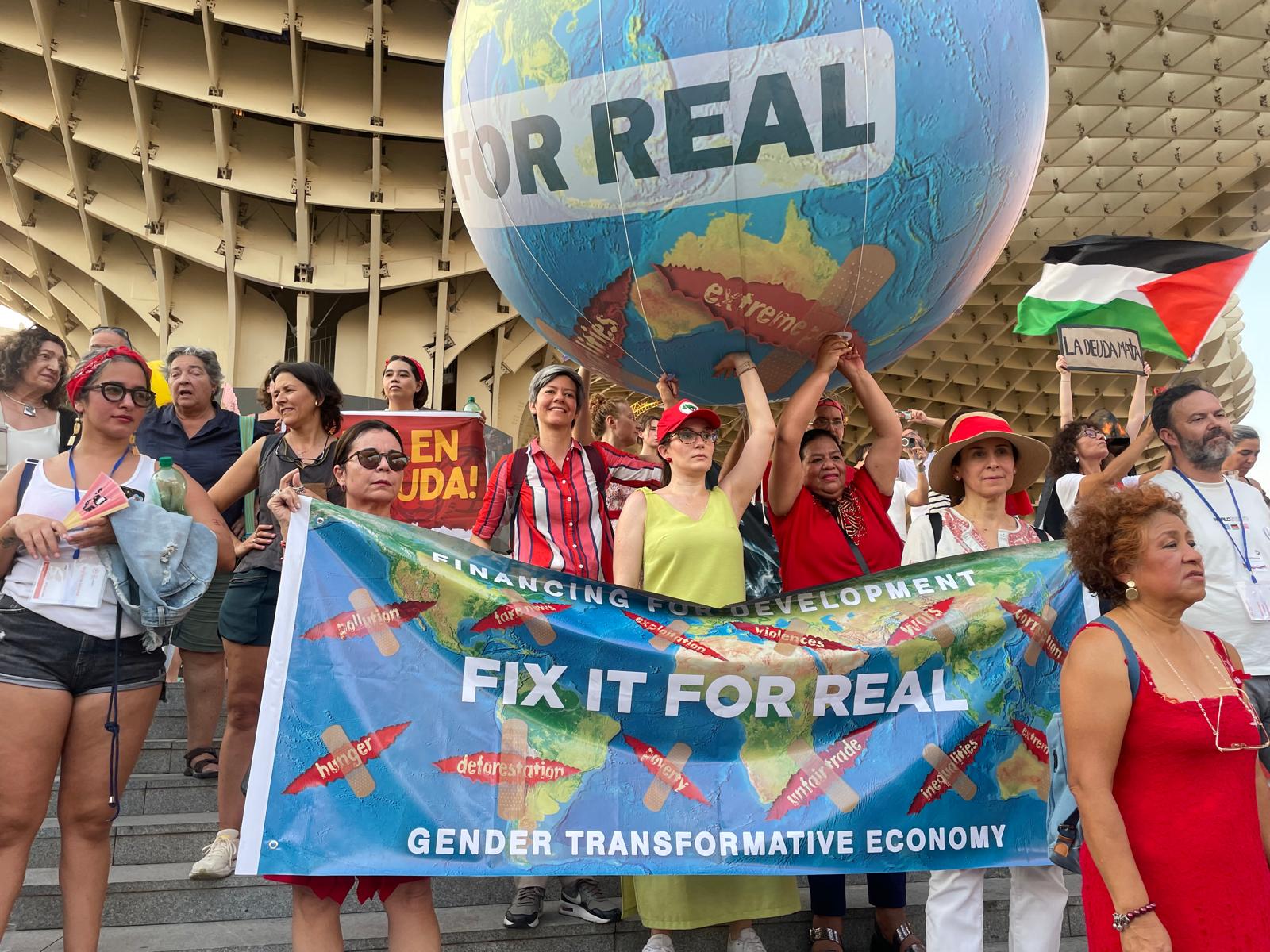
IPPF stands ready to support a progressive implementation of this agenda across national and regional contexts, and will continue to advocate for financing frameworks that truly serve the rights and needs of all persons, especially those most marginalized. We are also fully committed to the implementation of the Feminist Forum’s Declaration for a gender-transformative economic system based on rights, justice, care, and equality.
As we look ahead, we urge governments to act with ambition, integrity, and urgency, based on reparations, redistribution, and accountability. Gender equality and the fulfillment of human rights are not optional—they are foundational to building just, inclusive, and resilient societies. The world cannot afford to fall short.
when