




Articles about Press Release

07 September 2021
IMAP Statement on Reproductive Health in a Time of COVID-19

27 March 2025
We condemn Trinidad and Tobago’s Upholding Criminalization of Same-Sex Activity
The Trinidad and Tobago Court of Appeal’s decision to uphold the criminalization of consensual same-sex activity is an alarming assault on human rights. This ruling, which reinstates the criminality of private, consensual intimacy, is a direct violation of the fundamental rights of LGBTQI+ people and a stark reminder of the colonial-era laws that continue to inflict harm across the Caribbean. IPPF Americas and the Caribbean Regional Office (ACRO) together with local member Family Planning Association of Trinidad and Tobago (FPATT) stand unequivocally with LGBTQI+ communities in Trinidad and Tobago and across the region. We reject this ruling and any legislation that denies people their right to love freely and live with dignity. This decision reflects a justice system with oppressive statutes that have no place in a just and democratic society. According to Eugenia López Uribe, Regional Director of IPPF ACRO, this ruling is not just a setback for LGBTQI+ rights, it is an attack on human dignity: “It is a deliberate attempt to silence, criminalize, and exclude a part of citizens and people living in the country. But let this be clear: IPPF regional office in the Americas and the Caribbean will continue fighting for and with the LGBTQI+ movement so they won’t be silenced. IPPF will not back down. LGBTQI+ people’s rights are non-negotiable. " Criminalizing LGBTQI+ lives perpetuate violence, discrimination, and stigma. It emboldens hate, undermines access to justice, and creates a climate of fear where LGBTQI+ individuals are forced to live in further vulnerability. Research published by CAISO: Sex and Gender Justice’s Wholeness and Justice programme in 2023 indicate that 1 in 3 LGBTQI+ individuals in Trinidad and Tobago experience discrimination and harassment, 1 in 4 face family violence, and 1 in 4 experience physical assault. “FPATT [Family Planning Association of Trinidad and Tobago] notes the recent Court of Appeal decision that affirms an old law before independence that criminalizes persons of a different orientation, due to a technicality- the saving law clause,” says Professor Rose Marie Antoine, FPATT’s Board of Trustees President. “Interestingly, the British colonial masters that drafted that law have long abolished it. We note too that this was not a unanimous court decision. FPATT looks forward to the day when our legal system and laws can reflect true equity and non-discrimination, serving all our nation’s peoples in their access to fundamental rights and protecting vulnerable groups from harm and violence. FPATT will continue to welcome and serve all people regardless of their sexual orientation.” We call for urgent action: The immediate repeal of Sections 13 and 16 of the Sexual Offences Act. A commitment from Caribbean governments to decriminalize same-sex relations and protect LGBTQI+ individuals from discrimination and violence. An end to the use of colonial-era "savings law" clauses to justify human rights violations. Now is the time for every human rights defender, policymaker, and ally to take a stand. LGBTQI+ people in Trinidad and Tobago—and across the Caribbean, our region and the world—deserve justice, equality, and the freedom to live without fear. IPPF will not stop until that is a reality. For more information, please contact [email protected] - +44 7918 845944 About the International Planned Parenthood Federation IPPF is a global healthcare provider and a leading advocate of sexual and reproductive health and rights (SRHR) for all. Led by a courageous and determined group of women, IPPF was founded in 1952 at the Third International Planned Parenthood Conference. Today, we are a movement of 158 Member Associations and Collaborative Partners with a presence in over 153 countries. Our work is wide-ranging, including comprehensive sex education, provision of contraceptive, safe abortion, and maternal care and responding to humanitarian crises. We pride ourselves on being local through our members and global through our network. At the heart of our mission is the provision of – and advocacy in support of – integrated healthcare to anyone who needs it regardless of race, gender, sex, income, and crucially no matter how remote.

31 July 2024
Venezuela: Only in democracy are rights guaranteed.
Haz click aquí para leer este boletín en español. IPPF expresses our concern about the situation in Venezuela and our total solidarity with its people, who on 28 July received the news from the National Electoral Council (CNE) that the current president, Nicolás Maduro, was elected for a third presidential term. There are serious allegations of a lack of transparency in the process and we join the international community in demanding the publication of the election results, because, as of today, July 31st, the CNE has not shown the results of the election to prove the victory of Nicolás Maduro. It is worrying that the state security forces have responded with violence and repression since the beginning of the mobilisations, which continue, with hundreds of people arrested and a growing number of deaths. In addition to the current emergency, inequality, gender inequality and lack of access to health services, including sexual and reproductive health, have been on the rise for the past 25 years. It is impossible to forget: in Venezuela, the number of femicides has doubled in the last 6 years; 28.7% of people of sexual and gender diversity have been victims of violence by state security forces; 91.5% of complaints of violence against women are shelved or dismissed; legislation on abortion is extremely restrictive and services are very limited; in addition, 7.7 million people have been forced to move because of the socio-political context. With extreme concern, IPPF in the Americas and the Caribbean condemns the Venezuelan government's repression and violence against citizen mobilisations. It is unacceptable that while exercising their right to protest and free expression, Venezuelans are victims of criminalization and physical and political violence. IPPF ACRO joins the Venezuelan society in their demands for respect of democracy because the will of the people through authentic elections is a right and must be guaranteed by the State. ‘The situation in Venezuela further exacerbates the escalation of authoritarianism and violence in our region,’ said Alessandra Nilo, Director of External Relations at IPPF ACRO. ‘Democracy is conducive to states that guarantee and advance rights, including sexual and reproductive rights which, we know, in times of high tension and crisis, are the first to be violated. At this difficult time, we demand that the Venezuelan State returns to the democratic path, strengthens its institutions and respects the rights and wishes of its people. It is essential to protect the dignity and hope of all people, especially girls and women in all their diversity.’ ‘IPPF ACRO and Member and Partner Associations in the region are attentive to the development of events, we remain committed to Venezuelan people and their integral wellbeing, and we will continue to provide sexual and reproductive health care and services in Venezuela and, given the projected intensification of the migration wave, also in surrounding countries such as Colombia, Peru and Ecuador.’ Header image credit: REUTERS/Leonardo Fernandez Viloria

IPPF ACRO express concern over guidance of the Zambian Ministry of Health who advised against the use of the term “sexual and reproductive health and rights”.
At a time of profound and multiple crises, it is worrying that the focus of any government's action is to go back on already consolidated international commitments, particularly those which recognize, based on evidence, that Sexual and reproductive health and rights (SRHR) are fundamental human rights, central to eradicating poverty and achieving sustainable development across its social, economic, and environmental dimensions. SRHR – which encompasses a range of issues, including universal access to SRH services and supplies, comprehensive sexuality education, and ending gender-based violence and harmful practices such as early, child and forced marriage – are fundamental to the ability of all people, especially women, adolescent girls and young people, to lead full, satisfying, healthy and productive lives. SRH services are a critical aspect of SRHR, but a complete understanding of sexual and reproductive health and rights goes far beyond on access to health facilities and services to include an array of social, legal, institutional, and financial arrangements that enable individuals to exercise their rights in general and addresses the underlying social determinants. In this regard, our Latin American community urges the government of Zambia to review its position and, on the contrary, to improve and expand the SRHR services, including increasing funding in this sector, for example by investing in fulfilling the human rights of women and girls, in all their diversity, as gender discrimination is one of the leading determinants of poor health and unwanted SRHR outcomes. It is also key to addressing inequities in access due to poverty and multiple forms of discrimination, stigma and social and economic exclusion affecting various population groups. We conclude by highlighting the importance of evidence-based policies and, in 2023, the data indicates that effective policies are not those based on stigma and discrimination or elimination of rights. On the contrary, effective policies are those that include, care for, and treat all people as subjects of rights, capable of making decisions about their health and reproductive life, with the support of a State committed to promoting citizenship and the human dignity of their people. Here, at IPPF ACRO, we will remain attentive and always willing to contribute so that rights do not go backwards and no one is left behind. In solidarity, Eugenia Lopez Uribe Regional Director for the Americas and the Caribbean
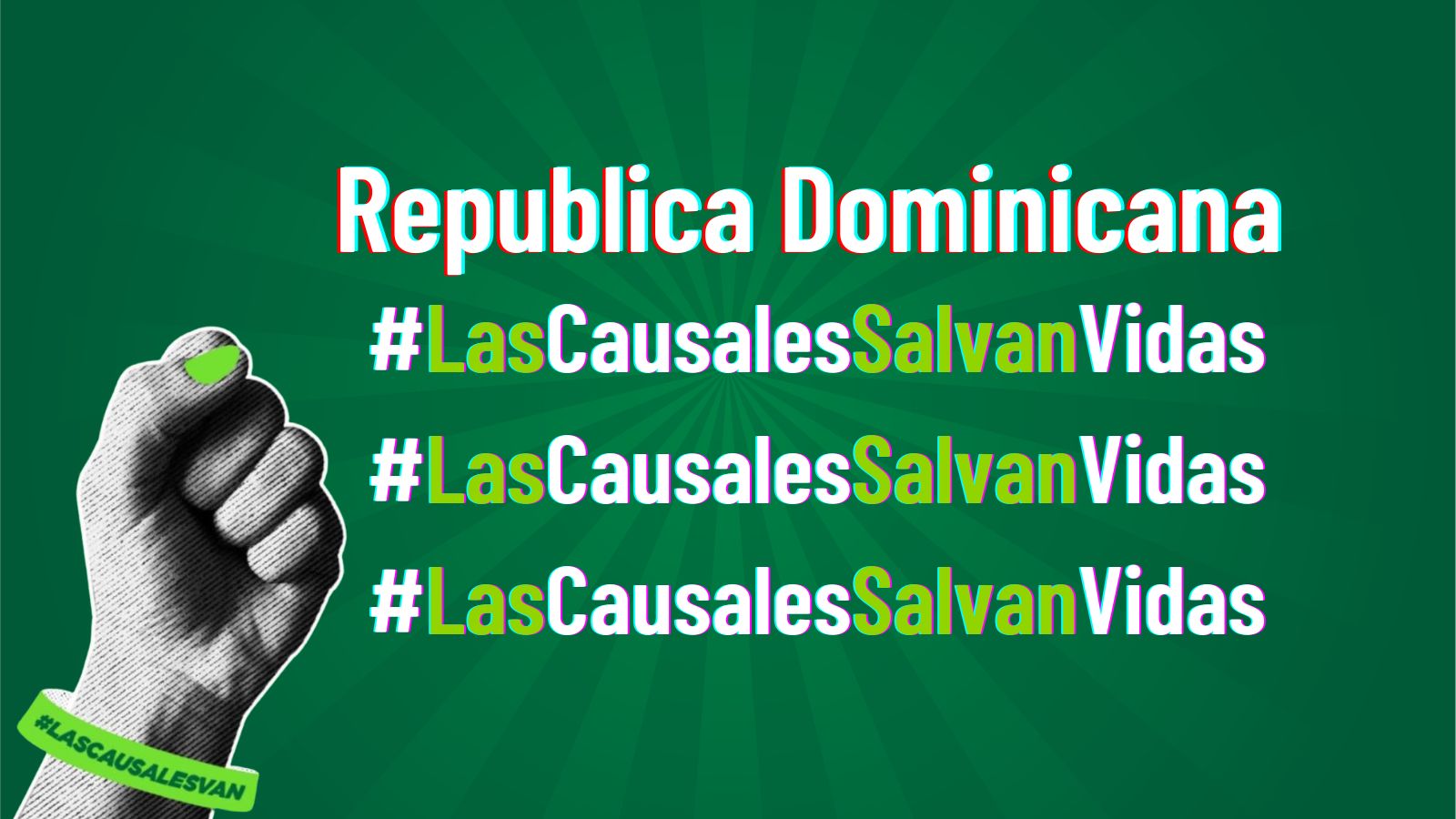
Statement on the Penal Code of The Dominican Republic
15 February 2023 For immediate release: Statement on the Penal Code of The Dominican Republic International Planned Parenthood Federation - Americas and The Caribbean Regional Office (IPPF ACRO) Two decades' worth of attempts by national feminist movements to reform the Dominican Republic's brutal Criminal Code has failed. The Caribbean country is one of the five countries in the world where ending a pregnancy is strictly prohibited under any circumstances. Abortion is now the third leading cause of maternal death in the country. The current Criminal Code dates back to 1884 and despite the Chamber of Deputies approving a revision to the Criminal Code in 2014 to allow abortion in the following three circumstances: where the pregnancy poses a risk to the life of a pregnant person, where the fetus could not survive outside the womb, and where the pregnancy is the result of rape or incest. The revision was struck down by the Constitutional Court in 2015. Despite President Luis Abinader vocal support of decriminalising support in certain circumstances, the decision today fails all pregnant people and will undoubtedly force more to turn to unsafe abortion methods that could be fatal. Eugenia Lopez Uribe – IPPF Americas and Caribbean Regional Director said: “ For twenty years the strong feminist movements in the Dominican Republic have fought to reform the barbaric Criminal Code that denies pregnant people access to safe and legal abortion. The Criminal Code is 140 years old, it did not serve the population then and it does not serve them now. IPPF will continue to stand side by side with the movement in the Dominican Republic to fight for reform, freedom and justice. All people must have the freedom to decide what happens to their body and that includes being able to end a pregnancy safely. Noone should have to die because of this Criminal Code that has caused so much harm and death.” IPPF - Americas and the Caribbean Regional Office stands in firm solidarity with the people of Dominican Republic and the feminist movements as we continue to fight for bodily autonomy, freedom, and reproductive justice. We acknowledge the enormous contribution of the Dominican leadership to the social justice movements in the region including the struggle for racial justice.

08 June 2022
2021 Annual Performance Report
IPPF has always done the utmost to advance sexual and reproductive health and rights for all. In 2021, IPPF Member Associations (MAs) continued to demonstrate their resilience and adaptability to carry on serving people in spite of the severe disruption caused by the COVID-19 pandemic. A total of 231.4 million services were delivered, a six per cent increase on 2020. Despite comprising fewer MAs, IPPF recovered more than half the decrease caused the previous year by clinic closures and other restrictions. Couple years of protection (CYP) increased by eight percent to reach 29 million – higher than in any year prior to the pandemic.

15 March 2022
IPPF Office in Bogota
We are overjoyed to announce the opening of the first of two locations of the International Planned Parenthood Federation - Americas and the Caribbean Regional Office (ACRO), in Bogota, Colombia. IPPF Director-General Dr. Alvaro Bermejo, IPPF ACRO's Regional Director Eugenia López Uribe, Deputy Regional Director Dona Da Costa Martinez, and IPPF Director of External Relations Mina Barling were joined by team members from the ACRO and London Offices to reinforce the commitment to the fight for rights and access to sexual and reproductive services in the region. This is an especially exciting time as Colombia stands as the latest champion to step forward to protect the bodily autonomy of everyone with the possibility of gestation, with a recent Constitutional Court victory legalizing access to abortion until 24 weeks. The new IPPF Americas and the Caribbean Regional Office serves Member Associations and Collaborative Partners in over 24 countries across the region, and which are growing in their movement building and service delivery capabilities, including comprehensive sex education, provision of contraceptive, safe abortion, and maternal care and responding to humanitarian crisis. IPPF pride ourselves on being local through our members and global through our network. At the heart of our mission is the provision of – and advocacy in support of – integrated healthcare to anyone who needs it regardless of race, gender, sex, income, and crucially no matter how remote. Volunteerism is central to our healthcare delivery. It underpins the vital work of our members and their teams, whether through community outreach and distribution of contraceptive care or the regional Youth Action Movements championing change.

09 September 2021
Statement of Mexico Ruling Sept 7 2021
La oficina regional y las asociadas miembro de IPPF en las Américas y El Caribe se unen a la celebración de México por el fallo histórico de la Suprema Corte de Justicia de la Nación (SCJN) que avanza en la lucha por las libertades de las mujeres y personas gestantes reconociendo su derecho a decidir interrumpir un embarazo en su etapa temprana, y, por lo tanto, eliminando la pena legal que existe para quien aborte. La Fundación Mexicana para la Planeación Familiar, MEXFAM, ha hecho un trabajo sistemático con actores clave en México para incidir a favor del reconocimiento de la autonomía corporal, incluyendo el trabajo con la SCJN. Su compromiso está reflejado también en su participación como líder de la Coalición de Acción del Foro Generación Igualdad de Autonomía Corporal. El fallo histórico contribuye, además, con la lucha de los movimientos feministas y defensores de los Derechos Sexuales y Derechos Reproductivos de nuestro continente que han logrado avances trascendentales: Cuba, Guyana, Barbados, Uruguay, Chile, Argentina, Ecuador y ahora México le muestran al mundo que en materia de Derechos Humanos no hay espacio para el retroceso por lo que reiteramos nuestro trabajo decidido para que en otras latitudes como Centroamérica y otros países de El Caribe, donde se mantienen las restricciones más fuertes para acceder al aborto en el mundo, la garantía de derechos sea pronto una realidad. El turno ahora es para Colombia. Profamilia, organización líder en la defensa, promoción y garantía de los Derechos Sexuales y Derechos Reproductivos en el país, celebra este avance y espera que la decisión de la SCJN sea un ejemplo para las autoridades judiciales en la región, en especial para la Corte Constitucional de Colombia, la cual está próxima a pronunciarse sobre la demanda de inconstitucionalidad frente al delito de aborto. Profamilia reitera que la despenalización total del aborto es el mejor camino para proteger y garantizar los derechos de las mujeres y personas gestantes, reduciendo los estigmas y efectos de la criminalización sobre la salud pública y los prestadores de salud. INNPARES, desde Perú, felicita al equipo de MEXFAM por este logro histórico que tendrá repercusión en la lucha que nos une para que todas las mujeres y personas gestantes sean realmente dueñas de sus cuerpos y de sus decisiones. En este sentido, INNPARES, como integrante la Mesa de Vigilancia por los Derechos Sexuales y Reproductivos, está redactando el proyecto de ley marco de Promoción y Protección de los Derechos Sexuales y Reproductivos, que será presentada muy pronto en el Congreso de la República. La Asociación de Planificación Familiar de Trinidad y Tobago (FPATT) una organización líder en el Caribe, con foco en la salud y los derechos sexuales y reproductivos de todes, celebra con su socio regional de México, el histórico fallo de la SCJN. Este avance en el reconocimiento de un derecho fundamental y la libertad de las mujeres demuestra un enfoque sistémico de la salud con visión de futuro. FPATT continuará abogando por una decisión similar para Trinidad y Tobago y confiará en que el gobierno, socios clave y partes interesadas reconozcan la oportunidad de impactar positivamente la vida de las mujeres como nunca antes se ha hecho. La Asociación de Planificación Familiar de Barbados (BFPA) también recibe con júbilo la noticia del éxito en México. Desde 1983, el derecho de las mujeres a tener control sobre sus cuerpos ha sido reconocido y apoyados por la constitución de Barbados. Esto ha llevado a una sociedad más equitativa, conduciendo al mayor período de desarrollo social y económico en la historia del país. Debemos mantener y multiplicar estos logros de equidad e igualdad para todes porque la oposición nunca duerme, y nosotros tampoco debemos hacerlo. La Afiliación Caribeña de Planeación Familiar (CFPA) se une a la celebración de las personas en México por este importante avance. El hecho de que México sea el segundo país con más población católica en el mundo es inspirador porque nos enseña que los derechos humanos, la justicia social y la salud reproductiva de las mujeres están en concordancia con la práctica de la fé. Demasiadas mujeres han sufrido altos costos en su salud y muchas han muerto como consecuencia de abortos practicados en condiciones de riesgo. La descriminalización del aborto reconoce que el derecho de las mujeres para decidir es un tema de gran relevancia, no solo para las mujeres, pero también para los hombres y la sociedad en su conjunto. Planned Parenthood Federation of America (PPFA) celebra esta victoria para las mujeres y personas gestantes de México, y ve con optimismo el impacto que la decisión de la corte tendrá para pavimentar el camino hacia la legalización en todo el país. Los avances latinoamericanos para garantizar que ninguna persona sea castigada por decidir de manera autónoma sobre su cuerpo continúan inspirando al resto del mundo en la lucha por la libertad reproductiva. Ahora más que nunca, y frente al retroceso que representa la Ley S.B. 8 que entró en vigencia en Texas la semana pasada, pasos como el dado por México trae esperanza para las mujeres y personas con capacidad de gestar de Estados Unidos y cambia el panorama de acceso al aborto en una frontera cruzada por personas que buscaban servicios de salud reproductiva en Texas y otros estados fronterizos cuando no podían acceder a ellos en México. Nuestro compromiso como Federación se mantiene, seguiremos acompañando a los movimientos para que todas las mujeres y personas gestantes de todos los rincones de las Américas y El Caribe puedan decidir libremente sobre sus cuerpos y sus vidas para que se garanticen los derechos sexuales y reproductivos y la maternidad elegida. No pararemos hasta lograr la justicia reproductiva en nuestro continente! ADS - Asociación Demográfica Salvadoreña/Pro-Familia. BFPA- The Barbados Family Planning Association, FPATT - Family Planning Association of Trinidad and Tobago, INPPARES - Instituto Peruano de Paternidad Responsable, JFPA - Jamaica Family Planning Association, MEXFAM - Fundación Mexicana para la Planeación Familiar, A.C., PPFA - Planned Parenthood Federation of America – United States of America, Profamilia - Asociación Pro-Bienestar de la Familia Colombiana, Stichting Lobi Suriname, CFPA - Caribbean Family Planning Affiliation: Anguilla Family Planning Association-The Primary Health Care, Antigua Planned Parenthood Association, Foundation for the Promotion of Responsible Parenthood (FPA), Bahamas Sexual Health and Rights Association, Bermuda Teen Services, Curaçao Foundation for the Promotion of Responsible Parenthood (FPRP), Dominica Planned Parenthood Association, Grenada Planned Parenthood Association, Association Guadeloupéenne pour le Planning Familial, Association Martiniquaise pour I'Information et l'Orientation Familiales, Saint Lucia Planned Parenthood Association, St. Vincent Planned Parenthood Association Oficina Regional para las Américas y el Caribe de la Federación Internacional de Planificación Federal – IPPF ACRO

08 September 2021
Declaración de Mexfam sobre el fallo de la Corte Suprema de Justicia- Ciudad de México, 07 de septiembre de 2021.
Declaración de Mexfam sobre el fallo de la Corte Suprema de Justicia- Ciudad de México, 07 de septiembre de 2021. MÉXICO EMITE UN FALLO SIN PRECEDENTES PARA LA DESPENALIZACIÓN DEL ABORTO Mexfam statement on the Supreme Court ruling - Mexico City, 07 September 2021. MEXICO ISSUES AN UNPRECEDENTED RULING FOR THE DECRIMINALISATION OF ABORTION
07 September 2021
IMAP Statement on Reproductive Health in a Time of COVID-19
27 March 2025
We condemn Trinidad and Tobago’s Upholding Criminalization of Same-Sex Activity
The Trinidad and Tobago Court of Appeal’s decision to uphold the criminalization of consensual same-sex activity is an alarming assault on human rights. This ruling, which reinstates the criminality of private, consensual intimacy, is a direct violation of the fundamental rights of LGBTQI+ people and a stark reminder of the colonial-era laws that continue to inflict harm across the Caribbean. IPPF Americas and the Caribbean Regional Office (ACRO) together with local member Family Planning Association of Trinidad and Tobago (FPATT) stand unequivocally with LGBTQI+ communities in Trinidad and Tobago and across the region. We reject this ruling and any legislation that denies people their right to love freely and live with dignity. This decision reflects a justice system with oppressive statutes that have no place in a just and democratic society. According to Eugenia López Uribe, Regional Director of IPPF ACRO, this ruling is not just a setback for LGBTQI+ rights, it is an attack on human dignity: “It is a deliberate attempt to silence, criminalize, and exclude a part of citizens and people living in the country. But let this be clear: IPPF regional office in the Americas and the Caribbean will continue fighting for and with the LGBTQI+ movement so they won’t be silenced. IPPF will not back down. LGBTQI+ people’s rights are non-negotiable. " Criminalizing LGBTQI+ lives perpetuate violence, discrimination, and stigma. It emboldens hate, undermines access to justice, and creates a climate of fear where LGBTQI+ individuals are forced to live in further vulnerability. Research published by CAISO: Sex and Gender Justice’s Wholeness and Justice programme in 2023 indicate that 1 in 3 LGBTQI+ individuals in Trinidad and Tobago experience discrimination and harassment, 1 in 4 face family violence, and 1 in 4 experience physical assault. “FPATT [Family Planning Association of Trinidad and Tobago] notes the recent Court of Appeal decision that affirms an old law before independence that criminalizes persons of a different orientation, due to a technicality- the saving law clause,” says Professor Rose Marie Antoine, FPATT’s Board of Trustees President. “Interestingly, the British colonial masters that drafted that law have long abolished it. We note too that this was not a unanimous court decision. FPATT looks forward to the day when our legal system and laws can reflect true equity and non-discrimination, serving all our nation’s peoples in their access to fundamental rights and protecting vulnerable groups from harm and violence. FPATT will continue to welcome and serve all people regardless of their sexual orientation.” We call for urgent action: The immediate repeal of Sections 13 and 16 of the Sexual Offences Act. A commitment from Caribbean governments to decriminalize same-sex relations and protect LGBTQI+ individuals from discrimination and violence. An end to the use of colonial-era "savings law" clauses to justify human rights violations. Now is the time for every human rights defender, policymaker, and ally to take a stand. LGBTQI+ people in Trinidad and Tobago—and across the Caribbean, our region and the world—deserve justice, equality, and the freedom to live without fear. IPPF will not stop until that is a reality. For more information, please contact [email protected] - +44 7918 845944 About the International Planned Parenthood Federation IPPF is a global healthcare provider and a leading advocate of sexual and reproductive health and rights (SRHR) for all. Led by a courageous and determined group of women, IPPF was founded in 1952 at the Third International Planned Parenthood Conference. Today, we are a movement of 158 Member Associations and Collaborative Partners with a presence in over 153 countries. Our work is wide-ranging, including comprehensive sex education, provision of contraceptive, safe abortion, and maternal care and responding to humanitarian crises. We pride ourselves on being local through our members and global through our network. At the heart of our mission is the provision of – and advocacy in support of – integrated healthcare to anyone who needs it regardless of race, gender, sex, income, and crucially no matter how remote.
31 July 2024
Venezuela: Only in democracy are rights guaranteed.
Haz click aquí para leer este boletín en español. IPPF expresses our concern about the situation in Venezuela and our total solidarity with its people, who on 28 July received the news from the National Electoral Council (CNE) that the current president, Nicolás Maduro, was elected for a third presidential term. There are serious allegations of a lack of transparency in the process and we join the international community in demanding the publication of the election results, because, as of today, July 31st, the CNE has not shown the results of the election to prove the victory of Nicolás Maduro. It is worrying that the state security forces have responded with violence and repression since the beginning of the mobilisations, which continue, with hundreds of people arrested and a growing number of deaths. In addition to the current emergency, inequality, gender inequality and lack of access to health services, including sexual and reproductive health, have been on the rise for the past 25 years. It is impossible to forget: in Venezuela, the number of femicides has doubled in the last 6 years; 28.7% of people of sexual and gender diversity have been victims of violence by state security forces; 91.5% of complaints of violence against women are shelved or dismissed; legislation on abortion is extremely restrictive and services are very limited; in addition, 7.7 million people have been forced to move because of the socio-political context. With extreme concern, IPPF in the Americas and the Caribbean condemns the Venezuelan government's repression and violence against citizen mobilisations. It is unacceptable that while exercising their right to protest and free expression, Venezuelans are victims of criminalization and physical and political violence. IPPF ACRO joins the Venezuelan society in their demands for respect of democracy because the will of the people through authentic elections is a right and must be guaranteed by the State. ‘The situation in Venezuela further exacerbates the escalation of authoritarianism and violence in our region,’ said Alessandra Nilo, Director of External Relations at IPPF ACRO. ‘Democracy is conducive to states that guarantee and advance rights, including sexual and reproductive rights which, we know, in times of high tension and crisis, are the first to be violated. At this difficult time, we demand that the Venezuelan State returns to the democratic path, strengthens its institutions and respects the rights and wishes of its people. It is essential to protect the dignity and hope of all people, especially girls and women in all their diversity.’ ‘IPPF ACRO and Member and Partner Associations in the region are attentive to the development of events, we remain committed to Venezuelan people and their integral wellbeing, and we will continue to provide sexual and reproductive health care and services in Venezuela and, given the projected intensification of the migration wave, also in surrounding countries such as Colombia, Peru and Ecuador.’ Header image credit: REUTERS/Leonardo Fernandez Viloria
IPPF ACRO express concern over guidance of the Zambian Ministry of Health who advised against the use of the term “sexual and reproductive health and rights”.
At a time of profound and multiple crises, it is worrying that the focus of any government's action is to go back on already consolidated international commitments, particularly those which recognize, based on evidence, that Sexual and reproductive health and rights (SRHR) are fundamental human rights, central to eradicating poverty and achieving sustainable development across its social, economic, and environmental dimensions. SRHR – which encompasses a range of issues, including universal access to SRH services and supplies, comprehensive sexuality education, and ending gender-based violence and harmful practices such as early, child and forced marriage – are fundamental to the ability of all people, especially women, adolescent girls and young people, to lead full, satisfying, healthy and productive lives. SRH services are a critical aspect of SRHR, but a complete understanding of sexual and reproductive health and rights goes far beyond on access to health facilities and services to include an array of social, legal, institutional, and financial arrangements that enable individuals to exercise their rights in general and addresses the underlying social determinants. In this regard, our Latin American community urges the government of Zambia to review its position and, on the contrary, to improve and expand the SRHR services, including increasing funding in this sector, for example by investing in fulfilling the human rights of women and girls, in all their diversity, as gender discrimination is one of the leading determinants of poor health and unwanted SRHR outcomes. It is also key to addressing inequities in access due to poverty and multiple forms of discrimination, stigma and social and economic exclusion affecting various population groups. We conclude by highlighting the importance of evidence-based policies and, in 2023, the data indicates that effective policies are not those based on stigma and discrimination or elimination of rights. On the contrary, effective policies are those that include, care for, and treat all people as subjects of rights, capable of making decisions about their health and reproductive life, with the support of a State committed to promoting citizenship and the human dignity of their people. Here, at IPPF ACRO, we will remain attentive and always willing to contribute so that rights do not go backwards and no one is left behind. In solidarity, Eugenia Lopez Uribe Regional Director for the Americas and the Caribbean
Statement on the Penal Code of The Dominican Republic
15 February 2023 For immediate release: Statement on the Penal Code of The Dominican Republic International Planned Parenthood Federation - Americas and The Caribbean Regional Office (IPPF ACRO) Two decades' worth of attempts by national feminist movements to reform the Dominican Republic's brutal Criminal Code has failed. The Caribbean country is one of the five countries in the world where ending a pregnancy is strictly prohibited under any circumstances. Abortion is now the third leading cause of maternal death in the country. The current Criminal Code dates back to 1884 and despite the Chamber of Deputies approving a revision to the Criminal Code in 2014 to allow abortion in the following three circumstances: where the pregnancy poses a risk to the life of a pregnant person, where the fetus could not survive outside the womb, and where the pregnancy is the result of rape or incest. The revision was struck down by the Constitutional Court in 2015. Despite President Luis Abinader vocal support of decriminalising support in certain circumstances, the decision today fails all pregnant people and will undoubtedly force more to turn to unsafe abortion methods that could be fatal. Eugenia Lopez Uribe – IPPF Americas and Caribbean Regional Director said: “ For twenty years the strong feminist movements in the Dominican Republic have fought to reform the barbaric Criminal Code that denies pregnant people access to safe and legal abortion. The Criminal Code is 140 years old, it did not serve the population then and it does not serve them now. IPPF will continue to stand side by side with the movement in the Dominican Republic to fight for reform, freedom and justice. All people must have the freedom to decide what happens to their body and that includes being able to end a pregnancy safely. Noone should have to die because of this Criminal Code that has caused so much harm and death.” IPPF - Americas and the Caribbean Regional Office stands in firm solidarity with the people of Dominican Republic and the feminist movements as we continue to fight for bodily autonomy, freedom, and reproductive justice. We acknowledge the enormous contribution of the Dominican leadership to the social justice movements in the region including the struggle for racial justice.
08 June 2022
2021 Annual Performance Report
IPPF has always done the utmost to advance sexual and reproductive health and rights for all. In 2021, IPPF Member Associations (MAs) continued to demonstrate their resilience and adaptability to carry on serving people in spite of the severe disruption caused by the COVID-19 pandemic. A total of 231.4 million services were delivered, a six per cent increase on 2020. Despite comprising fewer MAs, IPPF recovered more than half the decrease caused the previous year by clinic closures and other restrictions. Couple years of protection (CYP) increased by eight percent to reach 29 million – higher than in any year prior to the pandemic.
15 March 2022
IPPF Office in Bogota
We are overjoyed to announce the opening of the first of two locations of the International Planned Parenthood Federation - Americas and the Caribbean Regional Office (ACRO), in Bogota, Colombia. IPPF Director-General Dr. Alvaro Bermejo, IPPF ACRO's Regional Director Eugenia López Uribe, Deputy Regional Director Dona Da Costa Martinez, and IPPF Director of External Relations Mina Barling were joined by team members from the ACRO and London Offices to reinforce the commitment to the fight for rights and access to sexual and reproductive services in the region. This is an especially exciting time as Colombia stands as the latest champion to step forward to protect the bodily autonomy of everyone with the possibility of gestation, with a recent Constitutional Court victory legalizing access to abortion until 24 weeks. The new IPPF Americas and the Caribbean Regional Office serves Member Associations and Collaborative Partners in over 24 countries across the region, and which are growing in their movement building and service delivery capabilities, including comprehensive sex education, provision of contraceptive, safe abortion, and maternal care and responding to humanitarian crisis. IPPF pride ourselves on being local through our members and global through our network. At the heart of our mission is the provision of – and advocacy in support of – integrated healthcare to anyone who needs it regardless of race, gender, sex, income, and crucially no matter how remote. Volunteerism is central to our healthcare delivery. It underpins the vital work of our members and their teams, whether through community outreach and distribution of contraceptive care or the regional Youth Action Movements championing change.
09 September 2021
Statement of Mexico Ruling Sept 7 2021
La oficina regional y las asociadas miembro de IPPF en las Américas y El Caribe se unen a la celebración de México por el fallo histórico de la Suprema Corte de Justicia de la Nación (SCJN) que avanza en la lucha por las libertades de las mujeres y personas gestantes reconociendo su derecho a decidir interrumpir un embarazo en su etapa temprana, y, por lo tanto, eliminando la pena legal que existe para quien aborte. La Fundación Mexicana para la Planeación Familiar, MEXFAM, ha hecho un trabajo sistemático con actores clave en México para incidir a favor del reconocimiento de la autonomía corporal, incluyendo el trabajo con la SCJN. Su compromiso está reflejado también en su participación como líder de la Coalición de Acción del Foro Generación Igualdad de Autonomía Corporal. El fallo histórico contribuye, además, con la lucha de los movimientos feministas y defensores de los Derechos Sexuales y Derechos Reproductivos de nuestro continente que han logrado avances trascendentales: Cuba, Guyana, Barbados, Uruguay, Chile, Argentina, Ecuador y ahora México le muestran al mundo que en materia de Derechos Humanos no hay espacio para el retroceso por lo que reiteramos nuestro trabajo decidido para que en otras latitudes como Centroamérica y otros países de El Caribe, donde se mantienen las restricciones más fuertes para acceder al aborto en el mundo, la garantía de derechos sea pronto una realidad. El turno ahora es para Colombia. Profamilia, organización líder en la defensa, promoción y garantía de los Derechos Sexuales y Derechos Reproductivos en el país, celebra este avance y espera que la decisión de la SCJN sea un ejemplo para las autoridades judiciales en la región, en especial para la Corte Constitucional de Colombia, la cual está próxima a pronunciarse sobre la demanda de inconstitucionalidad frente al delito de aborto. Profamilia reitera que la despenalización total del aborto es el mejor camino para proteger y garantizar los derechos de las mujeres y personas gestantes, reduciendo los estigmas y efectos de la criminalización sobre la salud pública y los prestadores de salud. INNPARES, desde Perú, felicita al equipo de MEXFAM por este logro histórico que tendrá repercusión en la lucha que nos une para que todas las mujeres y personas gestantes sean realmente dueñas de sus cuerpos y de sus decisiones. En este sentido, INNPARES, como integrante la Mesa de Vigilancia por los Derechos Sexuales y Reproductivos, está redactando el proyecto de ley marco de Promoción y Protección de los Derechos Sexuales y Reproductivos, que será presentada muy pronto en el Congreso de la República. La Asociación de Planificación Familiar de Trinidad y Tobago (FPATT) una organización líder en el Caribe, con foco en la salud y los derechos sexuales y reproductivos de todes, celebra con su socio regional de México, el histórico fallo de la SCJN. Este avance en el reconocimiento de un derecho fundamental y la libertad de las mujeres demuestra un enfoque sistémico de la salud con visión de futuro. FPATT continuará abogando por una decisión similar para Trinidad y Tobago y confiará en que el gobierno, socios clave y partes interesadas reconozcan la oportunidad de impactar positivamente la vida de las mujeres como nunca antes se ha hecho. La Asociación de Planificación Familiar de Barbados (BFPA) también recibe con júbilo la noticia del éxito en México. Desde 1983, el derecho de las mujeres a tener control sobre sus cuerpos ha sido reconocido y apoyados por la constitución de Barbados. Esto ha llevado a una sociedad más equitativa, conduciendo al mayor período de desarrollo social y económico en la historia del país. Debemos mantener y multiplicar estos logros de equidad e igualdad para todes porque la oposición nunca duerme, y nosotros tampoco debemos hacerlo. La Afiliación Caribeña de Planeación Familiar (CFPA) se une a la celebración de las personas en México por este importante avance. El hecho de que México sea el segundo país con más población católica en el mundo es inspirador porque nos enseña que los derechos humanos, la justicia social y la salud reproductiva de las mujeres están en concordancia con la práctica de la fé. Demasiadas mujeres han sufrido altos costos en su salud y muchas han muerto como consecuencia de abortos practicados en condiciones de riesgo. La descriminalización del aborto reconoce que el derecho de las mujeres para decidir es un tema de gran relevancia, no solo para las mujeres, pero también para los hombres y la sociedad en su conjunto. Planned Parenthood Federation of America (PPFA) celebra esta victoria para las mujeres y personas gestantes de México, y ve con optimismo el impacto que la decisión de la corte tendrá para pavimentar el camino hacia la legalización en todo el país. Los avances latinoamericanos para garantizar que ninguna persona sea castigada por decidir de manera autónoma sobre su cuerpo continúan inspirando al resto del mundo en la lucha por la libertad reproductiva. Ahora más que nunca, y frente al retroceso que representa la Ley S.B. 8 que entró en vigencia en Texas la semana pasada, pasos como el dado por México trae esperanza para las mujeres y personas con capacidad de gestar de Estados Unidos y cambia el panorama de acceso al aborto en una frontera cruzada por personas que buscaban servicios de salud reproductiva en Texas y otros estados fronterizos cuando no podían acceder a ellos en México. Nuestro compromiso como Federación se mantiene, seguiremos acompañando a los movimientos para que todas las mujeres y personas gestantes de todos los rincones de las Américas y El Caribe puedan decidir libremente sobre sus cuerpos y sus vidas para que se garanticen los derechos sexuales y reproductivos y la maternidad elegida. No pararemos hasta lograr la justicia reproductiva en nuestro continente! ADS - Asociación Demográfica Salvadoreña/Pro-Familia. BFPA- The Barbados Family Planning Association, FPATT - Family Planning Association of Trinidad and Tobago, INPPARES - Instituto Peruano de Paternidad Responsable, JFPA - Jamaica Family Planning Association, MEXFAM - Fundación Mexicana para la Planeación Familiar, A.C., PPFA - Planned Parenthood Federation of America – United States of America, Profamilia - Asociación Pro-Bienestar de la Familia Colombiana, Stichting Lobi Suriname, CFPA - Caribbean Family Planning Affiliation: Anguilla Family Planning Association-The Primary Health Care, Antigua Planned Parenthood Association, Foundation for the Promotion of Responsible Parenthood (FPA), Bahamas Sexual Health and Rights Association, Bermuda Teen Services, Curaçao Foundation for the Promotion of Responsible Parenthood (FPRP), Dominica Planned Parenthood Association, Grenada Planned Parenthood Association, Association Guadeloupéenne pour le Planning Familial, Association Martiniquaise pour I'Information et l'Orientation Familiales, Saint Lucia Planned Parenthood Association, St. Vincent Planned Parenthood Association Oficina Regional para las Américas y el Caribe de la Federación Internacional de Planificación Federal – IPPF ACRO
08 September 2021
Declaración de Mexfam sobre el fallo de la Corte Suprema de Justicia- Ciudad de México, 07 de septiembre de 2021.
Declaración de Mexfam sobre el fallo de la Corte Suprema de Justicia- Ciudad de México, 07 de septiembre de 2021. MÉXICO EMITE UN FALLO SIN PRECEDENTES PARA LA DESPENALIZACIÓN DEL ABORTO Mexfam statement on the Supreme Court ruling - Mexico City, 07 September 2021. MEXICO ISSUES AN UNPRECEDENTED RULING FOR THE DECRIMINALISATION OF ABORTION