- - -

Articles about Peru

Kiamara Meneses

A confident and accessible place

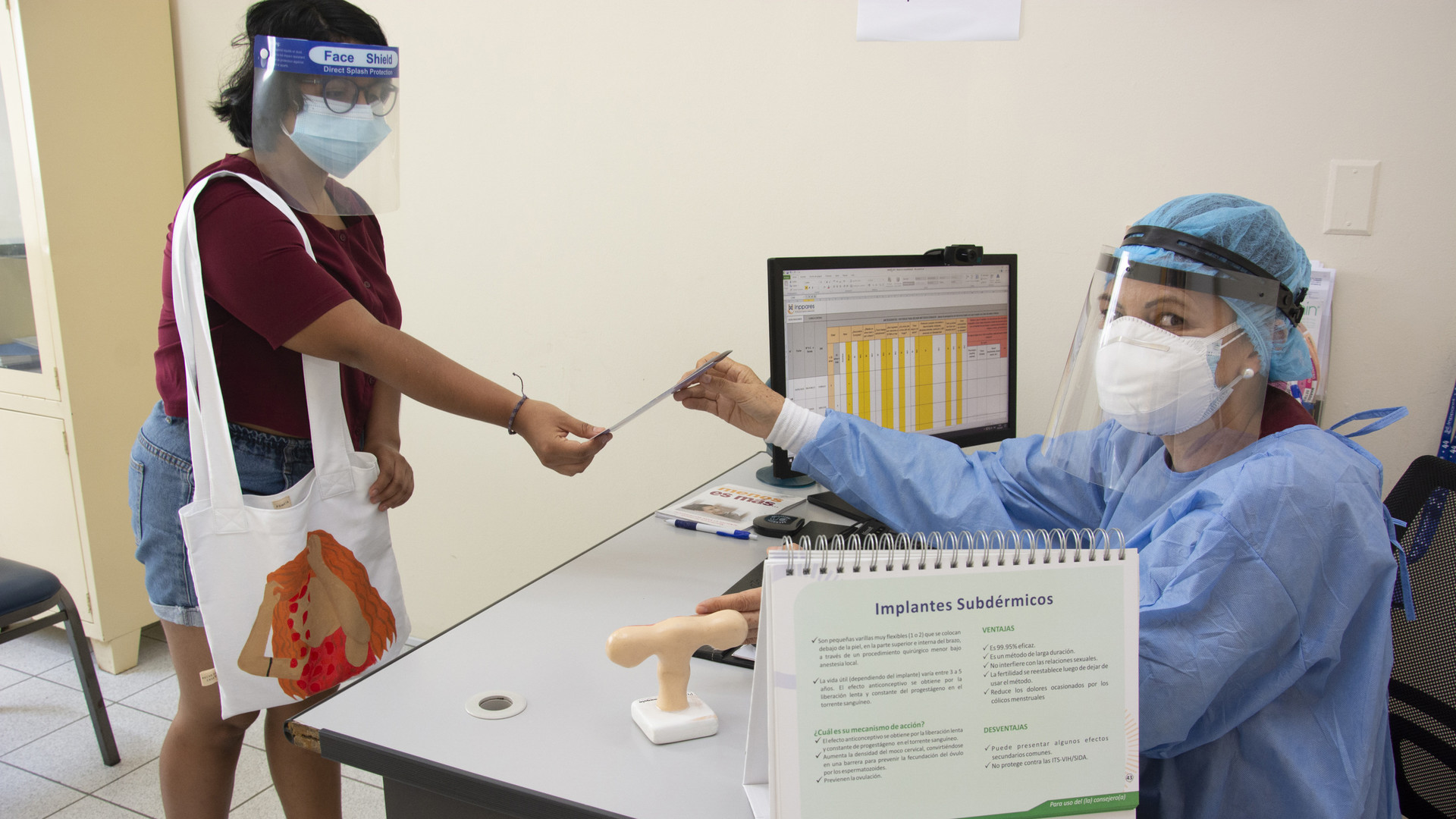
Two clients of sexual and reproductive health counseling services agree that trust is one of the most valued aspects. Danitza Gonzales, the 28-year-old personal trainer, came to Inppares on the recommendation of a friend: “I felt great with the counseling. The same doctor gave me all the confidence to be able to tell her my issues and my doubts that are still taboo, she knew how to guide me”. Kiamara Meneses, 25, a sociologist, says that she found out about the institution through Facebook and when she arrived at counseling with her partner she felt confident: “We liked the way the explanation was provided and it was all very clear, so we kept coming back all of 2019, until 2020, because I was considering having a subdermal implant and I came to consult”, she commented. “What I liked the most about the counseling service was that there was no such luck of judging people, which had happened to me in other health facilities, where if I asked for a longer-lasting method, such as an implant or an IUD They put limitations on having children before or things like that. Here I understood that there are no restrictions to use a particular method and that seemed super important to me”, adds Kiamara. Among other aspects that the users highlight is the accessible price and the central location. “The cost seemed adequate to me, in addition to the treatment they gave me. So I stayed. When someone asks me where to go to seek contraceptive counseling or advice, I share the experience I have had, in addition to the fact that the place is very central and the price is very convenient,”says Danitza. “What I mainly like are the services Inppares has, in addition to counseling, the ease of accessing the methods, because they always have campaigns and also the HIV test; in addition to the Future Youth Center; so, it is a fairly comprehensive place and I would definitely recommend it. It contributes a lot to the lives of young people because information empowers. Young women can have a differentiated service that meets their needs, empowers them to make informed decisions about their bodies”, concludes Kiamara.  Danitza agrees that “Services like these have a great impact on the lives of women and men in order to make informed and responsible decisions; they should promote them more in schools and universities”.

IPPF May News
31 May 2024

May News Round-Up

Haz click aquí para leer el Resumen de noticias de mayo en español. Brazil | Gestos celebrates 31 years of advocating for SRHR   Gestos, IPPF Collaborative Partner in Brazil, celebrated their 31st anniversary with dance, music and much love from their community. Since their founding, they have advocated to link social, cultural, economic and environmental issues to inclusive and effective public policies on sexual and reproductive health and rights.  For 31 years, Gestos has effectively contributed to guaranteeing the human rights of people living with HIV and AIDS. Around 70 per cent of the people who have sought legal support from the institution have had their rights repaired, through injunctions and judgements. Gestos' advocacy efforts effectively reach multilateral bodies dedicated to monitoring HIV, gender, sexual rights and public development policies and, since 2001, the organisation has been monitoring United Nations resolutions on these agendas.  Congratulations, parceiras!       Bolivia | Colectivo Rebeldía celebrates diverse 🏳️‍🌈 🏳️‍⚧️ families for IDAHOBIT  To commemorate the International Day Against LGBTIphobia, Colectivo Rebeldía,  Collaborative Partner in Bolivia, joined the Sexual Diversity Movement of Santa Cruz to celebrate love and diversity on May 17th. They brought the community together to celebrate all forms of love and all forms of families. The cold weather was no obstacle to this warm and welcoming gathering where they shared moments of reflection, art and connection.  You can learn more about this joint project with their most recent (and creative!) post.      Cuba | Cenesex fights LGBTQI-Phobia with gala, march and community-oriented events  IPPF Collaborative Partner in Cuba, Cenesex, went all out for IDAHOBIT celebrations with the Cuban Days Against Homophobia and Transphobia during the month of May. They took the streets to the rhythm of the Cuban Conga against Homophobia and Transphobia, waving the trans and transinclusive pride flag across San José de las Lajas. They also celebrated the graduation of 30 transgender people as Sexual Health and Rights promoters in prisons. Their community work is incredible!      Dominica | Dominica Planned Parenthood Association champions gender equality at SIDS4  From May 27-30 the Dominican Planned Parenthood Association participated in the 4th International Conference on Small Island Developing States. This year, Antigua & Barbuda was host to leaders from the 39 independent States and 18 Associate Members of United Nations regional commissions and other world leaders, officials, and experts from the private sector, academia and civil society. DPPA participated in the Gender Equality Forum as part of the SIDS4, bringing forward the importance of addressing gender-based violence.      Haïti | The Association of Midwifes of Haiti highlights the important role of midwives at the forefront of crisis.   To celebrate the International Day of the Midwife, on May 6th the Association des Sages-Femmes d’Haïti (ASFH) organized the webinar “Midwives in Haïti: Agents of Solution in the Socio-political Crisis”, of particular importance in the country’s current context. Key stakeholders came together to discuss best practices, challenges and solutions to strengthen maternal and child health in the country. It was a relevant virtual platform for reflection, exchange of ideas and collective action.      Perú | INPPARES and IPPF ACRO express concern regarding the latest Health Ministry’s decree that violates LGBTQI+ rights.  The IPPF Americas and Caribbean Regional Office joined INPPARES, IPPF Member Association in Peru, in expressing its rejection of the Supreme Decree Nº 009-2024-SA issued on May 10th by the Peruvian Ministry of Health which, by updating the Essential Health Insurance Plan (PEAS) based on the 10th revision of the International Classification of Diseases (ICD-10), violates the human rights of LGBTIQ+ people.  This decision of the Peruvian government to use ICD-10 is very serious, as it violates binding codes and agreements at local, regional and international level. You can read our joint statement here.     If you want to receive SRHR news directly from the ground to your inbox, subscribe to our newsletter Rising the Tide: Subscribe

Posicionamiento de INPPARES e IPPF sobre el Decreto Supremo Nº 009-2024-SA del Perú
17 May 2024

INPPARES and IPPF's position on Peru's Supreme Decree Nº 009-2024-SA

All LGBTQI+ people in Peru and in the Americas and the Caribbean have the right to lives free from violence! In recent months, IPPF ACRO Member Associations, Collaborating Partners and the IPPF ACRO Secretariat have witnessed how some governments in the Americas and the Caribbean, even some that have historically acted to protect and advance human rights, have become the main opponents of people's rights, freedom and self-determination. So, after writing about our concerns about the new Argentinean government, today, on the International Day Against LGBTIQ+-Phobia, we want to demonstrate our strong concern with the actions of the government of Peru, which undermine the fundamental rights of LGBTIQ+ people. The IPPF Americas and Caribbean Regional Office joins INPPARES, Member Association in Peru, in expressing its rejection of the Supreme Decree Nº 009-2024-SA issued last May 10th by the Peruvian Ministry of Health which, by updating the Essential Health Insurance Plan (PEAS) based on the 10th revision of the International Classification of Diseases (ICD-10), violates the human rights of LGBTIQ+ people.   Some context: The PEAS contains the list of interventions that can be addressed by health insurers in Peru, so it is vitally important that it is kept up to date with the guidelines and standards set by the World Health Organisation (WHO). From time to time, the WHO revises its International Classification of Diseases (ICD) to update it based on recent scientific evidence and thus adequately guide global clinical practice. Recall that in 2019, the 11th revision of the ICD made history by removing trans identities and expressions from the chapter on ‘Mental and Behavioural Disorders’. However, last week, the government of Peru decided to use an outdated revision of the ICD, which pathologises sexual orientation and gender identity. This decision of the Peruvian government to use ICD-10 is very serious, as it violates binding codes and agreements at local, regional and international level. On the one hand, it violates the constitutional right to health established in articles 7 and 9 of the Political Constitution of Peru, which establishes the right to health on the basis of equality and non-discrimination. Furthermore, it disregards the information, guidelines and standards of the WHO, the United Nations specialised health agency, and the requests of the Office of the UN High Commissioner since 2015 to stop the pathologisation of LGBTIQ+ people, in particular trans and intersex people. It also goes against commitments adopted by Peru in numerous regional and international declarations, such as the Montevideo Consensus, whose implementation and follow-up was officially adopted in 2016 by Supreme Decree N° 051-2016-PCM. Today, it is necessary to reaffirm that LGBTIQ+ people have the right to live free from violence, to live their gender identity and sexual orientation freely, to access health and reproductive services where their identities are respected and their specific needs are met. It is the responsibility of governments to ensure that these rights are fulfilled.

CAPACITY STATEMENT
25 October 2023

Capacity Statement - Perú (INPARRES)

se logo
30 November 2022

'Ready, SEt, Go!' – SE stories from the Federation for World Social Enterprise Day 2022

Through the 'Ready, SEt, Go!' series, the Social Enterprise Hub showcases organizations that received IPPF funding in the 2021/2022 financial year and shares insight and visuals into each Association’s Social Enterprise (SE) journey, from ideation to establishment, learnings and plans for the future.  This year there were three Members Association chosen to be featured from the IPPF Americas and Caribbean Region - Peru, Trinidad and Tobago, and Mexico, as well as other organisations.   Download the features in .pdf HERE  

inppares
07 June 2022

CSE: the pending task in Peruvian schools for INPPARES

Blog by Irma Ramos Executive Director of INPPARES featured in El Comercio Comprehensive Sexuality Education (CSE) plays an essential role in the health and well-being of all people. Having CSE in schools will provide children and adolescents with an education based on the promotion, protection and exercise of their human rights. Despite the efforts and implementation of strategies by various state agencies, there is no significant decrease in adolescent pregnancy. During the two years of confinement, we have presented cases of sexual violence and forced unions, especially in adolescents who required counselling on their sexual and reproductive health. In 2020 alone, the most critical year of the pandemic in Peru, 1,158 adolescents under the age of 15 became mothers, according to INEI. The Demographic and Family Health Survey (Endes, 2021) reveals that, of the 8.9 per cent of pregnancies registered in women aged 15-19, only 33.6 per cent completed primary school. The same source indicates that 6.9 per cent of women aged 15-49 have suffered physical violence by their husband or partner in the last 12 months and, of this figure, 1.8 per cent admit to having been sexually abused by their partner. Furthermore, in 2021, 146 femicides and 123 attempted femicides were perpetrated, according to the Ombudsman's Office. This is why, if we empower women from a young age with education, support and access to services so that they can exercise their sexual and reproductive rights, we will advance in the construction of gender equality with a rights-based approach. The Comprehensive Sex Education Guidelines for Regular Basic Education (RVM-169-2021-MINEDU) were approved almost a year ago. From Inppares, we have promoted the first network of CSE advocate teachers at national level, in order to contribute through them to the empowerment of students, collaborating in their self-knowledge, self-care, relationships and sexuality; helping them to cope in a world where violence, gender-based inequalities, unplanned teenage pregnancies, HIV and other sexually transmitted infections (STIs) continue to pose serious risks to their health and wellbeing. As civil society, we regret that children and adolescents continue to be recurrent victims of various forms of violence. The experiences they go through are harrowing and in most cases are faced alone. It affects them physically, psychologically and socially and, for the most part, prevents them from fulfilling their dreams and life projects. With regard to the legal framework, we are lagging behind in comparison with other countries in the region. In Latin America, six countries have laws that promote Comprehensive Sexuality Education (Mexico, Colombia, Argentina, Ecuador, Nicaragua and Uruguay). Meanwhile, in our country, achieving a norm with the status of law seems to be getting further and further away with initiatives such as the recent bill 904-2021-CR, which seeks to allow certain groups of parents' associations to supervise educational texts and materials without having the technical and pedagogical requirements to carry out such an important task. It is due to this ungrateful reality that we advocate for gender equality, healthy relationships, healthy sexual behaviour and the prevention of sexually transmitted infections from a positive, scientific, educational perspective, promoting a culture of prevention and emphasising values such as respect, inclusion, non-discrimination, equality, empathy, responsibility and reciprocity. From civil society, we advocate politically and publicly in favour of CSE, through alliances and constant dialogue with stakeholders, authorities, organisations, journalists, teachers and adolescents and young people, with the aim of influencing public policies, promoting the sexual and reproductive well-being of people living in Peru, as well as the free exercise of their rights. Irma Ramos Executive Director of Inppares  

Training bog. March 2022
14 March 2022

IPPF ACRO Humanitarian Training

The IPPF Americas and Caribbean Team (ACRO), together with representatives of Member Associations from Colombia, Trinidad and Tobago, Peru, and Ecuador met in Bogota in March 2022 for a training on implementation of the Minimum Initial Service Package on Sexual and Reproductive Health in humanitarian settings and on addressing gender-based violence led by the IPPF Humanitarian Team. Nearly 40 participants had the opportunity to update their knowledge and learn about new approaches to implementing humanitarian responses in Sexual and Reproductive Health, as well as share their experiences with the implementation of humanitarian responses in the diverse regional context of the Americas and the Caribbean, with particular emphasis on the Venezuelan migration crisis. During the training week, special relevance was given to the issue of coordinating efforts in humanitarian response with other allied actors as well as among the different IPPF Member Associations in the region because the Venezuelan migration crisis is a regional phenomenon. People from Venezuela, especially women, adolescents, and girls, are forced to leave their country due to the precarious economic situation, political instability, insecurity, lack of basic health care, and in other cases due to threats to their lives. They seek refuge in other countries in the region, with Colombia and Peru being the main destinations.  Migrants, who travel through entire countries to reach their final destination, face enormous difficulties and barriers in accessing health services in general and sexual and reproductive health services in particular, as well as discrimination and stigma. That through the humanitarian response they access programs and services provided by IPPF Member Associations, including STI and HIV diagnosis and treatment services, family planning, safe abortion care, and survivors of gender-based violence. IPPF Global and ACRO humanitarian team visit to key health care points for migrants from Venezuela. The humanitarian team had the opportunity to visit the points where services are being provided as part of the humanitarian response to Venezuelan migration in the cities of Cúcuta and Santander, which allowed them to learn more about the ongoing response in Colombia, a country that as of January 2021 has received more than 1,700,000 migrants from the neighboring country, according to data from Migration Colombia. IPPF's Humanitarian Program contributes to the consolidation of an innovative model for sexual and reproductive health and rights in crisis situations, connecting key elements of humanitarian action with long-term development. We are one of the world's largest providers of sexual and reproductive health services in emergencies. Sexual and reproductive health and rights in crisis The need for women's reproductive health care is not suspended in crises. A quarter of those affected by crises worldwide are women and girls between the ages of 15 and 49. One in five women is likely to be pregnant and one and five of all births will experience complications. In crisis settings, there is also an increased risk of child, early and forced marriages and unions, sexual violence, unsafe abortions, and unassisted childbirth. Transmission rates of STIs, including HIV, also increase in emergencies.   During crises, we work closely with our clinics on the ground to provide life-saving care to people in need. Our mobile health clinics bring comprehensive services to where they are needed by people affected by the crisis.  

peru

Counseling in Sexual and Reproductive Health, a space where you can talk.

Leny de la Mata Aquino has been working at Inppares since 2003, after working in public health establishments in the highlands of Peru and moving to the capital. “I came to Inppares invited by a colleague and I liked that we were working on rights; it was an awakening in sexual health. Because, although it is true, I am an obstetrician, I had not been trained in sexual and reproductive health and rights. And I learned a lot,” she recalls. “I also liked the camaraderie and working in a small institution, we treated each other like family. I had many perspectives in the sense of knowing a different environment because I had worked in the provinces for a long time and the realities are completely different”, says Leny. From her work experience at Inppares, Leny de la Mata highly values ​​the bond that is developed with the people who come to the services, which contributes a lot to an informed decision and a strengthening of self-care. “When you are close to people, you contribute a lot. As obstetricians, we dedicate ourselves to patients, we feel the many needs of users who come to the service, with many doubts regarding their sexual and reproductive health, with much ignorance of sexually transmitted diseases. Many people protect themselves from pregnancy, but not from STIs,” she says. As a counselor in sexual and reproductive health, Leny is aware of the importance that the empowerment of a women has on her body. “We also seek to empower women so they can recognize they have rights, which are above the decision of their partner. Before, couples had to consent to the choice of voluntary surgical intervention, but now it is not necessary and women have to make their own decisions. So far, we have users who ask their partners to determine a method of contraception, but we insist that the decision be made by her, we ask her: "What would you like?" It is important to empower them because sometimes the partner wants one thing and the woman wants another,” she says. In the day-to-day of counseling, Leny must also provide attention to cases surrounded by gender-based violence, which represents a very great challenge: “Machismo is cultivated since childhood.  That, in some way, is making it difficult to correct some things so far, because it’s part of the culture transmitted from generation to generation”, she reflects. “Inppares services are comprehensive; in other places, the counseling focuses only on contraceptive methods because they only see it as family planning, but here the counseling is comprehensive; from the moment the patient is admitted, he or she comes as a whole person. If I find a problem that I cannot solve, we have other professionals who can provide care, that helps us to provide the care people need”, Leny concludes.

Irma Ramos
30 September 2020

Being part of IPPF: what it means for INPPARES, Peru

IPPF interviewed the Peruvian Institute for Responsible Parenthood’s (INPPARES) Executive Director, Dr. Irma Ramos Chávez, to discuss what it means to be a member of a global Federation like IPPF, and what her hopes are for the Americas region. This interview is available in English and Spanish (below). How long has INPPARES been a member of IPPF? The Peruvian Institute for Responsible Parenthood (INPPARES) has been a member of IPPF for more than 44 years. Why did INPPARES join IPPF? INPPARES recognized in IPPF an organization of international trajectory, with which it shared the same mission and the same objectives: to provide access to Sexual and Reproductive Health Services and Comprehensive Sexuality Education for people to make informed decisions and respecting sexual and reproductive rights.  Dr. Miguel Ramos, who founded INPPARES in 1982, said at the time that the partnership was possible because of the common objectives and priority themes focused on the well-being of the population. Joining IPPF gave INPPARES support to be a leadeing organization in family planning.  Today we renew our partnership and continue to be part of IPPF because we share the same determination to achieve the development goals in a more inclusive world, where much remains to be done to achieve gender equality, eradicate gender-based violence and discrimination, and attain the full freedom for people to exercise their sexual and reproductive rights.   Could you tell us how INPPARES participated in the General Assembly in India last November and in IPPF’s reform process? INPPARES actively participated in the General Assembly through myself, its president Bertha Arroyo de Alva, and a youth representative from the INPPARES Board, Diego Andazábal Poma. Could you explain to us how INPPARES values being part of a worldwide federation working for sexual and reproductive rights? INPPARES values its more than four decades membership in the International Planned Parenthood Federation. Our membership in IPPF has resulted in: The increase in the number of services provided over more than 40 years An increase in the number of users who access comprehensive health services, with an emphasis on sexual and reproductive health for adolescents and young people, pregnant women, children, women and men Projects successfully carried out that focused on vulnerable populations at the national level A reduction in gaps and inequities related to the free exercise of sexual and reproductive rights in partnership with grassroot organizations as well as national and international partners Pioneering health and comprehensive sexuality education services through the Future Youth Center, with full participation of adolescents and young people volunteers Continuous advocacy for sexual and reproductive rights The opening of health facilities on more locations, ensuring increased access to our comprehensive health services Educational activities to raise sexual and reproductive rights awareness and training activities Provision of sexual health and reproductive health training through courses and diplomas courses What is your vision of IPPF’s expansion in the Americas region and how do you feel being a central part of this process? America is a continent with developed countries such as the US and Canada, but most of them are developing countries where the full exercise of sexual and reproductive rights is not realized. There are many challenges to work on. Gender-based violence and discrimination are some of our current problems and therefore the presence of IPPF in the Americas is important. We are a Member Association from Latin America and our vision is to continue being leaders on promoting access to health services, with an emphasis on sexual and reproductive health, working to narrow social gaps for fair and equitable development. We are protagonists of change and will continue to promote autonomy and empowerment for the realisation of sexual and reproductive rights for all people. For this, we have the support of IPPF. We are committed to be an institution that shares successful experiences in America and around the world, on health and education services, programs, projects and social enterprise. Could you tell us the best part of being part of IPPF’s worldwide movement in sexual and reproductive health? We very much value being part of a culture of continuous learning, through exchanging experiences between MAs, sharing a culture of values, such as passion, social inclusion, empowerment, diversity and volunteering. We are proud to be part of the International Planned Parenthood Federation that promote principles such as: Respect for the free exercising of people's rights Access to safe and reliable healthcare and high-quality services Equal contribution to the movement, which empowers to implement the mission and vision of each association We are also proud to be supported internationally to improve our knowledge by accessing up-to-date and relevant information on issues related to sexual and reproductive health which makes the institutional difference at the national level. We also value the possibility to share experiences which we transfer, enhance, and disseminate from INPPARES.  Interview in Spanish Hace cuánto tiempo que su Asociación es miembro de IPPF? Hace más de 44 años, el Instituto Peruano de Paternidad Responsable – INPPARES es miembro de IPPF.  Por qué su Asociación se unió a IPPF? Porque INPPARES reconoció en IPPF una organización de trayectoria internacional, con la cual compartía la misma misión y los mismos objetivos: brindar acceso a servicios en Salud Sexual Reproductiva y promover la Educación Sexual Integral para una adecuada toma de decisiones, en el marco del respeto a los derechos sexuales y reproductivos.  El Dr. Miguel Ramos, fundador del INPPARES en el año 1982, refirió en su momento que la unión se daba por tener objetivos y temas afines con IPPF en bienestar de la población. Asimismo, que le otorgaba a nuestra institución un respaldo y liderazgo en la planificación familiar.  Hoy renovamos nuestro deseo de continuar siendo parte de IPPF Global porque coincidimos en objetivos macro de desarrollo en un mundo más inclusivo donde queda mucho por trabajar en relación a la equidad de género, disminución de la violencia y discriminación basada en género y el ejercicio pleno de los derechos sexuales y reproductivos. Nos podría explicar cómo valora su organización el ser parte de una Federación Mundial trabajando por los derechos sexuales y reproductivos?  INPPARES valora el pertenecer a la Federación Internacional con su compromiso adquirido desde hace más de cuatro décadas. Compromiso que se evidencia en:  El incremento del número de servicios implementados a lo largo de más de 40 años.  El mayor acceso a nuestros usuarios/usuarias a servicios de salud integral, con énfasis en salud sexual y reproductiva (adolescentes y jóvenes, gestantes, niños, mujeres y hombres). En los proyectos realizados en favor de poblaciones vulnerables a nivel nacional. En las alianzas y convenios suscritos con organizaciones de base, nacionales e internacionales, para reducir las brechas e inequidades relacionadas al libre ejercicio de los derechos sexuales y reproductivos. Promoviendo la participación de adolescentes y jóvenes, voluntarios, a través del Centro Juvenil Futuro, pionero en servicios de salud para jóvenes a nivel nacional. Servicios educativos en temas de salud integral y salud sexual y reproductiva.  Advocacy por los derechos sexuales y reproductivos.  La apertura de nuevas sedes a nivel periférico y nacional, asegurando el incremento del acceso a nuestros servicios de salud integral.  En actividades educativas donde pone énfasis en la sensibilización y la capacitación en derechos sexuales y reproductivos. A través de cursos y módulos de diplomados con énfasis en salud sexual y salud reproductiva. Nos podría contar cómo su Asociación participó en la Asamblea General en la India el pasado Noviembre y en el proceso de reforma de IPPF? Participaron activamente en todas las sesiones, la presidenta de la institución Bertha Arroyo de Alva , la directora ejecutiva Dra. Irma Ramos Chávez y un representante de jóvenes que forma parte de la Junta Directiva Diego Andazábal Poma. Cuál es su visión sobre la expansión de IPPF en la región de las Américas y cómo se siente al ser parte central de este proceso? América es un continente que cuenta con países desarrollados como EEUU y Canadá, pero en su gran mayoría están en vías de desarrollo, donde el ejercicio pleno de los derechos sexuales y reproductivos no se concreta y hay mucho por trabajar al respecto. Igualmente la violencia de género, la discriminación son problemas graves y vigentes, por lo tanto es importante la presencia de IPPF. Somos una AM de américa Latina y nuestra visión es continuar trabajando para mantener el liderazgo en la promoción y el acceso a los servicios de salud, con énfasis en salud sexual y reproductiva, trabajando para disminuir las brechas sociales para un desarrollo justo y equitativo. Somos protagonistas del cambio y seguiremos promoviendo la autonomía y el empoderamiento para el ejercicio de los derechos sexuales y reproductivos de todas las personas, para ello contamos con el  apoyo de IPPF. Apostamos por ser una institución que comparte experiencias exitosas en América y en el mundo, tanto en servicios de salud, educativos, programas, proyectos y nuevos negocios.  Nos podría decir qué es lo mejor de ser parte del movimiento mundial de IPPF en Salud Sexual y Reproductiva?  Lo mejor es ser parte de una cultura de aprendizaje continuo, de intercambio de experiencias entre AM, compartiendo una cultura de valores,  como la pasión, la inclusión social, el empoderamiento, la diversidad y el voluntariado. Trabajar dentro de una Federación Internacional que promueve principios como:  Respeto por el libre ejercicio de los derechos de las personas. Acceso a una atención segura y confiable en servicios de calidad. Aporte de todos al movimiento, es relevante y empodera para implementa la misión y visión de cada asociación.  Asimismo, nos sentimos orgullosos de ser respaldados internacionalmente en mejora del conocimiento por contar con información actualizada y privilegiada en temas vinculados a la salud sexual y reproductiva que marca la diferencia institucional a nivel nacional. Además, compartir experiencias que permiten luego transferirse, potenciarse, imitarse y difundirse desde INPPARES. 
Instituto Peruano de Paternidad Responsable - Peru

The Peruvian Institute for Responsible Parenthood (INPPARES) is a non-governmental institution that has been working for more than 47 years for a country where all people have control over their own bodies and make their own decisions. We work with a focus on rights, gender and intersectionality.


We long for a world where all people are free to decide whether to be mothers, fathers or not; free to decide how many children to have and when to have them; free to pursue a healthy sexual life, without fear of unplanned pregnancies and sexually transmitted infections, including HIV-AIDS.A world where gender and sexuality are no longer a cause of inequality or stigma.

We have a youth program called Centro Juvenil Futuro (CJF), which each year trains new youth promoters through capacity building in sexual and reproductive health who are spokespersons for our work.

Today, we continue to care for the health and accompany the life decisions of thousands of people in Peru.
INPPARES is a full member association of IPPF ACRO.

Instagram

Twitter


Kiamara Meneses

A confident and accessible place

Two clients of sexual and reproductive health counseling services agree that trust is one of the most valued aspects. Danitza Gonzales, the 28-year-old personal trainer, came to Inppares on the recommendation of a friend: “I felt great with the counseling. The same doctor gave me all the confidence to be able to tell her my issues and my doubts that are still taboo, she knew how to guide me”. Kiamara Meneses, 25, a sociologist, says that she found out about the institution through Facebook and when she arrived at counseling with her partner she felt confident: “We liked the way the explanation was provided and it was all very clear, so we kept coming back all of 2019, until 2020, because I was considering having a subdermal implant and I came to consult”, she commented. “What I liked the most about the counseling service was that there was no such luck of judging people, which had happened to me in other health facilities, where if I asked for a longer-lasting method, such as an implant or an IUD They put limitations on having children before or things like that. Here I understood that there are no restrictions to use a particular method and that seemed super important to me”, adds Kiamara. Among other aspects that the users highlight is the accessible price and the central location. “The cost seemed adequate to me, in addition to the treatment they gave me. So I stayed. When someone asks me where to go to seek contraceptive counseling or advice, I share the experience I have had, in addition to the fact that the place is very central and the price is very convenient,”says Danitza. “What I mainly like are the services Inppares has, in addition to counseling, the ease of accessing the methods, because they always have campaigns and also the HIV test; in addition to the Future Youth Center; so, it is a fairly comprehensive place and I would definitely recommend it. It contributes a lot to the lives of young people because information empowers. Young women can have a differentiated service that meets their needs, empowers them to make informed decisions about their bodies”, concludes Kiamara.  Danitza agrees that “Services like these have a great impact on the lives of women and men in order to make informed and responsible decisions; they should promote them more in schools and universities”.

IPPF May News
31 May 2024

May News Round-Up

Haz click aquí para leer el Resumen de noticias de mayo en español. Brazil | Gestos celebrates 31 years of advocating for SRHR   Gestos, IPPF Collaborative Partner in Brazil, celebrated their 31st anniversary with dance, music and much love from their community. Since their founding, they have advocated to link social, cultural, economic and environmental issues to inclusive and effective public policies on sexual and reproductive health and rights.  For 31 years, Gestos has effectively contributed to guaranteeing the human rights of people living with HIV and AIDS. Around 70 per cent of the people who have sought legal support from the institution have had their rights repaired, through injunctions and judgements. Gestos' advocacy efforts effectively reach multilateral bodies dedicated to monitoring HIV, gender, sexual rights and public development policies and, since 2001, the organisation has been monitoring United Nations resolutions on these agendas.  Congratulations, parceiras!       Bolivia | Colectivo Rebeldía celebrates diverse 🏳️‍🌈 🏳️‍⚧️ families for IDAHOBIT  To commemorate the International Day Against LGBTIphobia, Colectivo Rebeldía,  Collaborative Partner in Bolivia, joined the Sexual Diversity Movement of Santa Cruz to celebrate love and diversity on May 17th. They brought the community together to celebrate all forms of love and all forms of families. The cold weather was no obstacle to this warm and welcoming gathering where they shared moments of reflection, art and connection.  You can learn more about this joint project with their most recent (and creative!) post.      Cuba | Cenesex fights LGBTQI-Phobia with gala, march and community-oriented events  IPPF Collaborative Partner in Cuba, Cenesex, went all out for IDAHOBIT celebrations with the Cuban Days Against Homophobia and Transphobia during the month of May. They took the streets to the rhythm of the Cuban Conga against Homophobia and Transphobia, waving the trans and transinclusive pride flag across San José de las Lajas. They also celebrated the graduation of 30 transgender people as Sexual Health and Rights promoters in prisons. Their community work is incredible!      Dominica | Dominica Planned Parenthood Association champions gender equality at SIDS4  From May 27-30 the Dominican Planned Parenthood Association participated in the 4th International Conference on Small Island Developing States. This year, Antigua & Barbuda was host to leaders from the 39 independent States and 18 Associate Members of United Nations regional commissions and other world leaders, officials, and experts from the private sector, academia and civil society. DPPA participated in the Gender Equality Forum as part of the SIDS4, bringing forward the importance of addressing gender-based violence.      Haïti | The Association of Midwifes of Haiti highlights the important role of midwives at the forefront of crisis.   To celebrate the International Day of the Midwife, on May 6th the Association des Sages-Femmes d’Haïti (ASFH) organized the webinar “Midwives in Haïti: Agents of Solution in the Socio-political Crisis”, of particular importance in the country’s current context. Key stakeholders came together to discuss best practices, challenges and solutions to strengthen maternal and child health in the country. It was a relevant virtual platform for reflection, exchange of ideas and collective action.      Perú | INPPARES and IPPF ACRO express concern regarding the latest Health Ministry’s decree that violates LGBTQI+ rights.  The IPPF Americas and Caribbean Regional Office joined INPPARES, IPPF Member Association in Peru, in expressing its rejection of the Supreme Decree Nº 009-2024-SA issued on May 10th by the Peruvian Ministry of Health which, by updating the Essential Health Insurance Plan (PEAS) based on the 10th revision of the International Classification of Diseases (ICD-10), violates the human rights of LGBTIQ+ people.  This decision of the Peruvian government to use ICD-10 is very serious, as it violates binding codes and agreements at local, regional and international level. You can read our joint statement here.     If you want to receive SRHR news directly from the ground to your inbox, subscribe to our newsletter Rising the Tide: Subscribe

Posicionamiento de INPPARES e IPPF sobre el Decreto Supremo Nº 009-2024-SA del Perú
17 May 2024

INPPARES and IPPF's position on Peru's Supreme Decree Nº 009-2024-SA

All LGBTQI+ people in Peru and in the Americas and the Caribbean have the right to lives free from violence! In recent months, IPPF ACRO Member Associations, Collaborating Partners and the IPPF ACRO Secretariat have witnessed how some governments in the Americas and the Caribbean, even some that have historically acted to protect and advance human rights, have become the main opponents of people's rights, freedom and self-determination. So, after writing about our concerns about the new Argentinean government, today, on the International Day Against LGBTIQ+-Phobia, we want to demonstrate our strong concern with the actions of the government of Peru, which undermine the fundamental rights of LGBTIQ+ people. The IPPF Americas and Caribbean Regional Office joins INPPARES, Member Association in Peru, in expressing its rejection of the Supreme Decree Nº 009-2024-SA issued last May 10th by the Peruvian Ministry of Health which, by updating the Essential Health Insurance Plan (PEAS) based on the 10th revision of the International Classification of Diseases (ICD-10), violates the human rights of LGBTIQ+ people.   Some context: The PEAS contains the list of interventions that can be addressed by health insurers in Peru, so it is vitally important that it is kept up to date with the guidelines and standards set by the World Health Organisation (WHO). From time to time, the WHO revises its International Classification of Diseases (ICD) to update it based on recent scientific evidence and thus adequately guide global clinical practice. Recall that in 2019, the 11th revision of the ICD made history by removing trans identities and expressions from the chapter on ‘Mental and Behavioural Disorders’. However, last week, the government of Peru decided to use an outdated revision of the ICD, which pathologises sexual orientation and gender identity. This decision of the Peruvian government to use ICD-10 is very serious, as it violates binding codes and agreements at local, regional and international level. On the one hand, it violates the constitutional right to health established in articles 7 and 9 of the Political Constitution of Peru, which establishes the right to health on the basis of equality and non-discrimination. Furthermore, it disregards the information, guidelines and standards of the WHO, the United Nations specialised health agency, and the requests of the Office of the UN High Commissioner since 2015 to stop the pathologisation of LGBTIQ+ people, in particular trans and intersex people. It also goes against commitments adopted by Peru in numerous regional and international declarations, such as the Montevideo Consensus, whose implementation and follow-up was officially adopted in 2016 by Supreme Decree N° 051-2016-PCM. Today, it is necessary to reaffirm that LGBTIQ+ people have the right to live free from violence, to live their gender identity and sexual orientation freely, to access health and reproductive services where their identities are respected and their specific needs are met. It is the responsibility of governments to ensure that these rights are fulfilled.

CAPACITY STATEMENT
25 October 2023

Capacity Statement - Perú (INPARRES)

se logo
30 November 2022

'Ready, SEt, Go!' – SE stories from the Federation for World Social Enterprise Day 2022

Through the 'Ready, SEt, Go!' series, the Social Enterprise Hub showcases organizations that received IPPF funding in the 2021/2022 financial year and shares insight and visuals into each Association’s Social Enterprise (SE) journey, from ideation to establishment, learnings and plans for the future.  This year there were three Members Association chosen to be featured from the IPPF Americas and Caribbean Region - Peru, Trinidad and Tobago, and Mexico, as well as other organisations.   Download the features in .pdf HERE  

inppares
07 June 2022

CSE: the pending task in Peruvian schools for INPPARES

Blog by Irma Ramos Executive Director of INPPARES featured in El Comercio Comprehensive Sexuality Education (CSE) plays an essential role in the health and well-being of all people. Having CSE in schools will provide children and adolescents with an education based on the promotion, protection and exercise of their human rights. Despite the efforts and implementation of strategies by various state agencies, there is no significant decrease in adolescent pregnancy. During the two years of confinement, we have presented cases of sexual violence and forced unions, especially in adolescents who required counselling on their sexual and reproductive health. In 2020 alone, the most critical year of the pandemic in Peru, 1,158 adolescents under the age of 15 became mothers, according to INEI. The Demographic and Family Health Survey (Endes, 2021) reveals that, of the 8.9 per cent of pregnancies registered in women aged 15-19, only 33.6 per cent completed primary school. The same source indicates that 6.9 per cent of women aged 15-49 have suffered physical violence by their husband or partner in the last 12 months and, of this figure, 1.8 per cent admit to having been sexually abused by their partner. Furthermore, in 2021, 146 femicides and 123 attempted femicides were perpetrated, according to the Ombudsman's Office. This is why, if we empower women from a young age with education, support and access to services so that they can exercise their sexual and reproductive rights, we will advance in the construction of gender equality with a rights-based approach. The Comprehensive Sex Education Guidelines for Regular Basic Education (RVM-169-2021-MINEDU) were approved almost a year ago. From Inppares, we have promoted the first network of CSE advocate teachers at national level, in order to contribute through them to the empowerment of students, collaborating in their self-knowledge, self-care, relationships and sexuality; helping them to cope in a world where violence, gender-based inequalities, unplanned teenage pregnancies, HIV and other sexually transmitted infections (STIs) continue to pose serious risks to their health and wellbeing. As civil society, we regret that children and adolescents continue to be recurrent victims of various forms of violence. The experiences they go through are harrowing and in most cases are faced alone. It affects them physically, psychologically and socially and, for the most part, prevents them from fulfilling their dreams and life projects. With regard to the legal framework, we are lagging behind in comparison with other countries in the region. In Latin America, six countries have laws that promote Comprehensive Sexuality Education (Mexico, Colombia, Argentina, Ecuador, Nicaragua and Uruguay). Meanwhile, in our country, achieving a norm with the status of law seems to be getting further and further away with initiatives such as the recent bill 904-2021-CR, which seeks to allow certain groups of parents' associations to supervise educational texts and materials without having the technical and pedagogical requirements to carry out such an important task. It is due to this ungrateful reality that we advocate for gender equality, healthy relationships, healthy sexual behaviour and the prevention of sexually transmitted infections from a positive, scientific, educational perspective, promoting a culture of prevention and emphasising values such as respect, inclusion, non-discrimination, equality, empathy, responsibility and reciprocity. From civil society, we advocate politically and publicly in favour of CSE, through alliances and constant dialogue with stakeholders, authorities, organisations, journalists, teachers and adolescents and young people, with the aim of influencing public policies, promoting the sexual and reproductive well-being of people living in Peru, as well as the free exercise of their rights. Irma Ramos Executive Director of Inppares  

Training bog. March 2022
14 March 2022

IPPF ACRO Humanitarian Training

The IPPF Americas and Caribbean Team (ACRO), together with representatives of Member Associations from Colombia, Trinidad and Tobago, Peru, and Ecuador met in Bogota in March 2022 for a training on implementation of the Minimum Initial Service Package on Sexual and Reproductive Health in humanitarian settings and on addressing gender-based violence led by the IPPF Humanitarian Team. Nearly 40 participants had the opportunity to update their knowledge and learn about new approaches to implementing humanitarian responses in Sexual and Reproductive Health, as well as share their experiences with the implementation of humanitarian responses in the diverse regional context of the Americas and the Caribbean, with particular emphasis on the Venezuelan migration crisis. During the training week, special relevance was given to the issue of coordinating efforts in humanitarian response with other allied actors as well as among the different IPPF Member Associations in the region because the Venezuelan migration crisis is a regional phenomenon. People from Venezuela, especially women, adolescents, and girls, are forced to leave their country due to the precarious economic situation, political instability, insecurity, lack of basic health care, and in other cases due to threats to their lives. They seek refuge in other countries in the region, with Colombia and Peru being the main destinations.  Migrants, who travel through entire countries to reach their final destination, face enormous difficulties and barriers in accessing health services in general and sexual and reproductive health services in particular, as well as discrimination and stigma. That through the humanitarian response they access programs and services provided by IPPF Member Associations, including STI and HIV diagnosis and treatment services, family planning, safe abortion care, and survivors of gender-based violence. IPPF Global and ACRO humanitarian team visit to key health care points for migrants from Venezuela. The humanitarian team had the opportunity to visit the points where services are being provided as part of the humanitarian response to Venezuelan migration in the cities of Cúcuta and Santander, which allowed them to learn more about the ongoing response in Colombia, a country that as of January 2021 has received more than 1,700,000 migrants from the neighboring country, according to data from Migration Colombia. IPPF's Humanitarian Program contributes to the consolidation of an innovative model for sexual and reproductive health and rights in crisis situations, connecting key elements of humanitarian action with long-term development. We are one of the world's largest providers of sexual and reproductive health services in emergencies. Sexual and reproductive health and rights in crisis The need for women's reproductive health care is not suspended in crises. A quarter of those affected by crises worldwide are women and girls between the ages of 15 and 49. One in five women is likely to be pregnant and one and five of all births will experience complications. In crisis settings, there is also an increased risk of child, early and forced marriages and unions, sexual violence, unsafe abortions, and unassisted childbirth. Transmission rates of STIs, including HIV, also increase in emergencies.   During crises, we work closely with our clinics on the ground to provide life-saving care to people in need. Our mobile health clinics bring comprehensive services to where they are needed by people affected by the crisis.  

peru

Counseling in Sexual and Reproductive Health, a space where you can talk.

Leny de la Mata Aquino has been working at Inppares since 2003, after working in public health establishments in the highlands of Peru and moving to the capital. “I came to Inppares invited by a colleague and I liked that we were working on rights; it was an awakening in sexual health. Because, although it is true, I am an obstetrician, I had not been trained in sexual and reproductive health and rights. And I learned a lot,” she recalls. “I also liked the camaraderie and working in a small institution, we treated each other like family. I had many perspectives in the sense of knowing a different environment because I had worked in the provinces for a long time and the realities are completely different”, says Leny. From her work experience at Inppares, Leny de la Mata highly values ​​the bond that is developed with the people who come to the services, which contributes a lot to an informed decision and a strengthening of self-care. “When you are close to people, you contribute a lot. As obstetricians, we dedicate ourselves to patients, we feel the many needs of users who come to the service, with many doubts regarding their sexual and reproductive health, with much ignorance of sexually transmitted diseases. Many people protect themselves from pregnancy, but not from STIs,” she says. As a counselor in sexual and reproductive health, Leny is aware of the importance that the empowerment of a women has on her body. “We also seek to empower women so they can recognize they have rights, which are above the decision of their partner. Before, couples had to consent to the choice of voluntary surgical intervention, but now it is not necessary and women have to make their own decisions. So far, we have users who ask their partners to determine a method of contraception, but we insist that the decision be made by her, we ask her: "What would you like?" It is important to empower them because sometimes the partner wants one thing and the woman wants another,” she says. In the day-to-day of counseling, Leny must also provide attention to cases surrounded by gender-based violence, which represents a very great challenge: “Machismo is cultivated since childhood.  That, in some way, is making it difficult to correct some things so far, because it’s part of the culture transmitted from generation to generation”, she reflects. “Inppares services are comprehensive; in other places, the counseling focuses only on contraceptive methods because they only see it as family planning, but here the counseling is comprehensive; from the moment the patient is admitted, he or she comes as a whole person. If I find a problem that I cannot solve, we have other professionals who can provide care, that helps us to provide the care people need”, Leny concludes.

Irma Ramos
30 September 2020

Being part of IPPF: what it means for INPPARES, Peru

IPPF interviewed the Peruvian Institute for Responsible Parenthood’s (INPPARES) Executive Director, Dr. Irma Ramos Chávez, to discuss what it means to be a member of a global Federation like IPPF, and what her hopes are for the Americas region. This interview is available in English and Spanish (below). How long has INPPARES been a member of IPPF? The Peruvian Institute for Responsible Parenthood (INPPARES) has been a member of IPPF for more than 44 years. Why did INPPARES join IPPF? INPPARES recognized in IPPF an organization of international trajectory, with which it shared the same mission and the same objectives: to provide access to Sexual and Reproductive Health Services and Comprehensive Sexuality Education for people to make informed decisions and respecting sexual and reproductive rights.  Dr. Miguel Ramos, who founded INPPARES in 1982, said at the time that the partnership was possible because of the common objectives and priority themes focused on the well-being of the population. Joining IPPF gave INPPARES support to be a leadeing organization in family planning.  Today we renew our partnership and continue to be part of IPPF because we share the same determination to achieve the development goals in a more inclusive world, where much remains to be done to achieve gender equality, eradicate gender-based violence and discrimination, and attain the full freedom for people to exercise their sexual and reproductive rights.   Could you tell us how INPPARES participated in the General Assembly in India last November and in IPPF’s reform process? INPPARES actively participated in the General Assembly through myself, its president Bertha Arroyo de Alva, and a youth representative from the INPPARES Board, Diego Andazábal Poma. Could you explain to us how INPPARES values being part of a worldwide federation working for sexual and reproductive rights? INPPARES values its more than four decades membership in the International Planned Parenthood Federation. Our membership in IPPF has resulted in: The increase in the number of services provided over more than 40 years An increase in the number of users who access comprehensive health services, with an emphasis on sexual and reproductive health for adolescents and young people, pregnant women, children, women and men Projects successfully carried out that focused on vulnerable populations at the national level A reduction in gaps and inequities related to the free exercise of sexual and reproductive rights in partnership with grassroot organizations as well as national and international partners Pioneering health and comprehensive sexuality education services through the Future Youth Center, with full participation of adolescents and young people volunteers Continuous advocacy for sexual and reproductive rights The opening of health facilities on more locations, ensuring increased access to our comprehensive health services Educational activities to raise sexual and reproductive rights awareness and training activities Provision of sexual health and reproductive health training through courses and diplomas courses What is your vision of IPPF’s expansion in the Americas region and how do you feel being a central part of this process? America is a continent with developed countries such as the US and Canada, but most of them are developing countries where the full exercise of sexual and reproductive rights is not realized. There are many challenges to work on. Gender-based violence and discrimination are some of our current problems and therefore the presence of IPPF in the Americas is important. We are a Member Association from Latin America and our vision is to continue being leaders on promoting access to health services, with an emphasis on sexual and reproductive health, working to narrow social gaps for fair and equitable development. We are protagonists of change and will continue to promote autonomy and empowerment for the realisation of sexual and reproductive rights for all people. For this, we have the support of IPPF. We are committed to be an institution that shares successful experiences in America and around the world, on health and education services, programs, projects and social enterprise. Could you tell us the best part of being part of IPPF’s worldwide movement in sexual and reproductive health? We very much value being part of a culture of continuous learning, through exchanging experiences between MAs, sharing a culture of values, such as passion, social inclusion, empowerment, diversity and volunteering. We are proud to be part of the International Planned Parenthood Federation that promote principles such as: Respect for the free exercising of people's rights Access to safe and reliable healthcare and high-quality services Equal contribution to the movement, which empowers to implement the mission and vision of each association We are also proud to be supported internationally to improve our knowledge by accessing up-to-date and relevant information on issues related to sexual and reproductive health which makes the institutional difference at the national level. We also value the possibility to share experiences which we transfer, enhance, and disseminate from INPPARES.  Interview in Spanish Hace cuánto tiempo que su Asociación es miembro de IPPF? Hace más de 44 años, el Instituto Peruano de Paternidad Responsable – INPPARES es miembro de IPPF.  Por qué su Asociación se unió a IPPF? Porque INPPARES reconoció en IPPF una organización de trayectoria internacional, con la cual compartía la misma misión y los mismos objetivos: brindar acceso a servicios en Salud Sexual Reproductiva y promover la Educación Sexual Integral para una adecuada toma de decisiones, en el marco del respeto a los derechos sexuales y reproductivos.  El Dr. Miguel Ramos, fundador del INPPARES en el año 1982, refirió en su momento que la unión se daba por tener objetivos y temas afines con IPPF en bienestar de la población. Asimismo, que le otorgaba a nuestra institución un respaldo y liderazgo en la planificación familiar.  Hoy renovamos nuestro deseo de continuar siendo parte de IPPF Global porque coincidimos en objetivos macro de desarrollo en un mundo más inclusivo donde queda mucho por trabajar en relación a la equidad de género, disminución de la violencia y discriminación basada en género y el ejercicio pleno de los derechos sexuales y reproductivos. Nos podría explicar cómo valora su organización el ser parte de una Federación Mundial trabajando por los derechos sexuales y reproductivos?  INPPARES valora el pertenecer a la Federación Internacional con su compromiso adquirido desde hace más de cuatro décadas. Compromiso que se evidencia en:  El incremento del número de servicios implementados a lo largo de más de 40 años.  El mayor acceso a nuestros usuarios/usuarias a servicios de salud integral, con énfasis en salud sexual y reproductiva (adolescentes y jóvenes, gestantes, niños, mujeres y hombres). En los proyectos realizados en favor de poblaciones vulnerables a nivel nacional. En las alianzas y convenios suscritos con organizaciones de base, nacionales e internacionales, para reducir las brechas e inequidades relacionadas al libre ejercicio de los derechos sexuales y reproductivos. Promoviendo la participación de adolescentes y jóvenes, voluntarios, a través del Centro Juvenil Futuro, pionero en servicios de salud para jóvenes a nivel nacional. Servicios educativos en temas de salud integral y salud sexual y reproductiva.  Advocacy por los derechos sexuales y reproductivos.  La apertura de nuevas sedes a nivel periférico y nacional, asegurando el incremento del acceso a nuestros servicios de salud integral.  En actividades educativas donde pone énfasis en la sensibilización y la capacitación en derechos sexuales y reproductivos. A través de cursos y módulos de diplomados con énfasis en salud sexual y salud reproductiva. Nos podría contar cómo su Asociación participó en la Asamblea General en la India el pasado Noviembre y en el proceso de reforma de IPPF? Participaron activamente en todas las sesiones, la presidenta de la institución Bertha Arroyo de Alva , la directora ejecutiva Dra. Irma Ramos Chávez y un representante de jóvenes que forma parte de la Junta Directiva Diego Andazábal Poma. Cuál es su visión sobre la expansión de IPPF en la región de las Américas y cómo se siente al ser parte central de este proceso? América es un continente que cuenta con países desarrollados como EEUU y Canadá, pero en su gran mayoría están en vías de desarrollo, donde el ejercicio pleno de los derechos sexuales y reproductivos no se concreta y hay mucho por trabajar al respecto. Igualmente la violencia de género, la discriminación son problemas graves y vigentes, por lo tanto es importante la presencia de IPPF. Somos una AM de américa Latina y nuestra visión es continuar trabajando para mantener el liderazgo en la promoción y el acceso a los servicios de salud, con énfasis en salud sexual y reproductiva, trabajando para disminuir las brechas sociales para un desarrollo justo y equitativo. Somos protagonistas del cambio y seguiremos promoviendo la autonomía y el empoderamiento para el ejercicio de los derechos sexuales y reproductivos de todas las personas, para ello contamos con el  apoyo de IPPF. Apostamos por ser una institución que comparte experiencias exitosas en América y en el mundo, tanto en servicios de salud, educativos, programas, proyectos y nuevos negocios.  Nos podría decir qué es lo mejor de ser parte del movimiento mundial de IPPF en Salud Sexual y Reproductiva?  Lo mejor es ser parte de una cultura de aprendizaje continuo, de intercambio de experiencias entre AM, compartiendo una cultura de valores,  como la pasión, la inclusión social, el empoderamiento, la diversidad y el voluntariado. Trabajar dentro de una Federación Internacional que promueve principios como:  Respeto por el libre ejercicio de los derechos de las personas. Acceso a una atención segura y confiable en servicios de calidad. Aporte de todos al movimiento, es relevante y empodera para implementa la misión y visión de cada asociación.  Asimismo, nos sentimos orgullosos de ser respaldados internacionalmente en mejora del conocimiento por contar con información actualizada y privilegiada en temas vinculados a la salud sexual y reproductiva que marca la diferencia institucional a nivel nacional. Además, compartir experiencias que permiten luego transferirse, potenciarse, imitarse y difundirse desde INPPARES. 

Instituto Peruano de Paternidad Responsable - Peru

The Peruvian Institute for Responsible Parenthood (INPPARES) is a non-governmental institution that has been working for more than 47 years for a country where all people have control over their own bodies and make their own decisions. We work with a focus on rights, gender and intersectionality.


We long for a world where all people are free to decide whether to be mothers, fathers or not; free to decide how many children to have and when to have them; free to pursue a healthy sexual life, without fear of unplanned pregnancies and sexually transmitted infections, including HIV-AIDS.A world where gender and sexuality are no longer a cause of inequality or stigma.

We have a youth program called Centro Juvenil Futuro (CJF), which each year trains new youth promoters through capacity building in sexual and reproductive health who are spokespersons for our work.

Today, we continue to care for the health and accompany the life decisions of thousands of people in Peru.
INPPARES is a full member association of IPPF ACRO.

Instagram

Twitter